

We’ve found that Omnipod 5 and Medtronic 780G represent distinct automated insulin delivery philosophies. Omnipod 5 offers tubeless convenience with smartphone control, five customizable targets (110-150 mg/dL), and compatibility with Dexcom or FreeStyle Libre sensors requiring no calibrations. Medtronic 780G provides traditional tubed design with button navigation, three lower targets (100-120 mg/dL), meal detection technology, and exclusive Guardian 4 sensor integration requiring daily fingerstick calibrations. Your choice depends on lifestyle preferences, desired glucose targets, and comfort with smartphone-dependent management versus independent pump operation—each system’s unique features address different patient needs and daily routines.
Key Takeaways
- Omnipod 5 is tubeless and waterproof, while Medtronic 780G requires tubing and must be disconnected for water activities.
- Medtronic 780G offers lower glucose targets (100-120 mg/dL) compared to Omnipod 5’s range of 110-150 mg/dL.
- Omnipod 5 uses smartphone app control with Dexcom or FreeStyle Libre sensors; Medtronic 780G uses button navigation with Guardian 4 sensor.
- Medtronic 780G requires daily fingerstick calibrations, while Omnipod 5’s compatible sensors are factory-calibrated without routine fingersticks.
- Omnipod 5 pods last three days; Medtronic 780G infusion sets last seven days with Guardian 4 sensors also lasting seven days.
Design Differences: Tubeless vs. Tubed Systems

The most fundamental difference between these systems lies in their physical architecture: the Omnipod 5 employs a completely tubeless design where the pod attaches directly to the skin as a single unit, while the Medtronic 780G—characterized as the “largest tubed pump”—requires external housing connected via tubing to a separate infusion set.
These design considerations directly impact daily management. The tubeless configuration eliminates snagging during physical activities and simplifies component management, though it may require more adhesive surface area than tubed alternatives. Conversely, the 780G’s tubing system offers broader infusion set options to accommodate user preferences but demands careful coordination during movement and water activities. The Medtronic 780G uses a plastic reservoir that must be manually filled with insulin, adding an extra step to the setup process.
For active individuals, the low-profile tubeless design typically provides greater discretion and freedom of movement. Understanding how each architecture aligns with your lifestyle helps guarantee ideal therapy adherence.
Blood Glucose Target Customization and Range Settings
While both systems employ automated insulin delivery algorithms, their approaches to blood glucose target customization reveal distinct philosophies in diabetes management. Medtronic 780G offers three fixed targets—100, 110, and 120 mg/dL—with 100 mg/dL representing one of the most aggressive options available among AID systems. Omnipod 5 provides five settings ranging from 110 to 150 mg/dL in 10 mg/dL increments, offering greater target flexibility for those preferring less aggressive control. Both systems allow temporary activity targets of 150 mg/dL. Medtronic’s auto-correction boluses target 120 mg/dL regardless of your selected setting, while Omnipod 5 adjusts algorithms based on user preferences. The 780G requires menu navigation for changes, whereas Omnipod 5’s smartphone app enables time-specific scheduling, accommodating different daily patterns. The Omnipod 5 system achieves automatic insulin delivery by integrating data from the Dexcom CGM to respond to glucose trends in real-time.
CGM Integration and Calibration Requirements
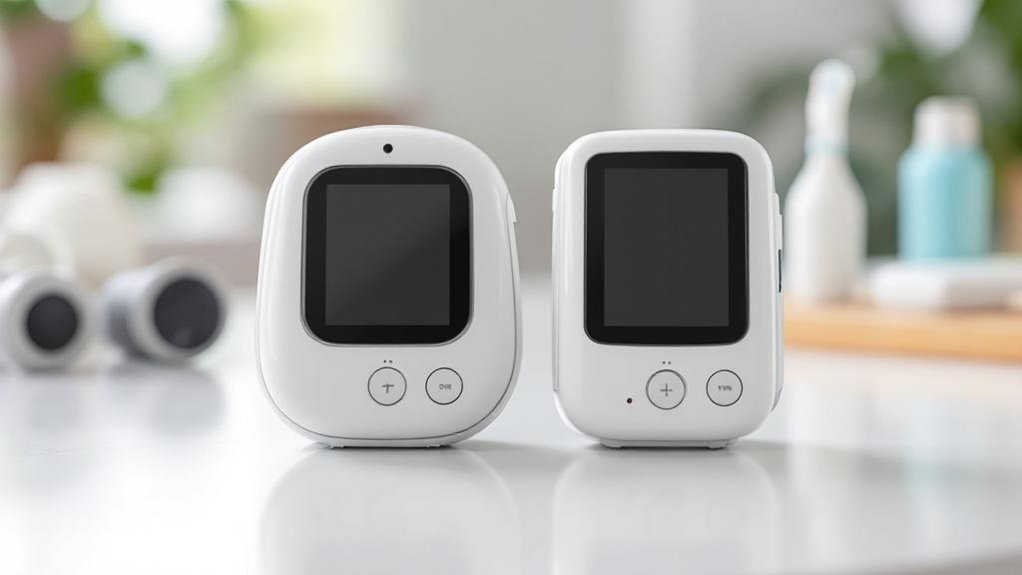
One of the most notable differences between these systems lies in CGM compatibility and calibration demands.
The Omnipod 5 offers exceptional sensor compatibility, integrating seamlessly with Dexcom G6, Dexcom G7, and Abbott FreeStyle Libre 2 Plus. This flexibility lets you choose the CGM that best fits your lifestyle. In contrast, the Medtronic 770G/780G exclusively uses the Guardian 4 sensor—there’s no option for third-party integration.
Calibration frequency differs considerably between systems. The Guardian 4 requires periodic fingerstick calibrations multiple times daily to maintain accuracy. Meanwhile, Dexcom sensors paired with Omnipod 5 operate without routine calibrations, and the FreeStyle Libre 2 Plus comes factory-calibrated. Many users report that Guardian sensors show significant improvement in performance compared to the older Enlite sensors that preceded them.
We also notice differences in sensor wear duration. Guardian 4 lasts seven days, while Dexcom G6 extends to ten days, and both Dexcom G7 and FreeStyle Libre 2 Plus reach 14 days.
Insulin Delivery Features and Bolus Options
Beyond sensor technology, insulin delivery capabilities form the foundation of how these systems manage your glucose throughout each day. We’ve found that both platforms excel at automated basal insulin adjustments, though their approaches differ meaningfully. The Medtronic 780G updates every 5 minutes and supports targets as low as 100 mg/dL, while Omnipod 5 adjusts every 3 days with targets from 110-150 mg/dL. For bolus calculations, both incorporate current glucose, carbs, and insulin on board. The 780G stands out with meal detection technology and automatic correction doses above 120 mg/dL. Omnipod 5 offers smartphone bolusing convenience. Regarding precision, Medtronic delivers in 0.025-unit increments versus Omnipod’s 0.05 units—a consideration for those requiring granular insulin adjustments. These automated insulin delivery systems reduce the number of manual dosing decisions you’ll need to make throughout the day.
Control Interface: Smartphone App vs. Button Navigation
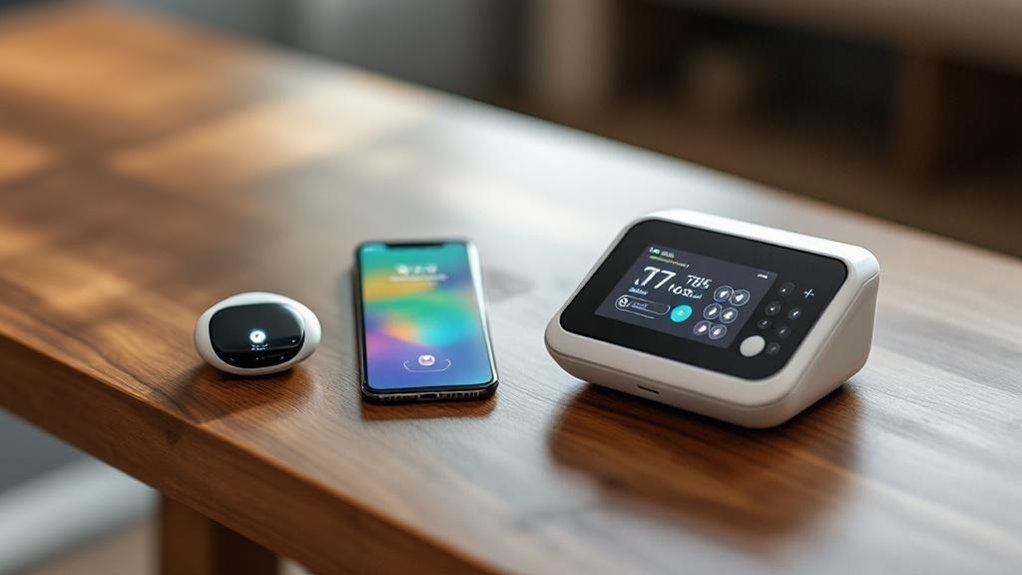
How you interact with your insulin pump matters as much as the technology inside it. The Omnipod 5 prioritizes smartphone integration, allowing full control through a compatible app—you’ll manage boluses, view data, and adjust settings from your phone’s touchscreen. This user experience eliminates the traditional controller but requires your smartphone for essential functions. In contrast, the Medtronic 780G uses dedicated button navigation on the pump itself. While this provides complete independence from smartphones, the multi-button interface demands greater manual dexterity and involves more navigation steps to access features. For user accessibility, consider your comfort with smartphone technology versus physical buttons. The Omnipod 5 suits those who prefer familiar touchscreen interfaces, while the Medtronic 780G works independently of smartphone battery life and connectivity. Consider how each pump fits into daily routines, including activities like exercise, showering, and sleeping when making your decision.
Water Resistance and Waterproof Capabilities
For swimmers, shower-takers, and anyone living an active lifestyle, the Omnipod 5 Pod delivers genuine waterproof protection with its IP28 rating—allowing submersion up to 25 feet (7.6 meters) for 60 minutes. The tubeless design maintains waterproof integrity without exposed connection points that could compromise your device.
However, we need to address a critical limitation: the Omnipod 5 Controller isn’t waterproof and must stay dry. More importantly, communication between your CGM and Pod drops considerably underwater—to just 9.1% during typical swimming. You’ll need to keep your devices within 13 cm (about 5 inches) for reliable connection.
The Medtronic 780G system, in contrast, handles water exposure differently with its tubed pump design requiring disconnection before submersion beyond submersion limits. During swimming sessions, the Pod replacement occurs every 3 days as part of the standard usage protocol.
Exercise and Activity Mode Functionality
We’ll now examine how these two automated insulin delivery systems support physical activity through their exercise-specific features. Both the Omnipod 5 and Medtronic 780G offer mechanisms to adjust glucose targets and modify insulin delivery during exercise, though they differ in terminology, activation methods, and the extent of automated adjustments. The Medtronic 780G includes an exercise mode that allows users to adjust their treatment ranges, while the Omnipod 5 provides an activity mode with a fixed target glucose of 150 mg/dl. Understanding these differences will help you determine which system’s approach to activity management aligns better with your exercise patterns and preferences.
Target Glucose Adjustments
When you’re preparing for physical activity with diabetes, maintaining stable blood glucose becomes considerably more challenging—and both the Omnipod 5 and Medtronic 780G address this through dedicated exercise modes that temporarily raise target glucose levels.
Both systems set their target glucose to 150 mg/dl during activity—a significant elevation designed specifically for hypoglycemia prevention. The Medtronic 780G raises this from its standard targets of 100, 110, or 120 mg/dl, while Omnipod 5 similarly elevates from baseline settings. These exercise adjustments maintain glucose in the safer 140-160 mg/dl range throughout physical activity.
The activity settings differ in minimum duration: Omnipod 5 requires at least one hour, while Medtronic 780G’s Temp Target mode starts at just 30 minutes. Both extend up to 24 hours for prolonged activities.
Insulin Delivery Modifications
Beyond simply raising target glucose levels, both systems modify their actual insulin delivery patterns during physical activity—though they take fundamentally different approaches. The Omnipod 5 features a dedicated hypo protector activity mode that automatically reduces basal insulin by approximately 50% the moment we activate it. This direct basal rate reduction works alongside the higher target to provide dual protection against exercise-induced hypoglycemia.
The Medtronic 780G doesn’t offer a dedicated exercise mode with direct basal modifications. Instead, it relies on SmartGuard technology to indirectly adjust insulin delivery through our manually set temporary target. The 780G requires manual operation when SmartGuard is turned off, meaning we’ll need to actively manage insulin delivery ourselves during these periods. Both activity modifications deliver insulin adjustments every five minutes based on predictive glucose trends, but Omnipod 5’s approach requires less manual intervention during our workouts.
Duration and Activation Options
While both systems require manual activation before exercise, they differ considerably in how we control duration and access these protective features.
The Omnipod 5 offers exceptional flexibility with activity duration settings ranging from 1 to 24 hours, allowing us to tailor protection to our specific workout length or all-day activities. We can activate this mode through either the smartphone app or dedicated controller device.
The Medtronic 780G provides user-specified duration settings for its Temp Target function, which we activate directly through the pump interface with a button press. Both activation methods are straightforward, though the Omnipod’s smartphone option may feel more intuitive for those already comfortable managing diabetes through mobile devices. Before initiating exercise mode on either system, checking our blood glucose levels helps us determine if we’re starting from a safe range and whether additional carbohydrate intake might be needed.
These activation methods guarantee we can quickly enable exercise protection whenever needed.
Adhesion, Durability, and Daily Maintenance Considerations
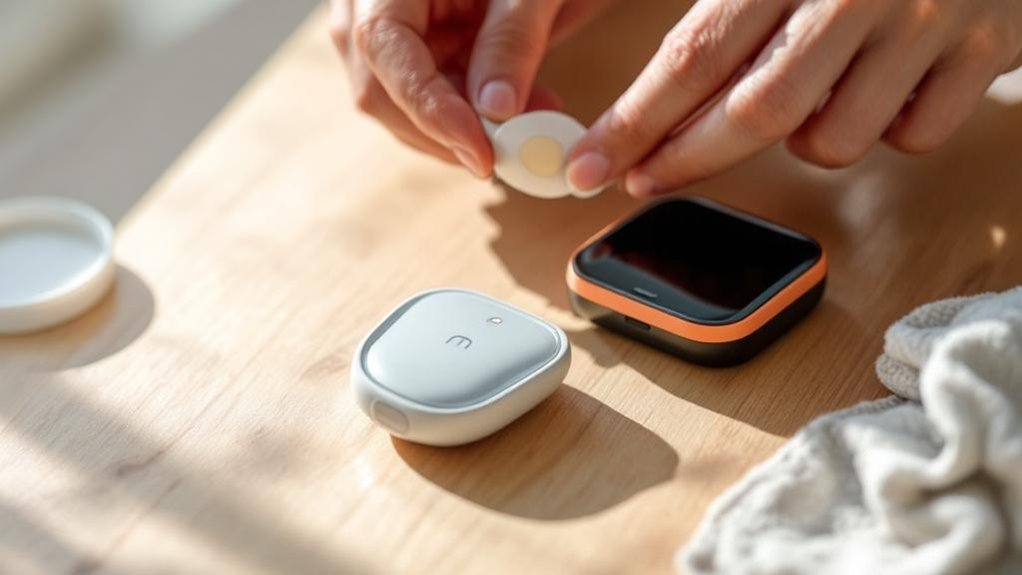
Since insulin pumps and sensors must remain securely attached to your body 24/7, adhesion performance directly impacts the reliability of your diabetes management system.
The Omnipod 5’s tubeless design requires more body adhesive than tubed pumps, and users report pods occasionally falling off, necessitating complete replacement. Its automatic applicator simplifies insertion, but the system lasts only three days maximum.
The Medtronic 780G’s Guardian sensor demands complete patch coverage over both sensor and transmitter. While adhesion challenges during swimming and high-sweat activities affect both systems, Medtronic’s larger surface area accumulates lint and debris, becoming visually unsightly. However, its infusion sets last up to seven days.
Both systems require supplemental adhesive products and strict maintenance protocols. Medtronic allows partial reinforcement, while Omnipod failures mean total pod replacement, increasing management costs. The Omnipod 5 offers freedom of movement as a completely tubeless system, eliminating concerns about tubing snagging during physical activities.
Frequently Asked Questions
Which System Has Better Insurance Coverage or Lower Out-Of-Pocket Costs?
We’ve found coverage varies considerably by your insurance classification. Our cost comparison analysis shows Omnipod 5’s pharmacy benefit often yields lower monthly costs, while Medtronic’s DME coverage depends on your deductible and insurance reimbursement strategies.
Can I Switch Between Omnipod 5 and Medtronic Systems Easily?
Switching isn’t easy due to system compatibility differences. Each requires separate prescriptions, insurance authorizations, and manufacturer-specific training. The user experience differs markedly—from smartphone apps to delivery algorithms—requiring substantial adjustment time and clinical support.
How Do Battery Life and Replacement Costs Compare Between Systems?
We’ve found Omnipod 5’s controller offers approximately 36-hour battery efficiency with daily charging recommended, while Medtronic systems use standard AAA batteries. Replacement frequency differs markedly: Omnipod controllers last roughly two years versus Medtronic’s disposable battery approach.
Which System Is Better for Children or Teenagers With Diabetes?
Both systems excel for young users, but we’d lean toward Omnipod 5’s tubeless, waterproof design for active teens. Medtronic 780G offers superior sensor accuracy and user-friendly interface with proven pediatric outcomes for ages seven and up.
What Are the Warranty Periods and Customer Support Options?
The warranty details show Omnipod offers 4-5 years for controllers and 18 months for pods. Support options include 24/7 phone assistance at 1-800-591-3455, live chat weekdays, and PodderCentral’s online resources for our community.
Conclusion
We’ve explored the core differences between Omnipod 5 and Medtronic’s systems—from tubeless versus tubed design to automation features and daily wearability. There’s no universally “best” pump; what matters is which aligns with your lifestyle, preferences, and management goals. We encourage you to discuss these options with your diabetes care team, request demos when possible, and consider trial periods. The right system is the one you’ll confidently use every day to achieve ideal glucose control.