

We’ve learned from extensive clinical research that 4mm pen needles are now the evidence-based standard for virtually all body types, including obese patients, children, and thin individuals. Studies consistently show that shorter needles reduce injection pain considerably (p<.01) while eliminating intramuscular injection risk in 99.9% of cases, regardless of BMI. The science confirms that subcutaneous tissue depth, not body size, determines proper insulin delivery, and 4mm needles safely penetrate this layer across all patient populations. Understanding the proper technique for your specific situation guarantees ideal diabetes management and comfort.
Key Takeaways
- The 4mm needle is universally recommended for all body types, regardless of BMI, ensuring safe subcutaneous delivery and minimizing pain.
- Obese patients achieve equivalent metabolic control with shorter needles; longer needles are unnecessary and increase discomfort without added benefit.
- Children and thin individuals should use 4mm needles with proper skin pinching technique to prevent intramuscular injection and reduce leakage.
- Skin thickness averages 1.9-2.4mm across all body types; BMI doesn’t significantly affect thickness, making shorter needles universally appropriate.
- Proper technique with 4mm needles eliminates intramuscular injection risk in 99.9% of cases, reducing hypoglycemia risk by 54%.
Understanding Pen Needle Lengths: What’s Available and Why It Matters
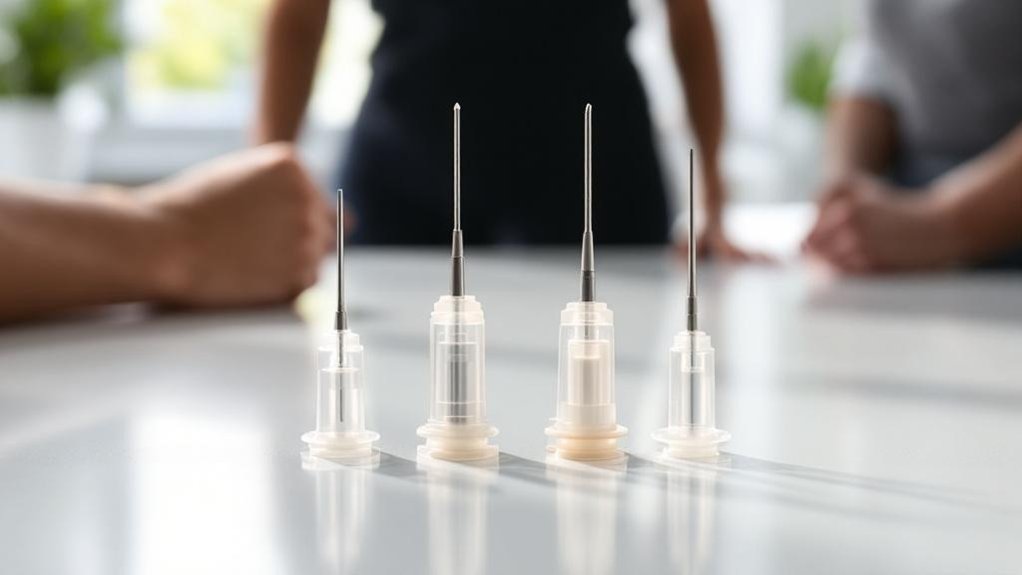
When you’re selecting an insulin pen needle, understanding the range of available lengths is essential for safe and effective medication delivery. We’ve seen manufacturers develop needle length options spanning from 4mm to 12.7mm, with standard sizes including 4mm, 5mm, 6mm, 8mm, and 12mm. Each length serves specific purposes based on injection site anatomy and individual body composition.
The introduction of nano pen needle technology made 4mm the smallest commercially available option, while 12.7mm represents the maximum standard length for specialized clinical circumstances. Mid-range options between 5mm and 6mm have emerged as the most versatile choices for the general population. Your body’s subcutaneous fat distribution, skin thickness, and injection site selection all influence which length will deliver medication most effectively into the subcutaneous tissue layer. Shorter needles reduce the risk of muscle injection, which can cause insulin to absorb too quickly and affect blood sugar control.
The 4mm Standard: Why Shorter Needles Work for Everyone
Among all available needle lengths, 4mm pen needles have emerged as the evidence-based standard for insulin delivery across all body types. The 4mm benefits are supported by extensive clinical research demonstrating their universal application. International scientific advisory board recommendations confirm these needles work effectively regardless of your body mass index, with ultrasound studies showing adequate subcutaneous penetration while minimizing intramuscular injection risk.
We’ve seen compelling evidence that shorter needles considerably reduce injection pain—clinical trials report 4mm needles are measurably less painful than 5mm or 8mm alternatives (p<.01). The combination of reduced pain, lower hypoglycemia risk from avoiding muscle injection, and consistent insulin absorption makes 4mm needles the preferred choice. Modern designs incorporating five-bevel tips and EasyFlow technology further enhance comfort and reliability for your daily diabetes management. Patient-reported outcomes show that enhanced needle design features can significantly improve the overall injection experience and comfort during insulin delivery.
Needle Selection for Obese Patients: Debunking Common Myths
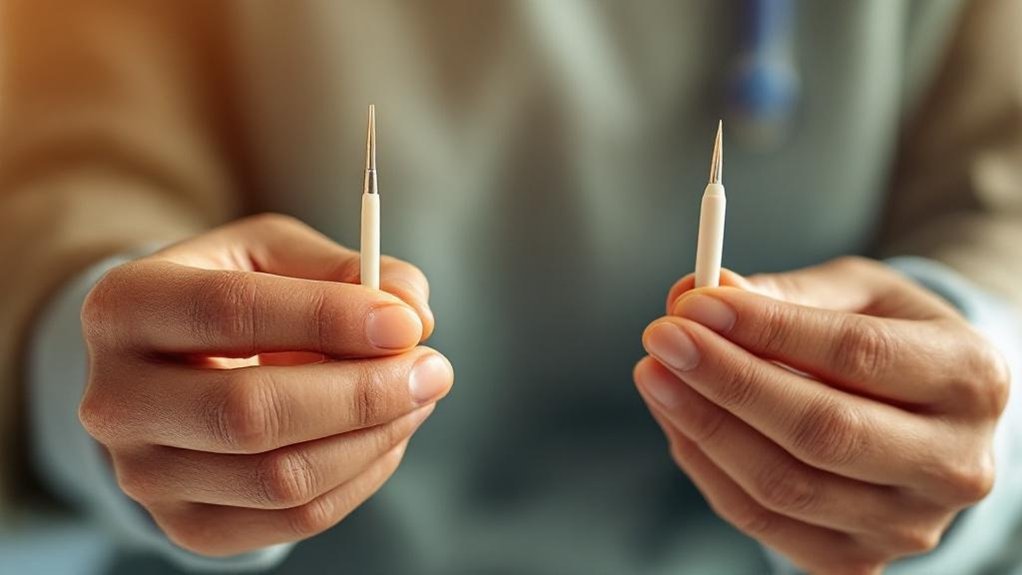
Despite widespread assumptions in clinical practice, obese patients don’t require longer pen needles for effective insulin delivery. Clinical evidence thoroughly debunks these needle myths. Research involving 126 obese patients (BMI ≥30 kg/m²) demonstrated that 5mm and 8mm needles produced equivalent metabolic control, with no considerable differences in A1C levels or hypoglycemic events.
We’ve found that subcutaneous tissue in obese individuals typically ranges 20-80mm thick, easily accommodating shorter needles without risk of intramuscular injection. Patient preferences reveal no overwhelming favor for longer needles—46% preferred 5mm, 41% preferred 8mm, and 13% had no preference. Remarkably, 5mm needles caused considerably less bleeding. The study employed a multicenter, open-label crossover design where patients used each needle length for three months before switching to evaluate real-world performance.
The evidence supports individualized needle selection based on personal comfort and injection technique rather than BMI alone, ensuring ideal diabetes management for every patient.
Special Guidance for Children and Very Thin Individuals
When caring for children and extremely thin individuals, we recommend 4 mm pen needles as the safest and most effective choice across all body compositions. For children aged 6 years and under, as well as very thin youth, proper technique requires lifting a skin fold during injection to guarantee subcutaneous delivery and prevent intramuscular penetration. This approach minimizes pain, reduces injection anxiety, and maintains consistent insulin absorption while eliminating the risks associated with longer needles. Proper disposal of used needles in FDA-cleared sharps containers is essential for safety, especially when managing pediatric diabetes care at home.
4mm Needles for Children
For children of all ages and very thin individuals, 4 mm needles represent the clinical standard for insulin delivery. This recommendation stems from robust clinical evidence showing that shorter needles prevent intramuscular injection while maintaining ideal glycemic control across all pediatric BMI ranges. We’ve observed that needle length preferences in pediatric populations consistently favor 4-5 mm options, as these lengths effectively address the unique anatomy of developing bodies.
Research demonstrates no efficacy difference between 4 mm and longer needles in children, yet shorter options considerably reduce insulin leakage incidents. For pediatric patient needs, particularly in those under ten years old, 4 mm needles paired with 31-32 gauge thickness provide both safety and comfort. Very thin adults with BMI below 18.5 require identical considerations to prevent accidental muscle delivery. The selection of appropriate needle length must account for the route of injection and specific anatomic site to ensure optimal vaccine delivery and patient comfort.
Skin Pinching Technique Required
Although 4mm needles offer maximum safety for children and thin individuals, proper skin pinching technique remains essential for specific populations to guarantee subcutaneous insulin delivery.
We recommend skin pinching for all children aged 6 and under, extremely thin individuals with minimal subcutaneous fat, and anyone using needles 8mm or longer. The technique is straightforward: lift a skin fold between your thumb and forefinger before injection, maintaining the pinch throughout the entire process. This separates the subcutaneous tissue from muscle, preventing intramuscular injection that causes rapid insulin absorption and hypoglycemia risk.
When executed correctly, skin pinching allows for perpendicular (90-degree) injection while maximizing injection comfort. Clinical evidence supports this approach across all body types, demonstrating equivalent efficacy and markedly reduced injection site complications. Since the average human skin thickness is approximately 2mm, proper skin pinching creates adequate distance from underlying muscle tissue regardless of body type.
How Skin Thickness and Body Composition Affect Needle Choice
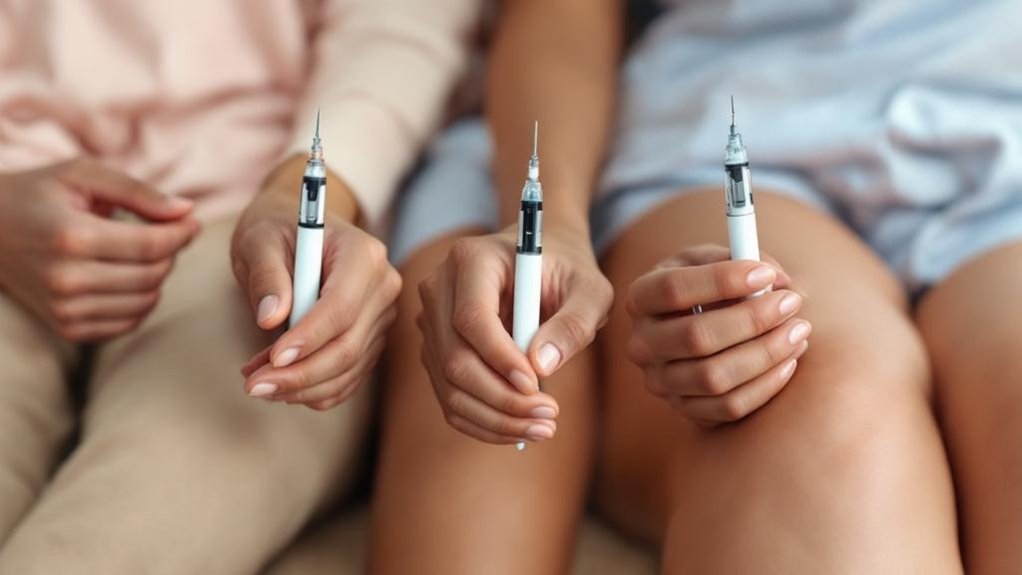
Understanding your body’s unique anatomy is essential for selecting the right pen needle length. We’ve learned through clinical research that skin thickness averages between 1.9-2.4 mm across injection sites, remaining below 2.88 mm in over 95% of individuals regardless of body composition. Surprisingly, your BMI doesn’t greatly affect skin thickness—patients with higher BMI actually showed thinner skin measurements. However, subcutaneous tissue depth varies considerably, ranging from 5.8-44.4 mm between individuals.
This variation matters because we’re targeting the subcutaneous layer, not the skin or muscle beneath. Your body composition directly influences injection depth requirements. Lower BMI increases intramuscular injection risk due to reduced fat tissue, while inadequate needle length relative to skin thickness can cause intradermal injection, leading to fluid leakage in 38% of cases studied. When needle length was adjusted from 4 mm to 6 mm for patients with skin thickness of 2.9 mm or greater, insulin leakage decreased significantly from 46% to 8%.
Proper Injection Techniques Based on Needle Length and Body Type
Choosing the right needle length is only half the equation—proper injection technique guarantees safe, effective insulin delivery while minimizing discomfort and complications. We’ll walk you through the standard perpendicular insertion method that works for most adults using 4mm needles, then address the specific modifications thin individuals need to prevent intramuscular injections. These evidence-based techniques directly impact your glycemic control, injection site reactions, and overall diabetes management success. After each injection, proper disposal of the pen needle is essential to prevent contamination and reduce infection risk.
Standard Adult Injection Technique
When selecting the proper injection technique for insulin pen needles, we’ve found that 4mm needles represent the universal standard for all adults, eliminating previous assumptions that body type or weight should dictate needle length. This evidence-based approach means you no longer need to pinch your skin during injection, reducing both needle anxiety and procedural complexity.
The 4mm length consistently delivers insulin into subcutaneous tissue while minimizing intramuscular injection risk across all body compositions. We recommend maintaining a 90-degree insertion angle at all injection sites, ensuring reliable absorption rates regardless of your BMI or anatomical location. Shorter needles also reduce injection pain compared to their longer counterparts, making the injection process more comfortable for daily insulin administration.
For those using needles exceeding 4mm, gentle skin pinching remains necessary—though we advise against aggressive technique that risks elevating muscle tissue. This standardized approach enhances injection comfort while improving adherence through simplified administration protocols.
Thin Individual Special Considerations
While the 4mm standard works universally across body types, we’ve identified specific considerations for thin individuals that warrant careful attention. For those with lower body fat, 4mm needles deliver ideal needle comfort while preventing intramuscular injection—a 22% higher risk with 8mm needles in thin patients. Research confirms that 4–5mm ultra-fine needles provide equivalent glycemic control without requiring skin pinching in 98% of thin-adult cases.
Your injection sites matter greatly. The abdomen requires shortest needles due to reduced subcutaneous depth, while proper site rotation prevents tissue damage. If using needles ≥6mm, mandatory skin pinching or 45-degree angles become necessary. However, ultrasound studies confirm 4mm needles adequately penetrate the dermis across all body types, eliminating technique modifications while maximizing comfort and safety. Studies show that skin thickness varies minimally across different BMI categories, with average subcutaneous thickness ranging from 10.35 mm to 15.45 mm, making these differences clinically negligible for thin individuals.
Safety Considerations: Reducing the Risk of Intramuscular Injection
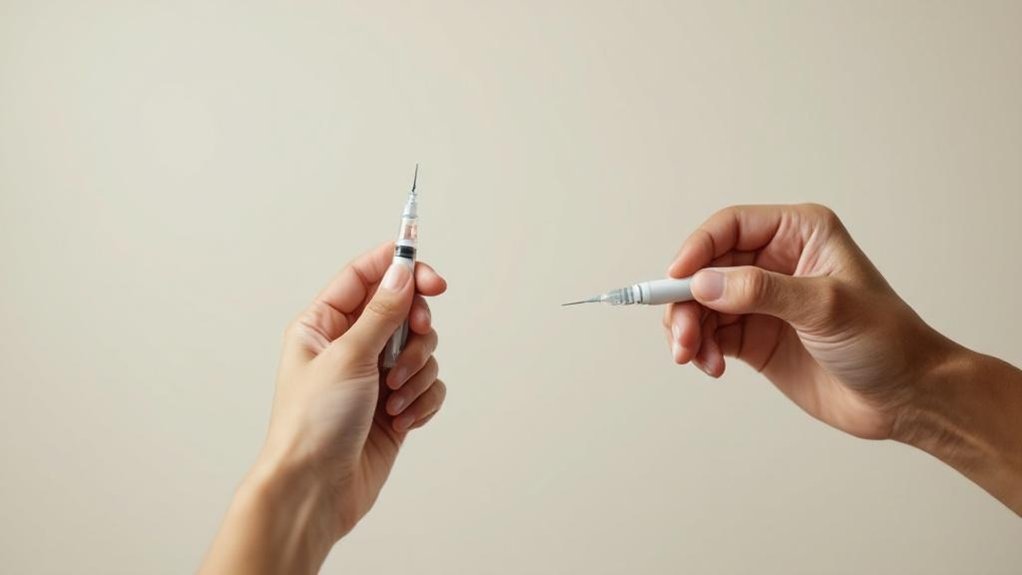
One of the most critical safety concerns in insulin delivery is preventing unintended intramuscular injection, which occurs when the needle penetrates beyond the subcutaneous tissue layer and reaches the muscle fascia. We need to understand the serious intramuscular risks: accelerated absorption rates increase 1.5–2 times, elevating hypoglycemia risk by 54%. These episodes typically peak within 30 minutes and cause significant blood glucose fluctuations requiring 15–20% higher insulin dosing.
Injection safety depends on proper technique and needle selection. Since muscle fascia lies beyond 4 mm depth in 99.9% of injection sites, shorter needles effectively eliminate intramuscular penetration across all body types. The evidence is clear: 4-mm needles inserted perpendicularly remain entirely within subcutaneous tissue, while needles exceeding 8 mm substantially increase intramuscular injection probability.
Frequently Asked Questions
Can I Reuse Pen Needles to Save Money on Supplies?
We don’t recommend reusing pen needles despite potential cost savings. Manufacturers design them for single use, and reuse compromises needle hygiene, increases infection risk, and may affect insulin delivery accuracy, ultimately impacting your diabetes management.
Does Needle Gauge Thickness Affect Comfort More Than Needle Length?
Yes, needle gauge affects comfort levels more notably than length. Clinical studies show thinner needles (higher gauge numbers like 32G-33G) provide 2-fold better pain reduction regardless of length, helping you experience gentler injections.
Where Can I Find Affordable Pen Needles Without Insurance Coverage?
We recommend exploring online pharmacies like Diabetic Supplies Hub, where you’ll save up to 65% on FDA-approved pen needles. Bulk purchasing further reduces costs, and manufacturer assistance programs provide additional support when you’re paying out-of-pocket.
How Do I Properly Dispose of Used Pen Needles Safely?
We recommend placing used pen needles directly into an FDA-cleared sharps container immediately after use—never recapping them. For safe disposal, locate drop-off sites through safeneedledisposal.org or contact your local health department for guidance.
Are Generic Pen Needles as Effective as Name-Brand Options?
Yes, generic pen needles are equally effective as name-brand options when matching gauge and length specifications. Clinical studies confirm no significant performance differences in insulin delivery, making generics a reliable, cost-effective choice for your diabetes management needs.
Conclusion
We’ve explored how needle length selection depends on individual factors rather than outdated assumptions. The evidence consistently supports 4mm needles for most patients, regardless of body type, when proper technique is used. We encourage you to work closely with your diabetes care team to evaluate your injection sites, assess your technique, and select the needle length that optimizes your insulin delivery while minimizing discomfort. Your blood sugar control depends on getting this fundamental aspect of diabetes management right.