

For diabetics, we’ve found that glycemic load (GL) matters more than glycemic index (GI). While GI measures carbohydrate quality, GL accounts for both quality and quantity, explaining 63% of blood glucose variation compared to GI’s 48%. Research shows high-GL diets increase coronary heart disease risk by 27% and obesity risk by 30%, considerably more than high-GI diets. GL also better predicts diabetes risk and supports sustained weight loss. Understanding these differences helps us make smarter food choices that genuinely impact blood sugar control and long-term health outcomes.
Key Takeaways
- Glycemic load explains 63% of blood glucose variation compared to glycemic index’s 48%, making GL more predictive.
- High-GL diets increase coronary heart disease risk by 27% versus high-GI diets in women with diabetes.
- Obesity risk is 30% higher with high-GL diets compared to only 13% with high-GI diets.
- GL tracking correlates with 1.8 kg greater sustained weight loss at 24 months for diabetics.
- Both metrics matter, but GL accounts for portion sizes, making it more practical for real-world diabetes management.
Understanding How Blood Sugar Measurements Work
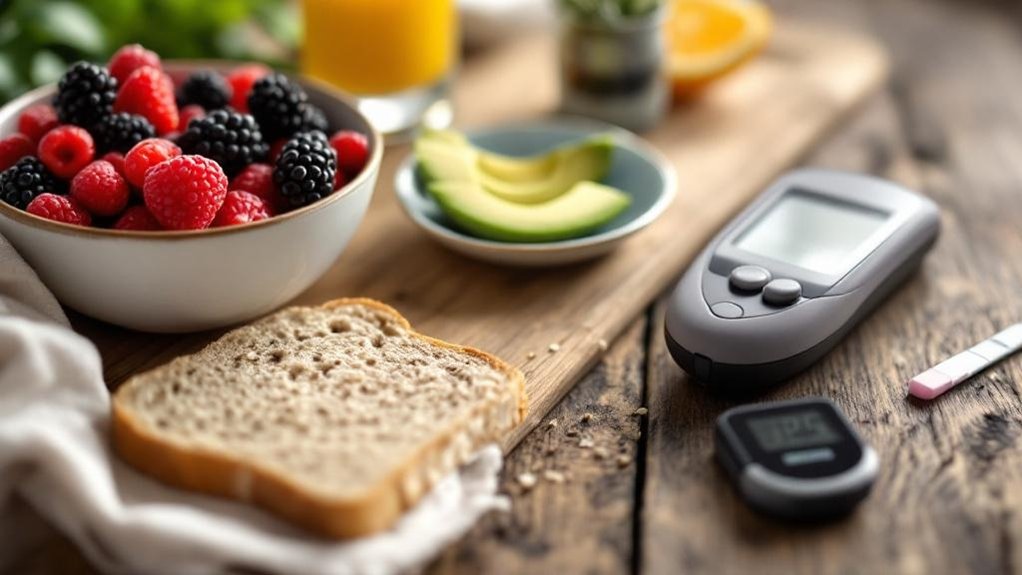
Managing diabetes effectively starts with accurate blood sugar monitoring, and today’s technology offers us several proven methods to track glucose levels. Traditional glucose meters require a small fingertip blood sample (0.3-1.0 microL) and deliver results within seconds. These finger-prick devices remain essential for many of us, particularly those with type 1 diabetes or those on insulin therapy.
Continuous Glucose Monitoring (CGM) systems represent a more advanced option, using subcutaneous sensors to track interstitial fluid glucose every 1-5 minutes. These monitoring systems can store up to 90 days of data and transmit readings wirelessly to smartphones or insulin pumps. CGM technology provides 24-hour glucose tracking, allowing us to visualize patterns and trends that single-point measurements might miss.
We also rely on A1C testing, which measures average blood glucose over 2-3 months, providing vital long-term insights into our diabetes management effectiveness.
Why Standard GI Testing Can Mislead Diabetics
How reliable are the glycemic index numbers we’ve been using to guide our food choices? The truth is, standard GI testing has significant limitations that can mislead us. First, tests measure glucose response over just two hours, even though we diabetics often need longer for blood sugar normalization. This underestimates our actual glucose exposure. Second, the portion size problem: GI uses fixed 50-gram carbohydrate portions, not real-world servings. Watermelon gets a high GI score despite minimal impact per typical serving. Third, foods are tested in isolation, but we eat mixed meals where fats, proteins, and fiber alter absorption rates. The combination of foods in meals, such as potatoes with meat, has been shown to influence both glycemia and satiety differently than consuming foods alone. Finally, research shows five-fold variability in individual responses to identical foods—what affects you may differ dramatically from standardized measurements.
The Clinical Evidence: GI and GL Show Different Health Outcomes
While both GI and GL aim to predict blood sugar responses, they’ve demonstrated markedly different outcomes in clinical research—differences that matter for our daily diabetes management.
Glycemic load explains 63% of blood glucose variation compared to glycemic index’s 48%, giving us more accurate predictions of actual responses. In cardiovascular health, high-GL diets showed 27% higher coronary heart disease risk in women, while high-GI associations were weaker and less consistent.
For weight management, the Health Professionals Follow-up Study reported 30% higher obesity risk with high-GL diets versus only 13% with high-GI diets. Additionally, GL tracking correlates with 1.8 kg greater sustained weight loss at 24 months, likely because counting carbohydrates enhances our overall calorie awareness and portion control. Meta-analyses have shown that low-GI diets produce significant decreases in fructosamine and HbA1c levels, indicating improved long-term blood glucose control in diabetes patients.
Diabetes Risk: What Large-Scale Studies Reveal
When we examine the large-scale evidence linking dietary choices to diabetes development, glycemic index shows a consistent but modest association with risk. Meta-analyses demonstrate an 8% increased risk per 5-unit GI increase, while cohort study comparisons from the Nurses’ Health Studies and Health Professionals Follow-up Study reveal 20-44% higher diabetes rates among those consuming high-GI diets.
Glycemic load demonstrates stronger associations, particularly when combined with low fiber intake—creating 47% increased risk compared to low-GL, high-fiber patterns. What’s most striking for diabetes prevention strategies: obese individuals consuming high-GI/GL foods face more than 10-fold greater risk than lean people following low-GI/GL diets. This amplified effect in overweight populations suggests we can’t view glycemic metrics in isolation from body weight. The research synthesis drew from 21 cohort studies conducted across multiple continents, including populations from the United States, Europe, Australia, Japan, and China.
Practical Guidance for Managing Blood Sugar With Food Choices
The large-scale evidence linking GI and GL to diabetes risk brings us to an important question: how do we translate these concepts into daily food decisions that actually control blood sugar?
We’ve found that meal composition matters more than individual food values. Pairing carbohydrates with protein, fat, or fiber greatly reduces your overall glycemic response. A baked potato with Greek yogurt creates a lower glucose spike than the potato alone.
Cooking methods also influence outcomes. Whole potatoes produce lower glycemic responses than mashed versions of the same food.
Here’s what works: focus on whole, minimally processed foods, combine high-GI items with low-GI components, and maintain consistent meal timing. These strategies create balanced glycemic responses that keep your blood sugar stable throughout the day. Low-GI foods promote sustained energy and help maintain steadier glucose levels between meals.
Frequently Asked Questions
Can I Still Eat High-Gi Foods if I Take Diabetes Medication?
Medication helps manage blood sugar, but high-GI foods still spike glucose levels. We recommend pairing them with high-GI alternatives like protein or fiber to reduce medication impact and support stable control through strategic food combinations.
Do GI and GL Values Change When Foods Are Cooked Differently?
Yes, we’ve seen that cooking methods greatly affect GI and GL values. Al dente pasta has lower GI than overcooked, while food ripeness also matters—riper fruits have higher glycemic responses than less-ripe versions.
Are Low-Gi and Low-Gl Diets Safe During Pregnancy With Gestational Diabetes?
Yes, low-GI diets are safe during gestational diabetes. We’ve seen significant low gi benefits including reduced insulin needs and lower macrosomia risk, without adverse effects. They effectively manage gestational diabetes risks while maintaining proper nutrition throughout pregnancy.
How Do Artificial Sweeteners Affect GI and GL Calculations?
Artificial sweeteners impact GI GL calculations minimally since they contain negligible carbohydrates, resulting in near-zero values. We recommend considering individual responses through monitoring, as some people experience unexpected glucose changes despite favorable GI GL comparisons.
Should Type 1 and Type 2 Diabetics Follow Different GI Approaches?
We believe GI strategies should align with your individual responses and lifestyle factors rather than type variations alone. Diabetic management works best when we personalize dietary preferences to your unique metabolic needs and daily routine.
Conclusion
We’ve seen that while glycemic index provides a foundation for understanding carbohydrate quality, glycemic load gives us the practical context we need for real-world eating. The evidence shows both metrics matter, but GL better reflects actual portion sizes and their impact on your blood sugar. We recommend using GL as your primary guide while keeping GI in mind for choosing between similar foods. Track how different foods affect your individual response, and you’ll develop the personalized insights that matter most for your diabetes management.