

We’ve found that smart ingredient swaps can transform your favorite comfort foods into low-carb alternatives without sacrificing satisfaction. Replace mashed potatoes with cauliflower (2.5g vs. 15.6g carbs per serving), swap traditional pasta for zucchini noodles (4g vs. 45g carbs), and use portobello caps or cauliflower crusts instead of pizza dough. Greek yogurt and cauliflower cream make rich sauces without flour thickeners, while cauliflower rice cuts carbs by nearly 90% compared to white rice. Our complete guide explores these substitutions and reveals the preparation techniques that make them work.
Key Takeaways
- Replace mashed potatoes with cauliflower mash, reducing carbs from 15.6g to 2.5g per half cup while preventing blood sugar spikes.
- Swap traditional pasta with zucchini noodles to cut carbohydrates from 45g to just 4g per cup serving.
- Use cauliflower rice instead of white rice, decreasing carbs from 44g to 5g per cup while providing vitamin C.
- Replace burger buns with lettuce wraps or portobello mushroom caps to eliminate 20-30g of carbohydrates per serving.
- Substitute lasagna noodles with grilled zucchini or eggplant slices to reduce net carbs by 80-90% per serving.
Mashed Potato Makeovers: Cauliflower and Root Vegetable Alternatives

When comfort food cravings strike, mashed potatoes often top the list—but their high carbohydrate content can derail blood sugar management. We’ve discovered that cauliflower makes an exceptional substitute, delivering only 2.5g carbs per half cup compared to potatoes’ 15.6g. Its glycemic index of 15 won’t spike your blood sugar like traditional spuds.
To achieve the best results, we recommend steaming cauliflower varieties until fork-tender, then blending with a food processor for smooth consistency. Adding cream cheese and Parmesan creates richness without adding significant carbs. For flavor enhancements, try roasting the cauliflower first or incorporating garlic during cooking. The mild taste readily accepts your favorite seasonings, making it nearly indistinguishable from the original when properly prepared with butter and herbs. You can also use 2 tbsp heavy cream and 2 tbsp butter for a classic preparation that keeps the carb count low.
Pasta Night Reinvented: Vegetable Noodles and Spiralized Options
Traditional pasta delivers up to 45 grams of carbohydrates per cup, making it challenging for diabetes management. We’ve found that spiralized vegetables like zucchini contain just 4 grams of carbohydrates per cup while providing essential vitamins and fiber. Let’s explore how simple spiralizing techniques and proper spaghetti squash preparation can transform your pasta nights into blood sugar-friendly meals. Spiralizers range in price from $10 to $80, depending on features and attachments.
Zucchini Noodles: Spiralizing Basics
Zucchini noodles—often called “zoodles”—have earned their reputation as one of the most successful low-carb pasta substitutes, and the technique for creating them is simpler than many people expect. We recommend selecting medium-sized zucchini (6-8 inches long) with straight shapes for ideal spiralizing techniques. Countertop spiralizers with suction cups offer the most consistent results, though handheld versions work well for smaller kitchens.
The key to restaurant-quality zoodles lies in moisture management. After spiralizing, pat the noodles with paper towels or lightly salt them to draw out excess water. This prevents the soggy texture that discourages many first-time attempts. We’ve found that quick cooking—just 60-90 seconds in a hot pan—maintains the “al dente” texture we’re looking for while keeping carbs minimal. For convenient storage, keep your spiralized noodles in a paper towel-lined container in the refrigerator for 2-3 days.
Spaghetti Squash Preparation Tips
While zucchini noodles excel in quick weeknight meals, spaghetti squash deserves recognition as the original vegetable pasta alternative—one that’s been quietly delivering satisfying, strand-like texture for decades before spiralizers became kitchen staples. We’ve found that selecting firm, uniformly yellow squash guarantees the best strand formation. Our preferred cooking techniques include baking at 375°F for 30-45 minutes or microwaving for efficiency—both preserve the squash’s nutritional integrity while keeping calories remarkably low at just 31 per 100g. After cooling, we scrape a fork lengthwise to extract those signature strands. For flavor enhancements, we recommend pairing with tomato-based, pesto, or light cream sauces that complement its mild, nutty taste. Our serving suggestions always include protein sources, creating balanced meals that honor both satisfaction and health. Each serving delivers over 2 grams of fiber for digestive support, significantly more than traditional pasta offers.
Pizza Crust Transformations: From Cauliflower to Portobello Bases

When it comes to replacing traditional pizza crust, cauliflower-based alternatives have moved from health-blogger trend to nationwide pizzeria staple, yet the nutritional reality doesn’t always match the health halo. While we’ve seen impressive pizza crust innovations, cauliflower crust reviews reveal that many commercial versions contain rice flour, cornstarch, and canola oil—ingredients that undermine their health positioning. Though carbs are typically lower than traditional crusts, some products pack 16g of fat per serving. The texture often resembles gritty crackers rather than authentic pizza, and the lack of gluten means crusts rip easily. If you’re committed to cauliflower, we recommend making your own using just cauliflower, eggs, cheese, and olive oil—extracting excess water is essential for structural integrity. For ready-made options, products like Caulipower feature thicker, more filling crusts that don’t require pre-baking before adding toppings. Alternatively, portobello mushroom caps offer a naturally low-carb base with built-in umami flavor.
Burger Upgrades: Leaner Proteins and Bread-Free Solutions
We’ll show you how to build satisfying burgers that keep net carbs minimal while maintaining protein quality. By swapping traditional buns for lettuce wraps or grilled portobello caps, you can eliminate 20-30g of carbs per meal without sacrificing the handheld convenience you’re craving. Pairing these bread-free solutions with lean protein options like turkey patties or even plant-based alternatives creates a complete comfort food experience that fits within your carb targets. For those seeking vegan options, Beyond Meat Beast Burger offers a non-GMO plant-based patty that delivers satisfying flavor while keeping your meal low in carbohydrates.
Turkey and Mushroom Patties
Turkey and mushroom patties represent one of the most protein-dense, low-carb alternatives to traditional burgers, delivering 28-41g of complete protein per serving while keeping carbohydrates minimal. We’re focusing on formulations with just 5g of carbs—significantly lower than standard versions containing 27-37g. The turkey benefits include 94% lean ground meat that provides complete amino acids without excessive saturated fat.
When we incorporate mushroom varieties like cremini or portobello, we add umami depth while maintaining strict carb limits. Commercial options range from 330-647 calories per serving, but we recommend checking actual carb counts since some “low-carb” products contain up to 37g. For best results, we skip breadcrumbs entirely and use minimal oil during cooking, preserving both nutritional integrity and our macronutrient targets. Pairing these patties with vegetable of the day options eliminates the need for traditional potato sides while maintaining satisfying portion sizes.
Lettuce and Mushroom Buns
While traditional burger buns contribute 25-35g of carbohydrates per serving, lettuce and mushroom alternatives eliminate this glycemic load entirely without sacrificing the structural integrity we need for handheld meals. Lettuce advantages include near-zero calories, minimal carbohydrates (typically under 1g), and added hydration with trace micronutrients. We’re looking at significant savings—commercial lettuce wraps reduce our carb intake by 25-35g compared to wheat buns.
Mushroom benefits center on portobello caps, which contain only 25-30 calories per cap with 5g total carbohydrates. When we roast them at 475°F for 10 minutes, they maintain structural stability. The preparation delivers zero cholesterol and accommodates various proteins. For those seeking versatile options, mushroom-quinoa burgers or chickpea veggie burgers pair exceptionally well with lettuce bun alternatives. Both options provide the satisfying burger experience we crave while supporting our metabolic goals through reduced processed ingredients and improved macronutrient profiles.
Creamy Sauces Without the Carbs: Greek Yogurt and Cauliflower Magic

When traditional comfort foods rely on heavy cream and flour-based roux to achieve their signature richness, we can turn to two surprisingly effective alternatives: Greek yogurt and cauliflower. These protein alternatives deliver exceptional nutritional benefits while maintaining the creamy texture we crave.
Greek yogurt provides 3.2 grams of protein per tablespoon with active cultures that support gut health. Its naturally thick consistency eliminates the need for flour or cornstarch thickeners. Meanwhile, cauliflower cream offers a vegetable-based option that’s remarkably low in carbohydrates. Both low carb sauces achieve ultra-smooth consistency through simple cooking techniques: blending for yogurt-based versions and reduction for vegetable purées.
These alternatives contain less fat and fewer calories than traditional versions while delivering double the protein, making them ideal for pasta alternatives, steamed vegetables, and protein dishes. For those seeking an even richer option, cream cheese additions can enhance the creamy texture without requiring flour-based thickeners.
Rice Replacement Strategies: Cauliflower Rice in Every Dish
Because traditional white rice delivers 44 grams of carbohydrates per cup, it’s often the first food we need to reconsider when managing blood sugar levels. Cauliflower rice offers a transformative solution with just 5 grams of carbs per cup while providing 57% of our daily vitamin C needs.
We can create this versatile base by pulsing fresh cauliflower varieties in our food processor until rice-sized granules form, then cooking for 5-7 minutes over medium heat. For those seeking cost-effectiveness, making cauliflower rice at home proves more economical than purchasing pre-packaged versions. The real magic happens through flavor enhancements—cauliflower rice absorbs seasonings, sauces, and spices exceptionally well, making it perfect for fried rice, burrito bowls, and pilafs. Commercial frozen options maintain similar nutritional benefits while saving preparation time, giving us convenient access to this essential low-carb staple.
Lasagna Layers Reimagined: Vegetable-Based Noodle Swaps
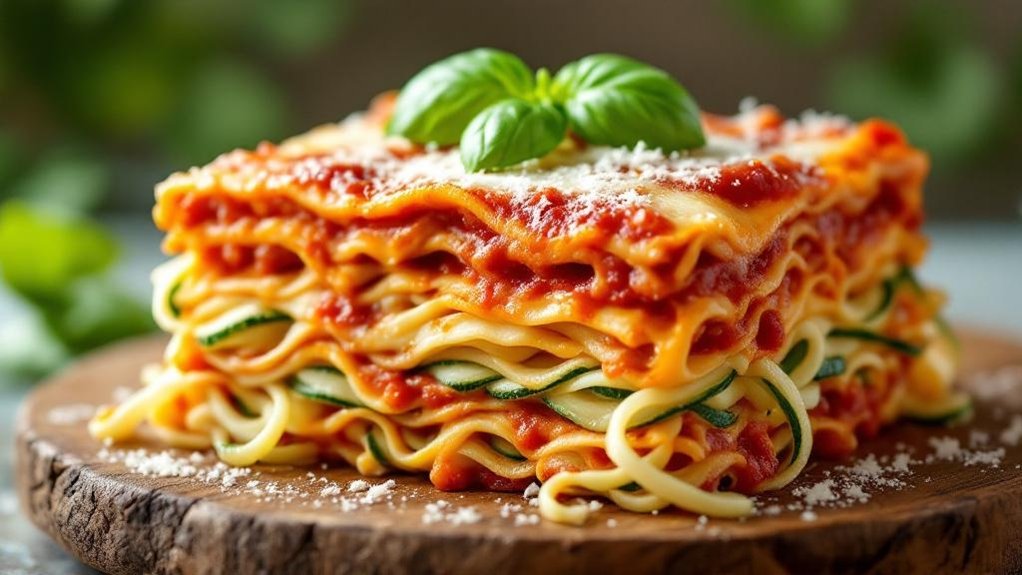
Just as we’ve transformed rice dishes, we can apply the same vegetable-based strategy to one of our most beloved comfort foods: lasagna. Vegetable layering using sliced eggplant, zucchini, or yellow squash creates satisfying noodle alternatives that reduce net carbs by 80-90% while eliminating over 200 calories per serving. We recommend salting your vegetables first to draw out excess moisture, preventing a watery final dish. Pre-grilling adds deeper flavor and guarantees proper texture. Zucchini noodles deliver just 14 net carbs per serving, while eggplant requires minimal prep. We can enhance our layers with mushroom ragu for meaty texture, cottage cheese for extra protein, and fresh herbs for flavor without added carbs. When preparing eggplant, bake slices at 400°F to evaporate moisture and reduce any bitterness. This approach lets us enjoy comfort food satisfaction while meeting our nutritional goals together.
Mac and Cheese Alternatives: Veggie-Forward Comfort Bowls
While traditional mac and cheese delivers upward of 40 grams of net carbs per serving, we can create equally satisfying comfort bowls with just 5 grams by building on vegetable foundations. Cauliflower florets serve as our primary base, maintaining 80-90% of the original volume while contributing fiber and vitamins C and K.
For veggie cheese sauces, we blend nutritional yeast with cashews or hemp seeds, achieving creamy textures that rival dairy versions. A quarter-cup of nutritional yeast provides B vitamins and that signature cheesy flavor we crave. Adding vegetable broth, lemon juice, and garlic powder enhances depth without compromising our low-carb goals.
These adaptations require only 25-30 minutes and minimal ingredients, making weeknight preparation accessible. Our families embrace these versions because they deliver the comfort we seek while supporting our nutritional objectives. For those seeking pasta-based options, lupin bean pasta provides a plant-based alternative with only 6 grams of net carbs per serving.
Complete Casserole Conversions: Low-Carb One-Dish Meals
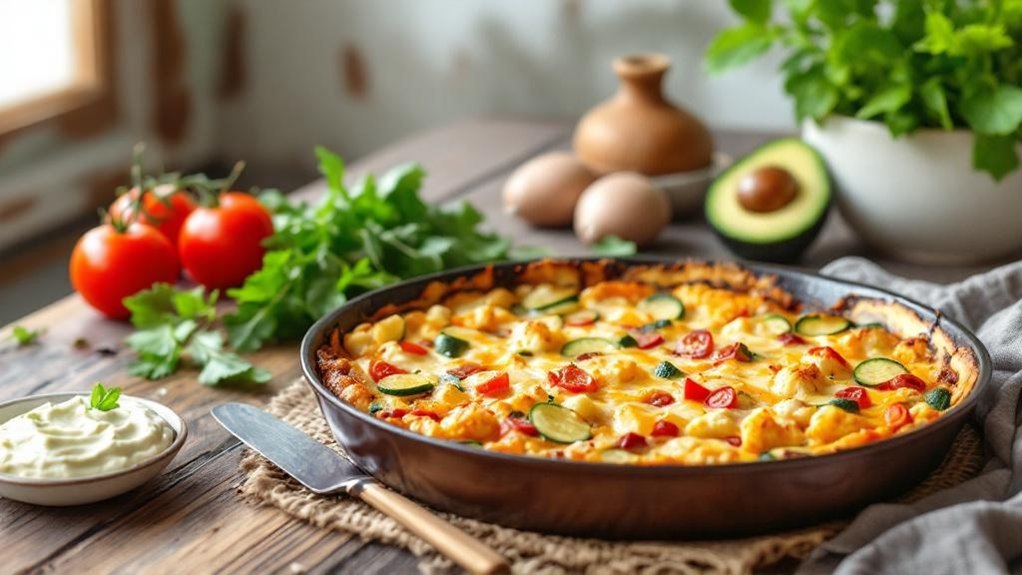
When traditional casseroles pack 35-50 grams of net carbs per serving, we’re faced with a choice: abandon these one-dish comfort meals or rebuild them strategically around low-carb foundations.
Our most successful casserole ideas start with vegetable bases: cauliflower rice (minimal carbs), zucchini slices (3g net carbs per cup), or spaghetti squash (5.5g net carbs per cup) replace pasta and rice effectively. We’ve found that layering shredded chicken (32g protein per serving) with broccoli florets (4g net carbs per cup) and cheddar cheese (1g net carb per ounce) creates satisfying texture.
These low carb variations demand specific technique: pre-steam cauliflower to prevent excess moisture, bake at 350°F for 25-30 minutes, then broil briefly for golden cheese toppings. Adding crispy bacon pieces brings both savory depth and textural contrast to vegetable-based casseroles. The result? One-dish meals delivering comfort without compromise.
Frequently Asked Questions
How Do Low-Carb Swaps Affect Blood Sugar Levels for Diabetics?
Low-carb swaps help stabilize blood sugar management by reducing glucose spikes that trigger insulin demands. We’ve found diabetes-friendly recipes using vegetable alternatives and plant-based ingredients offer sustainable A1C improvements while letting you enjoy familiar comfort foods safely.
Can I Meal Prep Low-Carb Comfort Foods for the Week?
Meal prep works wonderfully for low-carb comfort foods. We recommend batch-cooking protein-rich dishes like cauliflower-based casseroles or zucchini lasagna on weekends. They’ll stay fresh in portioned containers, supporting your blood sugar management throughout the week.
Are Low-Carb Alternatives Safe for Children and Pregnant Women?
We recommend consulting healthcare providers about child nutrition and pregnancy safety before making dietary changes. During pregnancy, balanced carbohydrate intake supports fetal development, while children need adequate carbs for growth. Medical guidance guarantees proper nutritional balance.
How Many Carbs Should I Eat Daily on Low-Carb Diet?
We recommend a daily intake of 50-150g carbs depending on your goals. Carb counting helps track your progress—20-50g for ketogenic, 100-150g for moderate low-carb. We’re here to support your personalized nutrition journey together.
Do Low-Carb Swaps Cost More Than Traditional Comfort Food Ingredients?
Yes, we’ll find that many low-carb specialty ingredients cost more in direct cost comparison—almond flour runs $8-15 per pound versus traditional flour under $1. However, strategic ingredient sourcing using whole foods, frozen vegetables, and bulk purchasing greatly reduces expenses.
Conclusion
We’ve shown you how simple swaps can transform your favorite comfort foods into blood sugar-friendly meals. The evidence supports these alternatives: research consistently demonstrates that reducing refined carbohydrates while increasing fiber-rich vegetables helps improve glycemic control. You don’t need to abandon the foods that bring you joy—you’re simply giving them a nutritious upgrade. Start with one or two swaps that appeal to you most, and gradually build your low-carb comfort food repertoire. We’re confident you’ll find these alternatives surprisingly satisfying.