

Diabetes and periodontal disease share a bidirectional relationship where each condition considerably influences the other’s progression. We’ve observed that diabetic patients face a 24% increased risk of developing periodontitis, while severe gum infections elevate HbA1c levels and compromise glycemic control. The mechanism involves inflammatory cytokines like IL-6 and TNF-α that disrupt insulin signaling, while hyperglycemia impairs neutrophil function against oral bacteria. Periodontal treatment reduces HbA1c by an average of 0.43 percentage points, potentially decreasing diabetes complication risks by 15%. Understanding these biological mechanisms and treatment implications reveals why coordinated dental-medical care proves essential for ideal health outcomes.
Key Takeaways
- Diabetic patients have nearly twice the prevalence of periodontitis compared to non-diabetics, with 58% affected.
- Periodontal treatment reduces HbA1c by an average of 0.43%, potentially decreasing diabetes complication risks by 15%.
- Gum infections trigger inflammatory cytokines that disrupt insulin signaling, worsening blood sugar control.
- High blood glucose weakens immune defenses, allowing periodontal infections to intensify and progress.
- Coordinating dental and medical care improves both glycemic control and periodontal health outcomes significantly.
Understanding the Two-Way Relationship Between Diabetes and Periodontal Disease
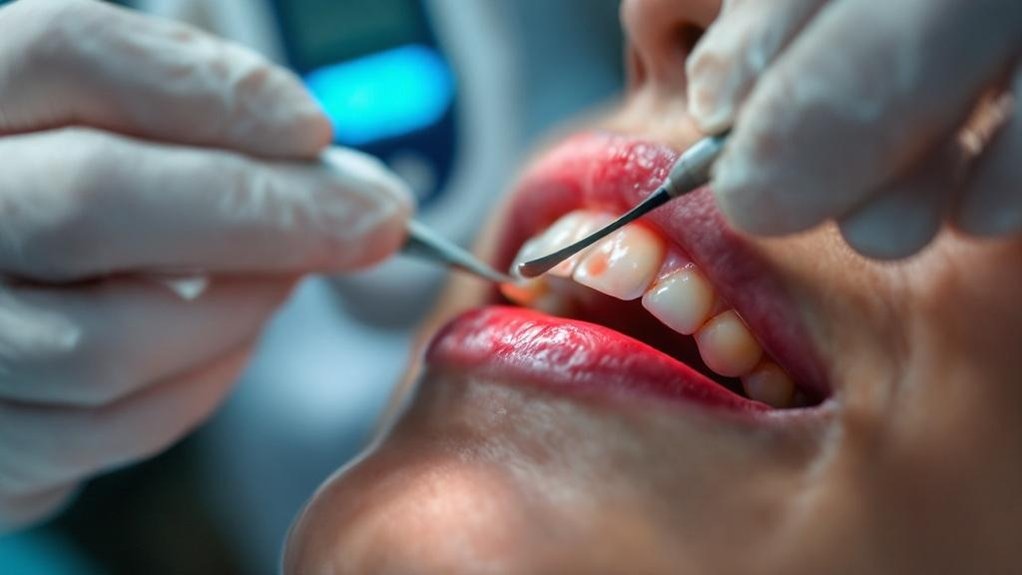
While the connection between oral health and systemic disease has gained increasing scientific recognition, the relationship between diabetes and periodontal disease represents one of the most thoroughly documented and clinically significant bidirectional associations in modern medicine. Research demonstrates that diabetic patients face a 24% increased risk of periodontitis onset and progression, with nearly twice the prevalence compared to non-diabetic individuals. Conversely, severe periodontitis negatively impacts glycemic control through systemic inflammatory pathways, elevating HbA1c levels and increasing risk of poor diabetes management. This reciprocal relationship operates through mechanisms involving altered immune function, neutrophil activity changes, and cytokine interactions. For diabetes awareness and effective periodontal prevention, we must recognize that managing one condition directly influences the other’s progression and overall health outcomes. Diabetes patients experience more severe periodontal tissue destruction compared to non-diabetic individuals, with poor glycemic control linked to increased disease recurrence.
How Periodontal Treatment Improves Blood Sugar Control
Although the bidirectional relationship between periodontitis and diabetes has been well-established, the critical question for clinical practice centers on whether treating gum disease actually improves glycemic control. The evidence is compelling: periodontal intervention reduces HbA1c by an average of 0.43 percentage points (95% CI: -0.59% to -0.28%), based on moderate-certainty evidence from a Cochrane review of 30 trials involving 2,443 participants. This glycemic reduction typically manifests 3-4 months post-treatment and can be sustained up to 12 months. Patients with poorer baseline control (HbA1c >9%) experience even greater improvements, with reductions reaching 0.6%. While seemingly modest, this 0.43% reduction may decrease diabetes complication risks by approximately 15%, making non-surgical periodontal therapy a clinically significant component of thorough diabetes management. The primary treatment approach involves subgingival instrumentation, scaling, and root planing, which directly addresses the gum inflammation and infection characteristic of periodontitis.
The Biological Connection: Why Gum Infections Affect Glucose Levels

The remarkable efficacy of periodontal treatment in reducing HbA1c levels raises an important scientific question: what specific biological mechanisms link oral bacterial infections to systemic glucose dysregulation?
We’ve identified several critical pathways. Periodontal pathogens like Porphyromonas gingivalis enter your bloodstream through inflamed gum tissue, releasing bacterial toxins that directly impair insulin function. These infections trigger elevated inflammatory cytokines—particularly IL-6, TNF-α, and IL-1β—which interfere with normal insulin receptor signaling throughout your body.
Simultaneously, high blood glucose creates immune dysfunction, impairing neutrophil activity and reducing your body’s ability to combat oral bacteria. This creates a destructive cycle: hyperglycemia weakens immune defenses, allowing periodontal infection to intensify, which then releases more inflammatory mediators that further disrupt glucose control. The formation of advanced glycation end-products from elevated blood sugar damages both gum and bone tissues, perpetuating the inflammatory cascade that undermines glycemic stability.
Prevalence of Gum Disease Among People With Diabetes
Epidemiological data reveals a striking disparity in periodontal disease burden between diabetic and non-diabetic populations. We observe a weighted prevalence of 58.0% among U.S. adults with diabetes compared to 37.6% for those without diabetes—gum disease statistics that underscore diabetes complications extending beyond glucose management. Clinical studies demonstrate more than 95% of type 2 diabetic patients exhibit some periodontal destruction. After controlling for sociodemographic factors and smoking status, people with diabetes show 39% higher likelihood of developing periodontal disease (aOR 1.39; 95% CI, 1.17–1.65). Severity distribution among type 2 diabetic patients reveals: 4.9% no periodontitis, 30.9% mild, 51.1% moderate, and 13.1% severe. Research from North India shows that among diabetic patients with good oral hygiene, severe periodontitis prevalence remains as low as 0.8%, while those with poor hygiene face rates of 29.4%. This evidence confirms our community faces substantially elevated periodontal risk requiring proactive intervention.
Daily Oral Care Practices That Support Diabetes Management
While glycemic control remains the primary focus of diabetes management, we’ve identified daily oral care practices as essential interventions that directly influence blood sugar regulation. Our research confirms that consistent oral hygiene routines—particularly twice-daily brushing and daily interproximal cleaning—disrupt the inflammatory cycle between oral infections and impaired insulin signaling. We recommend proper flossing technique using a C-shaped curve around each tooth, though interproximal devices serve as effective alternatives for our community members. These self care behaviors address the elevated periodontal disease risk we face collectively. Systematic reviews demonstrate that targeted oral health education enhances glycemic outcomes, while non-surgical periodontal treatment produces clinically significant HbA1c reductions. Regular self-assessment protocols enable early detection of gum health changes that may reflect blood sugar fluctuations. Healthcare personnel should develop knowledge of oral health related to diabetes to provide comprehensive patient support.
Coordinating Dental and Medical Care for Better Health Outcomes
When medical and dental professionals operate in isolated silos, adults with diabetes face fragmented care that compromises both glycemic control and periodontal health outcomes. We’ve observed that collaborative care models utilizing Health Information Exchange systems enable dentists to document oral findings and share critical data with physicians managing diabetes treatment. This health communication reduces barriers—adults with diabetes currently see dentists less frequently than medical providers (86.3%), despite periodontal disease occurring 2-3 times more often in this population. Integrated approaches yield measurable benefits: periodontal treatment reduces HbA1c levels considerably at three and six months, while lowering annual medical costs by $900-$2,840 per patient. When your dental and medical teams coordinate systematically, you receive thorough diabetes management that addresses both metabolic and oral health simultaneously. Poor glycemic control correlates with higher periodontal disease risk, with odds ratios ranging from 1.56 in well-controlled diabetes to 2.9 in poorly controlled cases.
Frequently Asked Questions
Does Dental Insurance Typically Cover Periodontal Treatment for Diabetic Patients?
Periodontal coverage varies considerably by plan, though diabetic eligibility may expand benefits when treatment’s medically linked to glucose management. We recommend verifying your specific policy’s provisions, as dental plans typically cover scaling procedures at 70-80% after deductibles.
Can Diabetes Medications Affect Oral Health or Saliva Production?
Yes, diabetes medications can considerably impact your oral health through medication-induced xerostomia and hyposalivation. We’ve observed that medication impact on saliva changes creates conditions favoring bacterial overgrowth, candidiasis, and increased periodontal disease risk requiring careful management.
How Often Should People With Diabetes Visit Their Dentist?
We recommend dental appointments every three to four months for ideal diabetes management. This increased frequency compared to the general population’s biannual visits helps us monitor gum health closely and maintain better glycemic control together.
Are Electric Toothbrushes More Effective Than Manual Ones for Diabetics?
Yes, electric toothbrushes deliver superior plaque reduction—21% after three months versus manual alternatives. Electric toothbrush benefits include automated precision movements and built-in timers, while manual toothbrush drawbacks involve inconsistent technique and reduced effectiveness for those managing diabetes.
What Are Early Warning Signs of Gum Disease in Diabetics?
Early gum sensitivity symptoms include bleeding when brushing, redness, swelling, and persistent bad breath. We recommend monitoring these signs closely, as diabetic oral hygiene requires vigilant attention to prevent progression of periodontal disease complications.
Conclusion
We’ve examined the bidirectional pathophysiology linking periodontal disease and glycemic control—inflammation-mediated insulin resistance, cytokine cascades, and bacterial endotoxin effects on glucose metabolism. The evidence demonstrates that appropriate periodontal therapy can reduce HbA1c levels by 0.4-0.7%, comparable to adding a second oral hypoglycemic agent. We must integrate oral health surveillance into our thorough diabetes care protocols. Regular periodontal assessments, meticulous home hygiene, and coordinated interdisciplinary treatment aren’t optional—they’re essential components of evidence-based diabetes management that directly impact our metabolic outcomes.