

Consider upgrading your glucose meter when you notice inconsistent readings, physical damage, or frequent errors. Modern meters offer Bluetooth connectivity, smartphone integration, and enhanced accuracy that align with ISO standards. Look for features that support structured monitoring programs, which are clinically proven to improve A1C levels. Your ideal meter should match your lifestyle needs and technical comfort level. The following guide explores how the right technology choice can transform your diabetes management experience.
Key Takeaways
- Consider upgrading your meter when readings are inconsistent or don’t match symptoms despite proper maintenance.
- Look for modern features like smartphone connectivity, automatic data syncing, and integration with health management apps.
- Choose meters that meet ISO 15197:2013 accuracy standards with at least 95% of readings within specified ranges.
- Evaluate continuous glucose monitoring systems if you need more comprehensive data without frequent fingersticks.
- Select a device that supports structured monitoring with customizable alerts and data visualization for improved diabetes management.
Signs Your Blood Glucose Meter Needs Replacing

How can you tell when it’s time to replace your glucose meter? Watch for inconsistent readings that don’t align with your symptoms or expected values based on your diet and medication. If you’re experiencing symptoms of hypo- or hyperglycemia that your meter doesn’t reflect, this signals potential issues.
Your meter’s typical lifespan is 4-5 years, but physical damage like cracked displays, sticky buttons, or damaged test strip ports are clear replacement tips. Frequent error messages or unexplained shutdowns that persist despite new batteries also indicate it’s time for an upgrade. Consider upgrading to a continuous glucose monitor which estimates glucose levels automatically throughout the day and night, providing real-time data without frequent finger sticks. The Dexcom G6 Transmitter Kit offers a compact and seamless solution for continuous glucose monitoring.
Don’t ignore declining accuracy that continues after proper maintenance. When your healthcare needs change—whether due to vision impairments or requirements for better data tracking—upgrading guarantees you remain empowered in managing your diabetes effectively.
Key Features of Modern Glucose Monitoring Technology
Modern glucose monitors offer advanced connectivity features that sync your readings wirelessly to smartphones and cloud platforms for thorough data tracking. Enhanced color indicators provide intuitive visual feedback on glucose levels, helping you quickly identify readings that require attention. These devices now integrate with broader health management systems, allowing your glucose data to work alongside other metrics like activity levels, medication schedules, and dietary information. The latest continuous glucose monitoring systems eliminate the pain of traditional fingersticks, resulting in better testing adherence among diabetes patients. Additionally, the Accu-Chek Guide Blood Glucose Meter features Bluetooth connectivity for automatic syncing, enhancing the overall monitoring experience.
Advanced Connectivity Features
Today’s glucose monitoring devices offer unprecedented connectivity options that transform diabetes management. With wireless connectivity, your meter can instantly sync readings to smartphone apps via Bluetooth, providing easy access to your glucose data anytime. This smartphone integration enables immediate sharing with healthcare providers, facilitating personalized treatment adjustments without office visits.
Modern systems support remote monitoring features, allowing family members or caregivers to follow your glucose patterns in real-time. Many devices now offer customizable alerts for high and low readings, ensuring timely intervention when needed. Some advanced CGMs even connect directly to smartwatches, eliminating the smartphone middleman for viewing your data. Top-tier CGM systems like Dexcom G7 can connect with automated insulin delivery systems to improve glucose management. These connectivity innovations not only simplify data tracking but create a supportive ecosystem where managing your diabetes becomes more collaborative and less isolating.
Enhanced Color Indicators
While interpreting blood glucose readings traditionally required patients to remember target ranges and mentally categorize their results, enhanced color indicators have revolutionized this process by providing instant visual feedback.
Systems like ColorSure Technology use intuitive blue, green, and red indicators to show when readings are low, in-range, or high. These color coded benefits greatly improve patient decision-making, particularly for those with low numeracy skills. Modern glucose meters like OneTouch Verio Flex allow for customizable range limits based on healthcare provider recommendations. Clinical studies demonstrate that patients using meters with color indicators experience notable HbA1c reductions—up to 0.59% for Type 1 diabetics—without medication changes or increased testing frequency.
Nearly 90% of users report easier interpretation of results, reducing anxiety and cognitive load while enhancing confidence in self-management. This visual feedback simplifies the monitoring process, allowing you to focus on taking appropriate actions rather than interpreting numbers.
Data Integration Solutions
Data integration solutions have fundamentally transformed glucose monitoring from isolated readings into thorough health management systems. Your meter’s ability to sync with smartphones, EHR systems, and insulin delivery devices creates a detailed picture of your diabetes management.
Modern systems use standardized protocols to guarantee seamless data exchange while maintaining accuracy across platforms. You’ll benefit from seeing your glucose trends alongside medication dosing, carbohydrate intake, and activity levels—all protected by advanced security measures compliant with HIPAA and GDPR regulations.
Despite integration challenges such as cross-device compatibility, today’s solutions offer blockchain technology and smart contracts to maintain data accuracy while giving you control over information sharing. When selecting a new meter, prioritize one that connects with your preferred apps and healthcare provider’s systems for truly personalized care. The integration of AI and CGM technologies enhances early detection of critical glucose ranges that might otherwise go unnoticed with traditional testing methods.
Understanding Color Range Indicators (CRI) and Their Benefits
Modern blood glucose meters use Color Range Indicators (CRI) to transform numerical readings into intuitive visual cues, making glucose management more accessible for diabetic patients. This color coding system—blue for low, green for normal, and red for high glucose levels—reduces cognitive load when interpreting your results. Additionally, devices like the Contour Next EZ Glucose Meter provide fast results and user-friendly features, enhancing the overall experience for individuals managing their diabetes.
Studies demonstrate CRI considerably improves glucose comprehension, particularly for those with limited numeracy skills. Patients using CRI-enabled meters show measurable improvements in glycemic control, with A1c reductions averaging 0.36% overall and up to 0.59% in type 1 diabetics. Research shows that patients generally preferred acting on high glucose results shown with color compared to those without color indicators.
The system integrates seamlessly with mobile applications via Bluetooth, enhancing your ability to track patterns and make informed decisions. When results are displayed with color, you’re more likely to take appropriate corrective actions—a simple yet powerful tool for better diabetes management.
The Importance of Structured Monitoring Programs

Structured blood glucose monitoring programs provide you with consistent, actionable data that improves clinical outcomes compared to random or sporadic testing. Your adherence to a prescribed testing schedule enables pattern recognition and allows you to make informed treatment adjustments based on reliable trends. Research shows that this systematic approach markedly improves HbA1c levels, increases time in range, and enhances your overall quality of life through better glycemic control. Evidence demonstrates that implementing structured monitoring with evidence-based prescriptions of blood glucose profiles can lead to significant A1C reduction while minimizing risks of diabetes complications. Additionally, utilizing advanced continuous glucose monitoring systems can further enhance your understanding of glucose trends throughout the day.
Data-Driven Decision Making
While most diabetes patients recognize the need for blood glucose monitoring, the difference between casual testing and following a structured monitoring program can greatly impact health outcomes.
Data accuracy becomes the foundation for effective management when you follow specific testing schedules designed for your treatment regimen. Research confirms that structured monitoring yields an additional 0.23-0.28% reduction in A1C compared to unstructured approaches. This provides you with a reliable decision framework for medication adjustments and lifestyle changes.
A recent study demonstrated that poorly controlled, insulin-naive type 2 diabetes patients using structured SMBG intervention showed significantly greater A1C reductions compared to those receiving usual care. Digital tools like CGM systems and diabetes apps can enhance your monitoring program, making pattern recognition easier and more actionable. When you share this structured data with your healthcare provider, it facilitates more personalized treatment adjustments, improving both glycemic control and your emotional well-being by reducing diabetes distress.
Consistency Yields Results
The power of consistency becomes clear when you examine the outcomes of structured blood glucose monitoring programs. Following a prescribed testing schedule yields considerably better results than random checks, with studies showing additional A1C reductions of 0.23% to 0.28%.
These consistency benefits extend beyond numbers. When you commit to regular monitoring frequency, you’ll experience improved diabetes knowledge, enhanced self-management skills, and reduced diabetes-related distress. Clinical guidelines have moved away from recommending routine SMBG use for non-insulin-treated patients due to limited benefits and added burden. The structured approach creates actionable patterns that both you and your healthcare provider can use to make informed treatment adjustments.
Remember that structure doesn’t mean burden—it means purpose. By transforming random data points into meaningful patterns, you’ll make more effective decisions about medication, diet, and lifestyle changes, ultimately improving both glycemic control and quality of life.
Connectivity Options: Bluetooth and App Integration
Modern blood glucose meters offer advanced connectivity features that transform diabetes management. Bluetooth advantages include wireless transmission of readings directly to your smartphone, eliminating manual data entry and reducing errors. This technology enables real-time sharing with your healthcare providers, supporting remote monitoring and timely treatment adjustments.
App features enhance your diabetes self-care through thorough data visualization with graphs and averages. You’ll benefit from personalized insights as these apps correlate your glucose patterns with lifestyle factors through event tagging. Many provide helpful reminders for testing schedules and allow you to export detailed reports for your care team. The integration of TeleRPM BGM technology allows doctors to effectively manage patients’ blood sugar levels through continuous monitoring.
With Bluetooth SMART® connectivity transferring data in as little as 4-5 seconds, these integrated systems streamline your monitoring routine while building a complete picture of your glucose management over time.
Accuracy Standards and Clinical Validation

Understanding accuracy standards remains essential when selecting a blood glucose meter for effective diabetes management. The gold standard, ISO 15197:2013, requires at least 95% of readings to fall within ±15 mg/dL for glucose levels below 100 mg/dL or ±15% for higher concentrations.
When evaluating meters, look for those that have undergone rigorous clinical validation protocols comparing their results to laboratory reference methods. High-quality meters demonstrate strong correlation coefficients (ideally ≥0.99) with minimal bias in Bland-Altman analyses.
Consider how meters perform with potential interfering factors relevant to your situation, such as medications or hematocrit variations. Some meters are unsuitable for critical care settings due to interfering substances that can significantly affect measurement accuracy. Remember that meters validated for general use may require additional testing for specialized populations or clinical settings. Your healthcare team can help interpret these standards to guarantee you’re using a meter that delivers consistently reliable results.
Making Sense of Glucose Metrics: GMI, Time in Range, and More
How do you interpret the wealth of data provided by continuous glucose monitoring (CGM) systems? Understanding key metrics transforms raw numbers into actionable insights for your diabetes management.
The Glucose Management Indicator (GMI) estimates your average blood glucose as an A1c-equivalent percentage, offering more immediate feedback than lab tests. Dexcom G7 provides continuous readings every 5 minutes, further enhancing your ability to monitor trends in real time. Time in Range (TIR) significance cannot be overstated—it measures the percentage of time your glucose stays within 70-180 mg/dL, with higher TIR correlating with fewer complications. The standardized Ambulatory Glucose Profile provides a visual tool for identifying problem areas in your glucose management.
Pay attention to Time Above Range (TAR) and Time Below Range (TBR), which quantify hyperglycemia and hypoglycemia respectively. For stable glucose control, aim for glycemic variability (CV) below 36%. For reliable GMI interpretation, make certain you’re collecting at least 14 days of data with 70% or more capture rate.
User-Friendly Design Elements That Matter

When selecting a glucose meter, you’ll want to take into account display visibility features like backlit screens and high-contrast numbers that can greatly influence your testing experience. Intuitive strip handling elements, including wide dosing areas and automatic strip ejectors, reduce errors and make daily testing less frustrating. Simple data navigation through tactile buttons and straightforward menu systems guarantees you can access your readings quickly, which is especially important for users with limited dexterity or visual impairments. The On Call Extra Voice model offers tactile features specifically designed for easier navigation through menus and settings for those with visual challenges. Additionally, consider a meter like the Accu-Chek Guide ME that supports alternative-site testing, providing you with more options for comfortable monitoring.
Display Visibility Features
Five critical visibility features can make or break your glucose monitoring experience, especially if you have visual impairments. High-contrast displays with optimized font sizes between 18-60 points greatly improve readability and reduce errors when checking glucose readings.
Look for meters offering customizable display contrast settings and the option to switch between color schemes like black text on light backgrounds or white text on dark backgrounds. Many modern meters include audio feedback features that verbalize your results, eliminating the need for visual reading altogether. The Prodigy Voice stands out as a breakthrough model that speaks all information displayed on screen, providing comprehensive accessibility.
Well-designed meters also incorporate tactile controls with distinct shapes and textures, allowing operation by touch alone. Large, color-contrasted buttons further enhance usability. When evaluating meters, prioritize those with simplified screen layouts that emphasize key data without visual clutter.
Intuitive Strip Handling
The design of test strip handling systems can make a significant difference in your daily diabetes management experience. Today’s meters feature thoughtful strip design elements that minimize common frustrations and errors.
Look for meters with clearly marked sample application zones and guides that facilitate proper strip alignment. Automated strip recognition technology eliminates guesswork during insertion, while one-handed operation capabilities accommodate real-life testing scenarios. The best systems include thorough user instructions that explain proper handling techniques.
Quality strips incorporate wicking materials that efficiently absorb precise blood volumes and resist environmental factors like moisture and temperature variations. Some innovative designs use filter paper as a base material that effectively manages blood sample distribution. Consider meters with strip ejection features that prevent blood contact after testing. These design considerations not only improve accuracy but also make the testing process more seamless for everyone managing diabetes.
Simple Data Navigation
Modern glucose meters boast intuitive data navigation systems that transform complex readings into actionable insights at a glance. You’ll appreciate dashboards that display summarized glucose trends with visual graphs rather than overwhelming numbers.
Look for meters offering configurable interfaces where you can select specific time periods for review—whether 14-day or 30-day summaries. Simple navigation pathways allow you to access your data through multiple routes, accommodating different preferences and abilities.
The best devices empower you through interactive elements that provide immediate feedback on readings. Large, clear fonts make values instantly recognizable, while automated data handling reduces manual entry burden. With wireless connectivity options, your readings can seamlessly transfer to smartphone apps, creating thorough records that help you and your healthcare team make informed decisions.
Maintaining Meter Performance and Reliability

Proper maintenance of your glucose meter guarantees you’ll receive accurate readings consistently, which is essential for effective diabetes management. Regular cleaning with a lint-free cloth prevents dust and dried blood from interfering with your device’s sensors. Use only manufacturer-approved disinfectants to protect the meter’s integrity while ensuring proper meter hygiene.
Store test strips in their original container and cap immediately after use to prevent exposure to humidity. Perform routine calibration checks with both high and low control solutions weekly to verify your meter’s accuracy across glucose ranges. When readings seem inconsistent with how you’re feeling, recheck your glucose level. Additionally, ensure you are using Accu-Chek Guide Test Strips for reliable performance and compatibility with your meter.
Inspect your meter annually for physical damage and store it safely when not in use. Remember to maintain charged spare batteries to avoid unexpected downtime.
Comparing Technology: BGM vs. CGM Solutions
Understanding the differences between traditional Blood Glucose Meters (BGM) and Continuous Glucose Monitoring (CGM) systems can help you make informed decisions about your diabetes management technology.
While BGMs provide accurate snapshots of your glucose at specific moments, their limitations include missing fluctuations between readings and requiring multiple painful fingersticks daily. In contrast, CGM benefits include real-time data every few minutes (approximately 288 readings daily), trend arrows showing glucose direction, and alerts for high or low levels—often before they become problematic. Additionally, CGMs like the Dexcom G7 offer real-time glucose readings that empower users to proactively manage their diabetes.
CGMs reduce fingerstick frequency, allow for discreet monitoring, and improve clinical outcomes through increased Time-in-Range. Though CGMs typically cost more initially, many users find the extensive data and reduced discomfort worth the investment for better diabetes control.
Personalizing Your Glucose Monitoring Approach
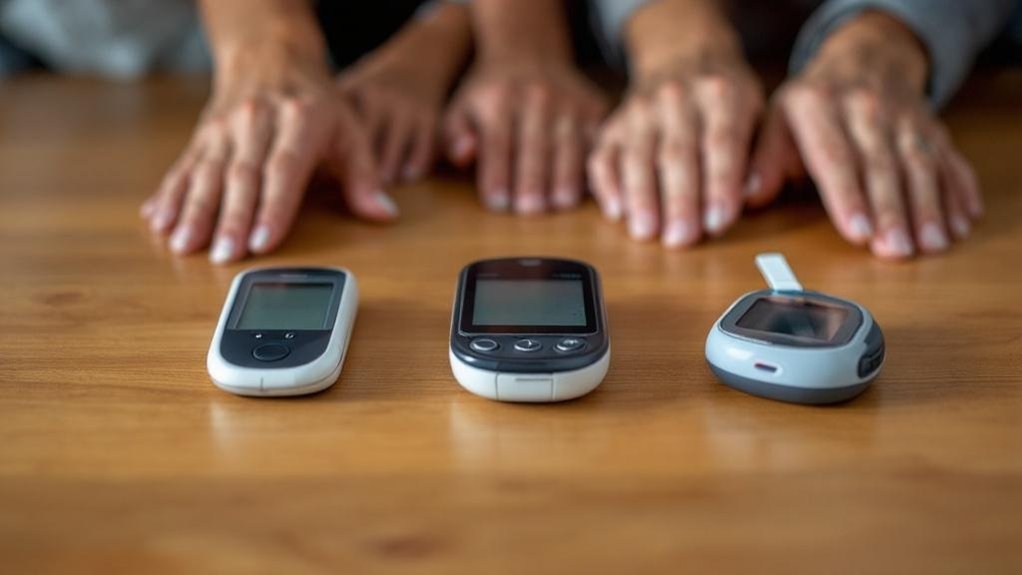
While diabetes management tools have advanced considerably, the deeply personal nature of glucose response means that your monitoring strategy should be as unique as you are. Research confirms that individuals respond differently to identical meals and daily routines, making personalized monitoring essential for peak control.
Your approach might combine traditional blood glucose meters with periodic CGM use to develop adaptive strategies tailored to your specific patterns. Machine learning algorithms can now analyze your monitoring data alongside meal information to predict glucose excursions with remarkable accuracy. These personalized insights allow for just-in-time interventions that prevent unwanted spikes. Consider incorporating a continuous glucose monitoring system like the Dexcom G7 for real-time data and predictive alerts that enhance your diabetes management.
Consider working with your healthcare provider to determine which combination of monitoring technologies best addresses your unique glycemic variability, lifestyle needs, and management goals.
Frequently Asked Questions
Are Blood Glucose Meters Covered by Insurance or Medicare?
Yes, your blood glucose meter is typically covered by insurance coverage and Medicare benefits. You’ll generally pay 20% coinsurance under Medicare Part B after meeting your deductible, with specific eligibility requirements.
Can Multiple Family Members Share One Glucose Meter?
No, you shouldn’t share blood glucose meters with family members. Shared usage poses infection risks as meters can harbor blood residues. For your family’s safety, each person needs their own meter with proper meter hygiene.
How Do Temperature Extremes Affect Meter and Strip Accuracy?
Temperature extremes greatly impact your meter and strip accuracy. When exposed to heat or cold, you’ll experience accuracy issues as reagents degrade, potentially leading to incorrect readings that affect your treatment decisions.
Do Travel Restrictions Apply to Blood Glucose Monitoring Supplies?
You’re exempt from typical travel regulations like the 3.4-ounce liquid restriction for diabetes medications. While there are no supply limitations, you’ll need to declare your glucose monitoring equipment during screening.
How Often Should Control Solution Testing Be Performed?
You should perform control solution testing weekly, when opening new test strips, after meter damage, or when readings seem suspicious. This frequency guarantees your testing accuracy remains reliable for your glucose management.
Conclusion
You’ve now armed yourself with the information to assess when it’s time to replace your glucose meter and what features to prioritize. Remember that your device should adapt to your evolving needs. Regular evaluation of your monitoring technology isn’t just about having the latest model—it’s about optimizing your diabetes management with tools that provide accurate, accessible data for informed healthcare decisions.