

We’ve compiled the most effective diabetes management strategies, including extending CGM sensor life through strategic placement, implementing DIY closed-loop systems with open-source apps, and optimizing pre-exercise insulin algorithms. Other proven hacks include carbohydrate sequencing to reduce glucose excursions by 28%, weight-based carb calculations for activity, and continuous ketone monitoring for early DKA prevention. These evidence-based approaches can transform daily management while maximizing technology investment and improving outcomes.
Key Takeaways
- Extend CGM wear time by using strategic placement, overlapping adhesives, and proper skin preparation techniques.
- Adjust insulin doses 90-120 minutes before exercise, reducing pre-meal insulin by 25-50% to prevent hypoglycemia.
- Sequence meals by eating protein and vegetables before carbohydrates to reduce glucose excursions by up to 28%.
- Implement 3-minute walking breaks every 30 minutes to improve time in range and glucose stability.
- Calculate personalized carbohydrate needs using weight-based formulas (0.25g/kg/hr) for optimal exercise fueling.
Extending CGM Wear Time to Maximize Sensor Life
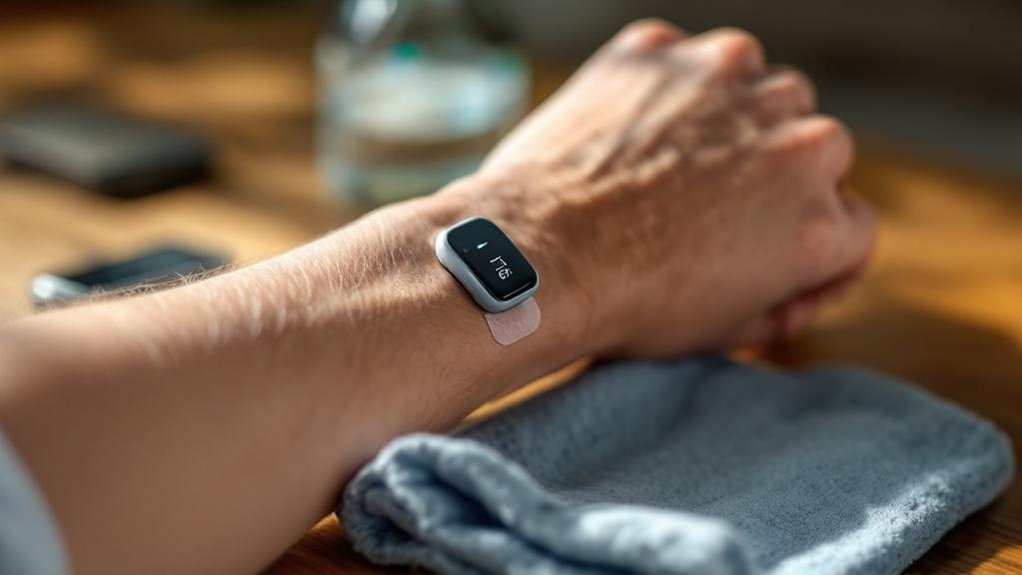
While continuous glucose monitors (CGMs) are designed with specific wear durations, understanding how to safely extend their lifespan can provide considerable cost savings for diabetes management.
Most CGMs offer 7-15 day wear times, but your usage patterns greatly impact optimization. We’ve found weekday compliance (Monday-Thursday) typically exceeds weekend rates, with seasonal adjustments needed during summer months when adhesive may fail more frequently. For best results, consider strategic sensor placement away from areas of frequent movement and employ overlapping adhesive strategies using skin preparation products. The upper arm placement recommended by manufacturers like Dexcom typically provides optimal sensor stability and accuracy.
Patient characteristics account for over 50% of sensor performance variability, so track your individual wear patterns. Monitoring techniques like consistent transmitter recharging (minimum 10 minutes daily) and understanding your unique time delays can dramatically improve wear time beyond manufacturer specifications while maintaining accuracy. Research shows that CGM consistency tends to be disrupted in warmer months from May to July, so plan accordingly with extra adhesive or backup sensors during this time.
Building a DIY Closed-Loop System With Open-Source Apps
We’ll examine the essential hardware components needed for DIY closed-loop systems, including compatible pumps, CGMs, and smartphones that work with open-source applications like AndroidAPS and Loop. These systems enable entirely autonomous insulin delivery with better glycemic control than manual methods. When troubleshooting common issues, users should verify software versions, check device connectivity, and maintain backup supplies for system failures. A thorough risk-benefit assessment framework helps patients evaluate whether the potential improvements in glycemic control outweigh the technical challenges and absence of commercial support.
Hardware Requirements Overview
Building a DIY closed-loop system requires specific hardware components working in harmony to create an automated insulin delivery system. We’ll need compatible CGM sensors (like Dexcom G6 or Guardian Sensor 3) that provide real-time glucose measurements with predictive accuracy for algorithm efficiency. The insulin pump must support automatic basal adjustments based on CGM data—either tethered systems with tubing or tubeless patch pumps offer reliable insulin delivery options. These systems function similarly to commercial advanced hybrid closed-loop technologies that have been shown to improve time in target glucose range.
Integration challenges arise when connecting the algorithm processing unit, which calculates corrections based on glucose trends and insulin on board. Your connectivity solutions should include smartphone compatibility for remote monitoring. The user interface must allow manual overrides when needed, while hardware durability guarantees automation reliability in daily use. When these components work together, they maintain glucose levels between 70-180 mg/dL through intelligent basal adjustments.
Troubleshooting Common Issues
Even with carefully selected hardware components, DIY closed-loop systems frequently encounter technical challenges that require systematic troubleshooting. We’ve found that algorithm calibration issues often manifest when insulin-on-board calculations don’t match actual glucose responses, requiring adjustment of pharmacokinetic parameters to prevent hypoglycemic events.
Device compatibility problems typically arise during CGM data transmission or when integrating pumps with Android applications. When your system fails to complete the five-minute update cycle, check connection protocols between your smartphone and CGM first, then verify pump compatibility with your current software version. The strong global community of over 10,000 AAPS users provides valuable troubleshooting assistance through platforms like Facebook, Discord, and GitHub when technical issues arise.
Risk-Benefit Assessment Framework
When considering a DIY closed-loop insulin delivery system, patients must carefully weigh numerous technical and clinical factors within a structured risk-benefit framework.
We’ve found the algorithm safety benefits include transparent code verification and five-minute calculation cycles that optimize insulin delivery. Clinical outcome evaluation shows impressive results—A1C reductions from 7.5% to 6.6% and improved time-in-range metrics. However, DIY system risks include hardware compatibility challenges requiring specific pump and CGM models, plus operation outside FDA regulatory oversight implications.
The user community support provides invaluable troubleshooting and patient education resources through platforms like Nightscout and OpenAPS Data Commons. Open source innovation accelerates development cycles without commercial constraints, creating extensive management tools. The #WeAreNotWaiting hashtag reflects the patient community’s unwillingness to delay access to potentially life-changing technology. Before proceeding, assess your technical capabilities, compatible devices, and comfort with self-directed learning against potential clinical improvements.
Pre-Exercise Algorithm Adjustments for Optimal Performance
We recommend activating timing mode features in your diabetes management system 90-120 minutes before planned exercise to establish ideal glucose baseline conditions. For moderate aerobic activities, implementing adaptive bolus strategies that reduce pre-meal insulin by 25-50% can effectively minimize hypoglycemia risk while maintaining adequate coverage. CGM integration enables real-time algorithm adjustments that account for both insulin-independent and insulin-dependent glucose uptake mechanisms that persist for 24-48 hours post-exercise. The effectiveness of these approaches is further enhanced when combined with data balancing techniques like SMOTE and RUS, which have been shown to improve prediction accuracy in diabetes management systems.
Timing Mode Activation
For individuals managing diabetes during exercise, Timing Mode Activation represents a critical pre-workout strategy that optimizes glucose control through algorithmic adjustments to insulin delivery.
At Diabetic Supplies Hub, we recognize that timing strategies are essential for maintaining stable glucose levels during physical activity. While we don’t offer specific timing mode features in our products, we recommend discussing personalized algorithm adjustments with your healthcare provider to establish protocols for pre-exercise insulin modifications. Understanding how insulin binding triggers structural transitions necessary for proper receptor activation can help patients better manage their diabetes treatment regimens.
Performance optimization during workouts requires careful planning of when to check glucose levels, adjust insulin doses, and consume carbohydrates. Many of our customers find success by establishing consistent pre-exercise routines that incorporate glucose monitoring with our affordable testing supplies from trusted brands like Contour Next and FreeStyle Libre.
Adaptive Bolus Strategies
Adaptive bolus strategies represent a sophisticated approach to pre-exercise insulin management, leveraging algorithmic adjustments to compensate for the 31% increase in insulin sensitivity that typically occurs following aerobic activity. These fine-tuned modifications help normalize glycemic response during the critical 4-15 hour post-exercise window.
We’ve found that integrating insulin sensitivity adaptation (ISA) algorithms with smart bolus calculators markedly reduces hypoglycemia risk while maintaining target glucose ranges. For those on pump therapy, these adaptive systems track both immediate and delayed sensitivity changes, automatically adjusting insulin doses based on exercise duration and intensity. The incorporation of both ISA and ALPHA algorithms has demonstrated a remarkable 71.7% reduction in hypoglycemia time for patients with Type 1 diabetes.
Our community benefits most when combining insulin dose adjustments with strategic carbohydrate intake (0.75-0.85g/kg body weight), especially for adolescents who require additional carbohydrates 7-11 hours post-exercise to prevent late hypoglycemia episodes.
Strategic Carbohydrate Entry for Preventing Post-Meal Lows
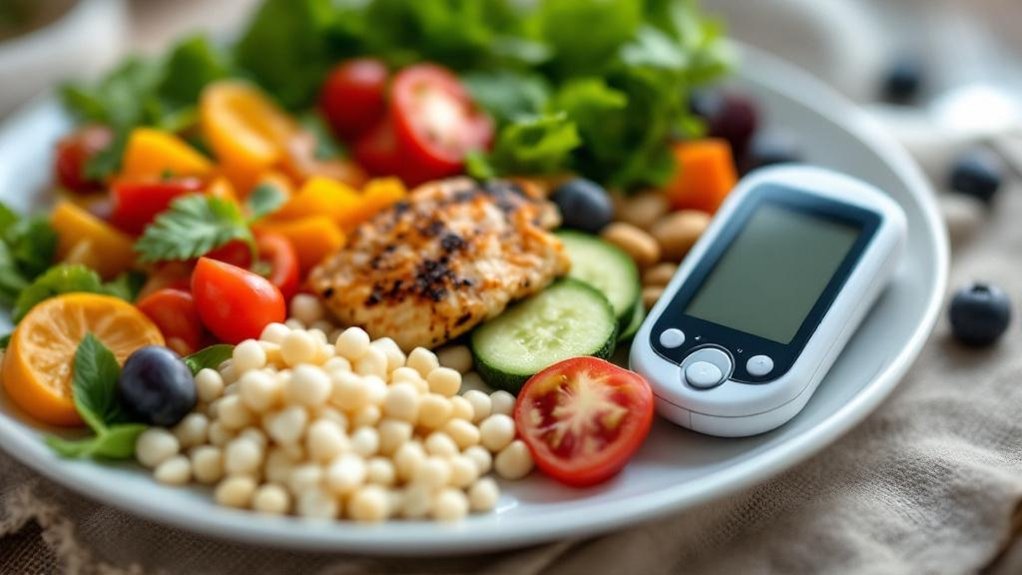
Although commonly overlooked, the sequence in which you consume carbohydrates during meals can significantly impact your post-meal glucose levels. Research shows that adopting a carbohydrate sequencing approach—consuming protein and vegetables before carbohydrates—can reduce glucose excursions by up to 28% over three hours.
We’ve found that incorporating a protein preload before carbohydrate-rich foods stimulates insulin and incretin hormone secretion while slowing gastric emptying. This strategic approach activates GLP-1 responses that enhance glucose regulation without requiring medication adjustments. A recent study demonstrated that consuming carbohydrates last in a meal resulted in 53% lower incremental area under the curve for glucose compared to eating carbohydrates first.
For ideal results, target 30-35 grams of carbohydrates per meal, primarily from vegetables and fruits. Remember, approximately 90% of dietary carbohydrates convert to glucose within 1-2 hours, so timing matters. We’re all working toward the same goal: stable blood sugar without the rollercoaster.
Weight-Based Carb Calculations During Physical Activity
We’ll explore how calculating carbohydrate needs based on your body weight provides precise fueling for exercise with diabetes. The formula typically multiplies body weight (kg) by activity-specific factors to determine total carbohydrates needed during physical activity. For moderate intensity workouts, experts recommend 0.25g/kg/hr as a reliable starting point. These calculations can be further refined using intensity measurements like heart rate zones or the Borg Scale to create personalized fueling strategies that prevent hypoglycemia while optimizing performance.
Weight Calculation Formula
When managing diabetes during exercise, calculating weight-based carbohydrate needs becomes essential for maintaining glycemic control. We recommend using the standard formula: weight in pounds divided by 4 equals your total daily insulin requirements. Alternatively, multiply your weight in kilograms by 0.55 for comparable results.
For precise insulin sensitivity adjustments during activity, we utilize the correction factor formula: 1800 divided by your total daily dose. This helps establish your personalized glucose response to insulin units administered. Remember that weight management directly impacts these calculations—as your weight changes, so do your insulin requirements. Always consult with your healthcare provider to determine your specific insulin-to-carb ratio for optimal management.
Our diabetes community finds that carbohydrate ratios should be adjusted during exercise periods. The 500 rule (500 ÷ total daily dose) provides an excellent starting point, but monitor closely as physical activity enhances insulin sensitivity.
Activity-Specific Fueling Guidelines
Depending on your activity type and duration, proper carbohydrate calculation becomes essential for maintaining ideal blood glucose levels during exercise. We recommend testing blood sugar 15-30 minutes before starting, especially if you’re on insulin or hypoglycemia-inducing medications.
For high-intensity workouts, consider reducing insulin doses slightly and adding extra carbohydrates beforehand. Activity timing relative to meals greatly impacts glucose response—physical activity after eating effectively reduces blood sugar levels.
Remember that intensity adjustment matters: vigorous activities require 75 minutes weekly versus 150 minutes for moderate intensity. For best glycemic control, distribute your exercise as 30-minute sessions five times weekly, and incorporate three-minute movement breaks every half hour of sitting.
We’ve found that consistent exercise timing—with sessions spaced no more than 48 hours apart—maximizes benefits for our diabetes community. Exercise increases GLUT4 proteins in muscles, improving glucose uptake even when insulin resistance is present.
Automating Insulin Delivery With Machine Learning Integration
As machine learning revolutionizes diabetes management, automated insulin delivery systems represent the cutting edge of technological advancement in this field. Neural network-based meal detection algorithms now achieve 83.3% sensitivity with a 16.6% false discovery rate, delivering insulin approximately 25 minutes after meal consumption—a timing that provides significant glucose control benefits. The SmartGuard technology enables automatic insulin adjustments based on continuous glucose monitoring data to minimize hypoglycemia risk.
Three primary insulin algorithms dominate current systems: proportional-integral-derivative control, model predictive control, and fuzzy-logic knowledge-based systems. The first commercial hybrid closed-loop artificial pancreas became available in 2018, but innovation continues at a rapid pace. Recent studies show the Rapid Automated Insulin Delivery (RAP) system significantly reduced time above range by 10.8% compared to hybrid model predictive control systems.
We’re particularly excited about digital twin technology, which creates cloud-based replicas of users for parameter optimization. In clinical trials, 72 of 77 participants completed a 6-month study using this approach, demonstrating its practical viability for personalized care.
CGM and Pump Placement Optimization for Accurate Readings
Ideal placement of continuous glucose monitoring (CGM) sensors and insulin pumps represents a critical factor in achieving accurate blood glucose readings and effective diabetes management. For best locations, remember that FDA approves specific anatomical considerations—Dexcom systems work on abdomen and upper arms, while FreeStyle Libre is approved exclusively for upper arms. The one hour warm-up ensures proper sensor initialization before delivering accurate measurements.
We’ve found rotation strategies greatly impact placement success. Alternating between approved sites prevents tissue damage while allowing 10-14 days before reusing locations minimizes accuracy challenges from scar tissue formation. These advanced monitoring systems provide up to 288 glucose readings per day, offering significantly more data than traditional finger-stick methods.
Environmental factors like temperature fluctuations and clothing friction can compromise adhesive performance. For consistent readings, select areas with adequate subcutaneous fat, minimal muscle movement, and consistent blood flow patterns. These considerations help maintain sensor stability and guarantee reliable glucose monitoring throughout your wear period.
Dual-Hormonal System Implementation for Better Control
The breakthrough of dual-hormone artificial pancreas systems represents a significant advancement in diabetes management by closely mimicking normal pancreatic function. By delivering both insulin and glucagon, these systems address the fundamental insulin-glucagon imbalance that characterizes Type 1 diabetes.
The dual hormone benefits extend beyond what insulin alone can achieve. Studies show these systems increase time in target glucose range while simultaneously reducing both hyper- and hypoglycemic episodes. The glucagon role is vital—it provides a counterregulatory safety net when blood glucose drops too low. Modern systems like the SmartGuard technology help optimize insulin delivery through automated adjustments and continuous monitoring. Current technologies aim to overcome the challenge of hormonal abnormalities that contribute to metabolic instability and glycemic variability in Type 1 diabetes patients.
We’re particularly excited about emerging technologies that combine ultra-rapid insulin analogs with temperature-responsive delivery systems. These innovations bring us closer to our shared goal: a physiologically balanced approach that eliminates clinically significant glucose excursions and helps you live life with greater freedom.
Continuous Ketone Monitoring for Early DKA Prevention
Recent developments in continuous ketone monitoring (CKM) technology have revolutionized how we approach diabetic ketoacidosis (DKA) prevention. This innovation measures interstitial ketones every 5 minutes via subcutaneous sensors, alerting users when levels exceed 1.0 mmol/L.
We’ve seen CKM’s effectiveness in high-risk populations, including Type 1 patients, pregnant women, and those taking SGLT2 inhibitors. A recent clinical case demonstrated how CKM helped a 55-year-old male with type 1 diabetes avoid hospitalization when his insulin pump cannula dislodged. The technology enables early intervention before symptoms appear, with documented cases showing successful DKA prevention through timely alerts.
Unlike traditional testing methods requiring user initiation, CKM provides continuous monitoring with standardized threshold alerts. Future technology integration will connect these systems with insulin pumps and CGMs for thorough management.
For those seeking reliable diabetes management tools, CKM offers unprecedented clinical insights while enhancing sensor accuracy and user experience through automated surveillance and prevention strategies.
T25/T25 Exercise Management Tables for Glucose Stability
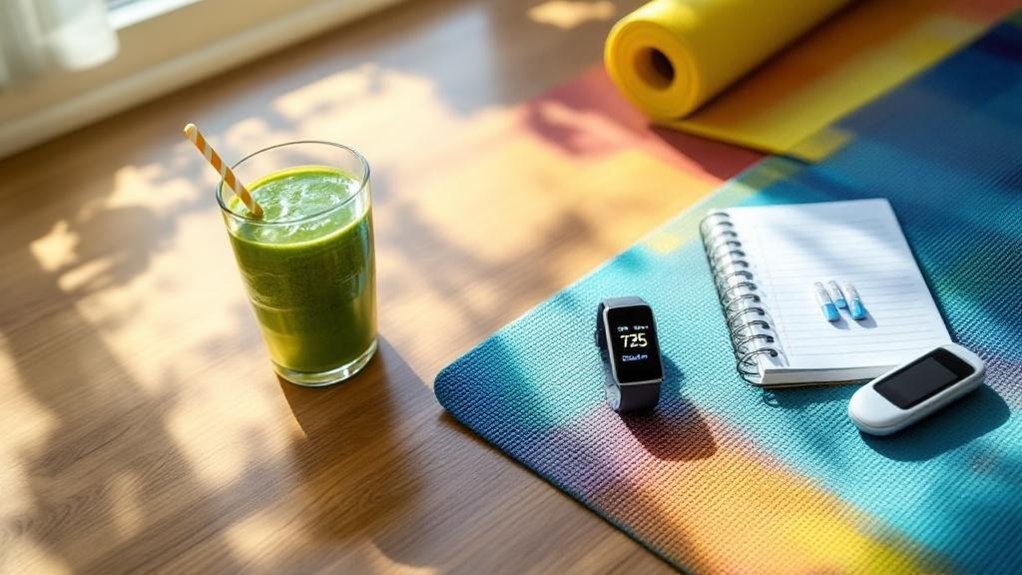
Managing blood glucose during exercise requires precise insulin adjustments, which is why our T25/T25 Exercise Management Tables have been developed to optimize glycemic stability for people with diabetes.
Our tables recommend a 25% reduction in exercise insulin for meals consumed within two hours before activity, preventing hypoglycemia while maintaining control. For pump users, we suggest 50% reductions both before and after sessions. We’ve incorporated intensity classifications, as high-intensity resistance work affects glucose differently than aerobic activity—each 10 minutes potentially reducing levels by 30 mg/dL.
The tables also guide you through implementing 3-minute walking breaks every 30 minutes during sedentary periods, improving time in range by 14%. For overnight recovery, we recommend 20% insulin reductions or 20g carbohydrate/protein intake to prevent delayed hypoglycemia. Both resistance and endurance exercises are included in our recommendations since they have comparable effects on long-term glycemic control while offering different physiological benefits.
Frequently Asked Questions
How Do Insurance Companies View DIY Diabetes Management Systems?
We find most insurance companies don’t cover DIY diabetes systems due to policy limitations requiring FDA-approved devices. These homemade solutions typically fall outside standard insurance coverage parameters for medical necessity.
Can CGM Adhesives Cause Skin Reactions and What Are Alternatives?
Yes, CGM adhesives can cause reactions in about 25% of users. We recommend trying barrier films, alternative adhesives, or specialized tapes as CGM skin solutions. Many in our community find these adhesive alternatives effective.
What Medications Interact Negatively With Closed-Loop Insulin Delivery Systems?
We don’t have specific evidence on medications that negatively interact with closed-loop systems. However, drugs causing insulin resistance or requiring precise medication timing may potentially affect system performance and glucose control.
How Do Menstrual Cycles Affect Algorithm Performance in Automated Systems?
We don’t have clinical evidence showing how menstrual cycles affect algorithm performance in automated diabetes systems. This remains an understudied area in our community’s diabetes management technology research.
Are Waterproof Cases Available for Pumps During Swimming Activities?
Yes, we offer several waterproof bags for insulin pumps that provide IPX6-IPX8 protection during swimming activities. Our cases guarantee swim safety while maintaining full functionality and protection from water immersion.
Conclusion
We’ve presented these evidence-based diabetes management strategies based on clinical observations and user experience. Our data indicates these approaches may considerably improve glycemic control and quality of life when implemented correctly. Remember, while these advanced techniques show promise, they’re best utilized under healthcare supervision. We’ll continue monitoring emerging research on closed-loop systems, algorithmic adjustments, and continuous monitoring technologies to provide you with cutting-edge diabetes management solutions.