

For nearly pain-free fingerstick testing, we recommend washing hands with warm water first, using an ultra-fine lancet device set to the shallowest effective depth, and testing on the sides of fingers rather than centers. Rotate through all five fingers on both hands to prevent tissue damage. Try devices with comfort features like Genteel or DigiVibe, and keep your hand below heart level to improve blood flow. The techniques we’ll share can transform your daily testing routine.
Key Takeaways
- Use the sides of fingers where there are fewer nerve endings rather than the center of fingertips.
- Warm your hands under hot water for 4 minutes before testing to improve blood circulation.
- Choose ultra-fine gauge lancets (33G) with silicone coating to reduce insertion discomfort.
- Set the lancing device to the shallowest depth possible while still getting an adequate blood sample.
- Consider advanced lancing devices with pain-reduction features like Genteel or DigiVibe.
Understanding the Science Behind Fingerstick Pain
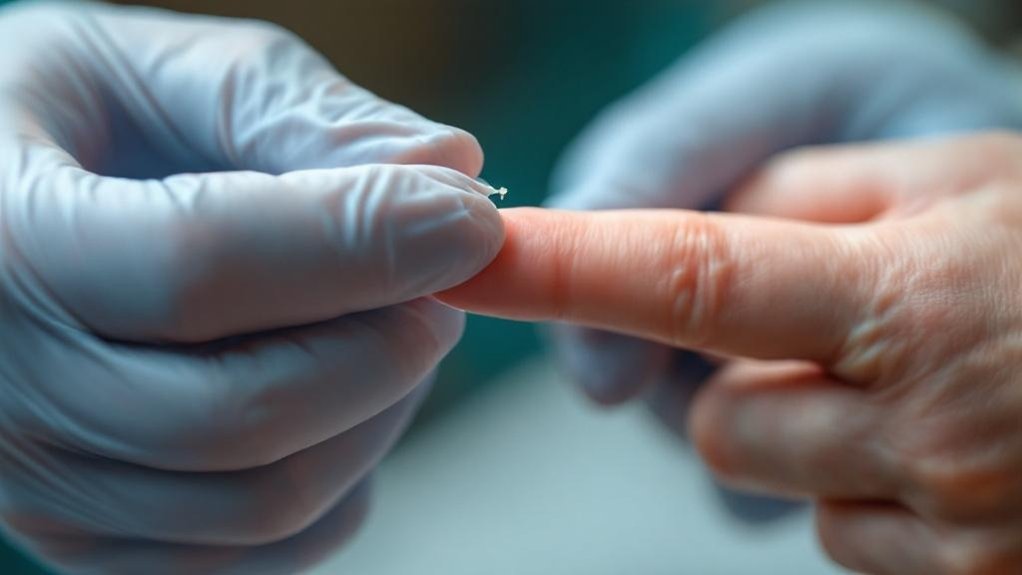
While testing blood glucose is essential for diabetes management, many patients find fingerstick testing uncomfortable or even painful. This discomfort isn’t just in your head—it’s rooted in biology. When you prick your finger, you’re activating pain receptors in the skin’s superficial layers, triggering your body’s natural threat response.
Your fingertips have a higher density of nerve endings than most body parts, which explains why testing there can be particularly sensitive. The depth of insertion significantly affects the amount of pain experienced during the procedure. Modern lancets like those with ultra-fine gauge needles can significantly reduce discomfort during skin entry. Notably, psychological factors greatly influence pain perception. Anticipatory anxiety before testing can actually increase discomfort, while anxiety relief after completing the test may compete with the actual pain experience.
We’ve found that alternate testing sites like the palm often result in less pain, with studies showing 86% of palm pricks are perceived as painless.
Essential Supplies for Minimizing Discomfort
Having the right supplies can make all the difference in your fingerstick testing experience. At Diabetic Supplies Hub, we recommend a comfort-focused supply checklist including advanced lancing devices with pain-reduction features.
The Genteel lancing device uses vacuum technology and cushioned tips clinically proven to be painless, while the DigiVibe device blocks pain signals through targeted vibration. Consider specialized lancets like Butterfly Touch, designed specifically for optimized comfort. The Genteel device allows painless testing on various body areas beyond just fingertips. The Accu-Chek FastClix offers bevel-cut lancets for minimal skin trauma during testing.
For thorough discomfort management, explore monitors that allow alternate site testing from areas with fewer pain receptors than fingertips. Don’t forget comfort enhancing products like diabetes-formulated lotions to maintain skin condition between tests.
We’re committed to making your testing routine as comfortable as possible—that’s why we offer 30-day guarantees on these specialized devices, allowing you to find what works best for your unique needs.
Pre-Test Preparation to Reduce Sensitivity
Before the lancet ever touches your skin, proper preparation can greatly reduce the discomfort of fingerstick testing. We recommend washing your hands under hot water (around 40°C) for at least 4 minutes to maximize blood flow. This warming technique dilates your capillaries, making blood collection easier and less painful.
Hydration importance can’t be overstated. Even while fasting for your test, drink two glasses of water 30 minutes beforehand. This reduces blood viscosity and improves circulation to your fingertips.
Light arm exercises also help—try swinging your arms in circles for several minutes right before testing. Position your hand below waist height during collection to let gravity assist blood flow. For best results, consider taking a hot shower before your testing appointment. These simple steps work together to minimize sensitivity and make your testing routine more comfortable.
Choosing the Right Lancet Device and Settings
Now that your hands are warm and blood flow is optimized, the lancet device you select can make a significant difference in your testing comfort. We recommend looking for features that minimize pain, such as the silicone-coated needles in the OneTouch Delica Plus or the precision-guided technology of Accu-Chek SoftClix. The 28-gauge lancets in the SoftClix system provide virtually pain-free blood sampling with precision-cut tips.
Proper depth adjustment is essential for your testing experience. Devices like the OneTouch Delica Plus offer 13 depth settings, while the Genteel Plus uses innovative vacuum technology to draw blood with minimal discomfort. Remember that thinner 33G needles generally cause less pain than thicker options.
While advanced options like the Genteel Plus ($99) cost more than basic models, many of our customers find the investment worthwhile for reduced testing anxiety and improved compliance. For optimal safety and hygiene, always use new lancets each time to reduce infection risk.
Strategic Finger Selection and Rotation
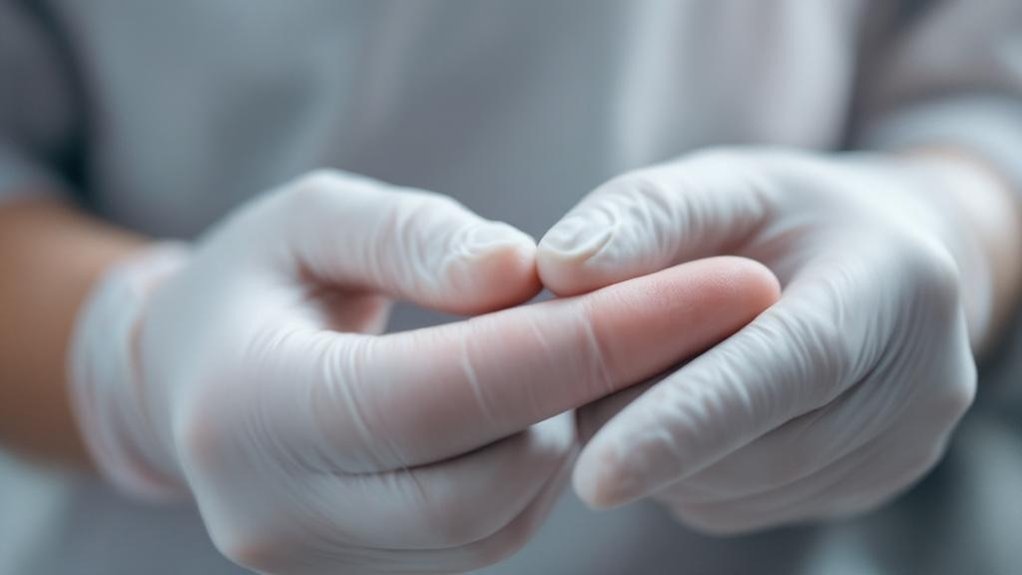
We’ve found that testing on the sides of your fingers rather than the center can greatly reduce pain, as these areas have fewer nerve endings. Implementing a five-finger rotation system helps prevent tissue damage and allows each site to fully heal between tests. By systematically alternating between fingers on both hands, you’ll maintain sensitivity and reduce the development of calluses that can interfere with accurate readings. Choose the third or fourth finger on your non-dominant hand for optimal comfort when beginning your rotation schedule.
Side Versus Center Testing
Strategic finger selection can greatly reduce pain during blood glucose testing. When pricking your finger, we recommend focusing on the sides rather than the center. Side testing typically causes less discomfort because these areas have fewer nerve endings compared to the center of your fingertip.
The difference is significant—many of our customers report a noticeable reduction in pain when switching from center to side testing. For best results, aim for the lateral edges of your fingertips, about 2-3mm from the nail bed. Center testing, while providing adequate blood samples, often creates unnecessary pain that can discourage regular monitoring. Alternatively, using the palm site for blood glucose sampling has been shown to be less painful while still providing reliable readings comparable to fingertip measurements.
Five-Finger Rotation System
Beyond selecting the right area of your fingertip, establishing a methodical rotation system is key to pain-free glucose monitoring. We recommend assigning specific fingers to each day of the week, ensuring all ten digits are utilized in your finger rotation plan. This approach is particularly beneficial for those conducting regular self-monitoring of blood glucose for diabetes management.
In the morning, use one side of the designated finger, then switch to the opposite side for evening tests. This maximizes healing time between lancings and prevents overuse of favorite testing spots.
Proper Technique for Minimal Pain Experience
We’ve found that lancet insertion depth greatly impacts your testing comfort, with shallow insertions often being insufficient while deep ones cause unnecessary pain. Cold fingertips can further complicate testing by restricting blood flow and increasing discomfort during the procedure. Using the side of your fingertip rather than the center can reduce pain as there are fewer pain receptors in this area. The 11-depth comfort dial allows precise customization for different skin types to minimize tissue trauma. Let’s examine how to adjust your technique for warmer hands and ideal lancet depth to transform your daily testing routine into a nearly pain-free experience.
Shallow Versus Deep Insertion
Finding the right insertion depth is one of the most essential factors in pain-free fingerstick testing. We recommend shallow punctures for most testing needs—they reduce pain considerably while still providing adequate blood samples. Shallow punctures avoid hitting nerve endings concentrated deeper in your fingertip tissue, minimizing discomfort.
Deep punctures often cause unnecessary tissue trauma and pain without improving sample quality. Different lancets offer varying penetration depths designed for specific skin types, so it’s worth experimenting to find what works best for you. Many modern lancet devices allow users to adjust depth settings for personalized comfort.
The ideal depth guarantees sufficient blood flow without requiring multiple attempts. Remember that controlled insertion prevents over-penetration while still collecting enough blood for accurate readings. We’ve found that most people can reduce their testing discomfort dramatically by simply adjusting their lancet depth setting.
Cold Fingertips Problem
Cold fingertips can considerably increase discomfort during blood glucose testing. When exposed to cold temperatures, our bodies naturally redirect blood from extremities to core organs, causing constriction of small arteries in the skin and making sample collection difficult.
To counter these cold temperature effects, wash your hands in warm water before testing. This not only removes residue but also stimulates blood circulation. After washing, try dropping your hands by your sides and gently flapping them toward the floor—this simple technique enhances blood flow to your fingertips. Those experiencing symptoms like skin color changes, numbness and tingling during cold exposure may have Raynaud phenomenon, which can further complicate fingerstick testing.
Remember that even mild cold exposure from handling frozen items or morning testing can trigger circulation problems. For those with conditions like Raynaud’s phenomenon or diabetic neuropathy, these warming techniques are especially important to guarantee adequate blood samples while minimizing discomfort.
Alternative Testing Sites Worth Considering
While fingertips remain the standard location for blood glucose testing, several alternative sites can offer welcome relief from the daily discomfort of multiple finger pricks.
Palm site testing provides a less painful experience without compromising accuracy, as the palm shows similar blood glucose readings to fingertips but contains fewer nerve endings. Many of our customers find this a reliable alternative for routine monitoring. Using 30-gauge needles can further minimize discomfort when testing at palm sites.
Forearm testing is another option worth considering, especially during periods of stable glucose levels. Remember that forearm sites respond more slowly to glucose changes, making them best for non-critical testing times. Other potential testing locations include the upper arm, stomach, and legs which can be used with appropriate lancing devices.
Always verify that your meter supports alternate site testing before trying these options—we’re happy to help you determine compatibility with your current equipment.
Post-Testing Care to Speed Healing
Proper care after fingerstick testing isn’t just about stopping the bleeding—it’s about promoting quick healing and preventing complications that can make future tests more painful. After testing, apply gentle pressure with clean gauze for 30-60 seconds, then clean the site with an alcohol wipe.
Using 28 gauge lancets designed with ultra-thin steel helps minimize tissue damage and discomfort during testing. For effective wound care, allow the site to air dry before covering. To prevent infection, always dispose of lancets in a sharps container and keep the area clean. For patient safety, always ensure single-use lancets are properly discarded after each test. Managing pain is simple—try applying a cold compress for 5-10 minutes or using topical numbing cream before future tests.
To accelerate healing, consider applying antibiotic ointment and keeping hands moisturized. Don’t forget about follow-up care—monitor the site for 3-5 days and document any unusual healing patterns for your healthcare provider.
Special Considerations for Regular Testers
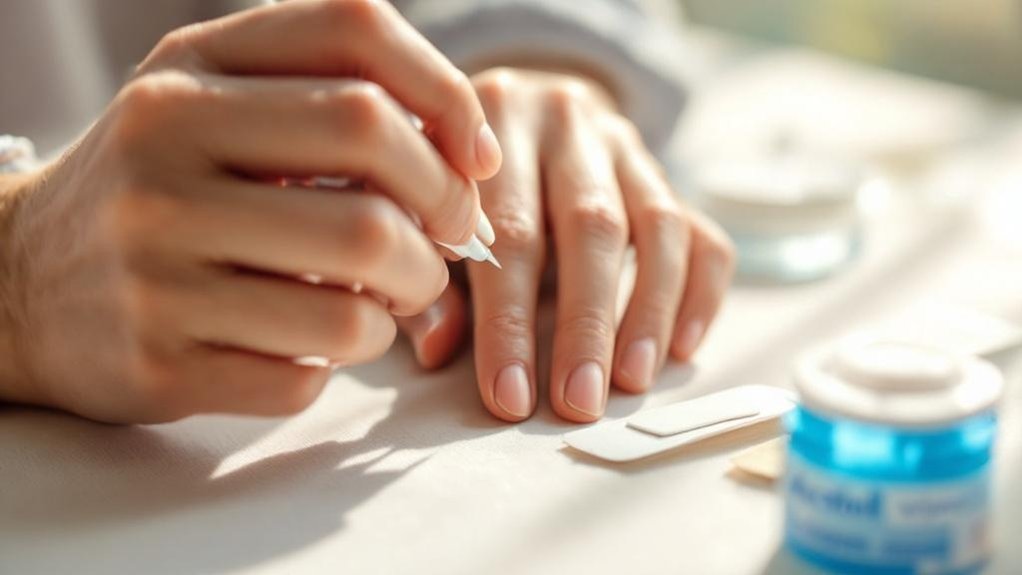
For those who test multiple times daily, managing diabetes requires special strategies that balance accuracy, comfort, and cost-effectiveness. We suggest dedicating a single meter to yourself rather than sharing, which reduces contamination risks and helps maintain consistent readings.
Your testing frequency demands attention to device maintenance. Clean your meter according to manufacturer instructions and store it safely to prevent damage. Remember that fingertip readings provide greater accuracy than alternative sites, especially after meals or exercise. Using strips that require minimal blood samples helps reduce discomfort during frequent testing. Regular monitoring with your meter is essential for preventing diabetes complications and maintaining optimal health.
To manage costs, explore insurance coverage options or look into our affordable supplies at Diabetic Supplies Hub. We recognize the financial burden of frequent testing and offer trusted brands at up to 65% savings.
Always dispose of lancets properly in approved sharps containers, never reusing them even on yourself.
Frequently Asked Questions
Can Medications Affect Blood Glucose Reading Accuracy?
Yes, several medications can affect blood sugar readings. We’ve found that acetaminophen, hydroxyurea, and aspirin can cause false results in your glucose meters and continuous monitors.
How Does Ambient Temperature Impact Test Strip Performance?
Temperature extremes greatly affect your test strips’ accuracy. We recommend storing them in cool, dry places—never bathrooms. After exposure to heat or cold, allow 15 minutes for equilibration before testing for reliable results.
Should I Test Before or After Exercise for Best Results?
We recommend both pre-workout testing to establish your baseline and post-workout testing (20-30 minutes after) to capture your body’s response. This two-test approach gives you the most complete picture of exercise effects.
Can Fingertip Calluses Be Safely Removed to Improve Testing?
Yes, calluses can be safely removed gradually after soaking in warm water. We recommend gentle filing with a pumice stone for fingertip care, never removing the entire protective layer.
Will Hydration Level Affect My Blood Glucose Readings?
Yes, hydration levels greatly affect your readings. When we’re dehydrated, our blood becomes more concentrated, causing misleading glucose variability. We recommend staying well-hydrated for the most accurate testing results.
Conclusion
We’ve shared these strategies because we recognize fingerstick testing is a daily reality for many of you. By implementing these techniques, you’ll likely experience considerably less pain while maintaining accurate results. Remember, comfortable testing leads to more consistent monitoring, which supports better health outcomes. Don’t hesitate to discuss these approaches with your healthcare provider to personalize your testing routine for maximum comfort and effectiveness.