

When traveling with diabetes supplies, we’ll need to pack double the necessary items, keeping insulin in temperature-controlled containers like Frio cooling sleeves. Always carry supplies in your carry-on, bring documentation from your doctor, and arrive early for TSA screening—declare your equipment and request alternative screening if needed. Wear medical ID and pack quick-acting glucose sources for emergencies. The right preparation guarantees your diabetes management remains seamless throughout your journey.
Key Takeaways
- Always pack double the amount of diabetes supplies needed for your trip’s duration in case of delays or emergencies.
- Carry a doctor’s letter stating medical necessity for diabetes supplies to facilitate airport security screening.
- Store insulin properly using cooling pouches and never leave supplies in hot environments like cars.
- Distribute diabetes supplies between carry-on and personal items, never checking essential medications or devices.
- Declare diabetes equipment to TSA agents and request alternative screening if concerned about X-ray damage to devices.
Essential Pre-Travel Planning for Diabetic Travelers
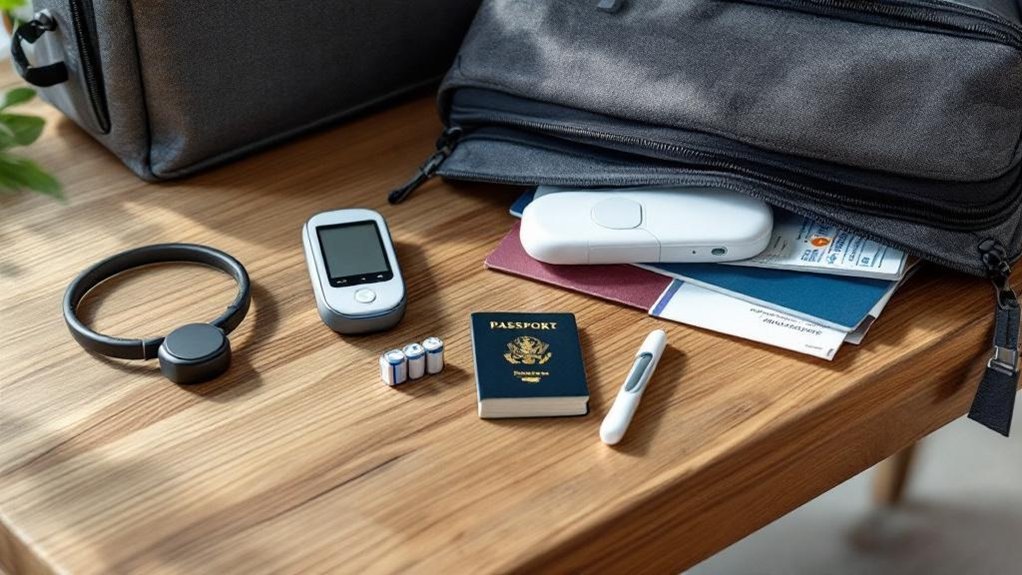
While managing diabetes at home follows a familiar routine, traveling introduces unique challenges that require careful preparation. We recommend starting with a visit to your healthcare provider at least a month before departure to guarantee your blood sugar is well-controlled and vaccinations are current.
Ask your doctor to provide a signed letter stating the medical necessity of your supplies and equipment. Don’t forget to obtain extra prescription labels from your pharmacist for attachment to supply bags and request additional prescriptions as backup.
For users of the Minimed 770G insulin pump, the SmartGuard technology provides automated insulin adjustments that can help maintain stable glucose levels during travel. Review your travel itinerary with your diabetes care team to address potential challenges like altitude changes or temperature extremes. This conversation is essential for developing a customized plan that keeps you safe while enjoying your journey. Consider researching medical facilities nearby at your destination to ensure you can access healthcare if needed during your trip.
Packing Strategies for Diabetes Devices and Medications
Smart packing is the cornerstone of stress-free travel with diabetes. We recommend distributing supplies across multiple bags—keeping your primary kit in your carry-on and backup supplies in your personal item. Never check diabetes supplies due to temperature risks.
Our favorite packing techniques include using Frio cooling sleeves for insulin during summer travel and organizing supplies by category in labeled pouches for easy identification. Supply organization is essential—pack twice what you’ll need for your trip duration, including backup devices and batteries. The Omnipod 5 system offers waterproof durability that’s ideal for diverse travel conditions. Consider bringing extra supplies if traveling to hot and humid locations where devices may fail more frequently.
Keep medications in original containers within clear plastic bags for security screening, and always have fast-acting glucose sources readily accessible. Remember to pack a portable sharps container and disinfectant wipes to maintain proper hygiene while managing your diabetes on the go.
Navigating Airport Security With Diabetes Equipment
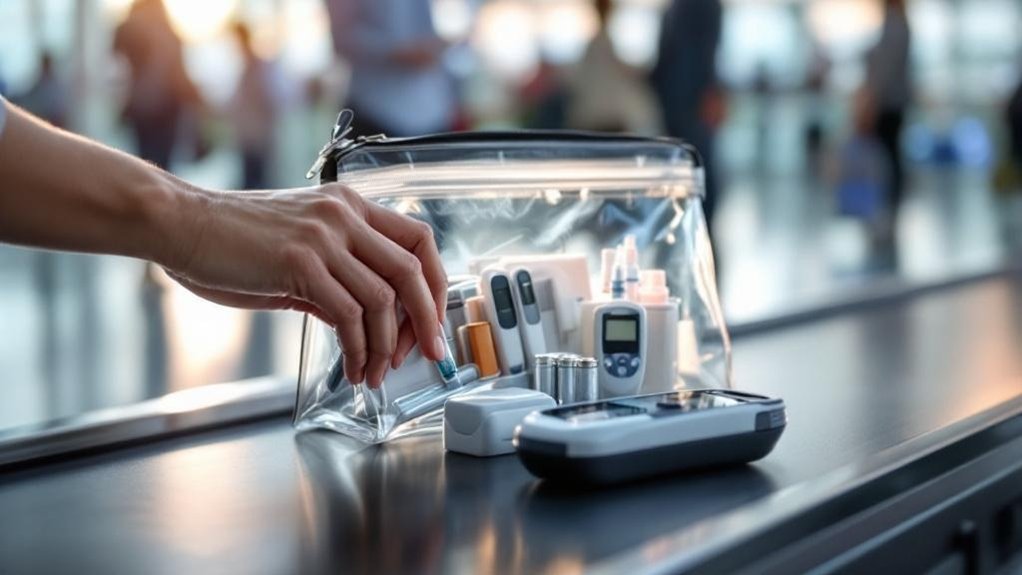
Security checkpoints present unique challenges for travelers with diabetes equipment, but with proper preparation, you can navigate them confidently. We recommend declaring all diabetes supplies to TSA agents before screening begins and packing them in a separate clear bag for easy inspection.
While insulin pumps and CGMs can safely pass through metal detectors, they should be removed before entering body scanners. Removal is necessary because body scanners may damage these sensitive devices through x-ray exposure. Be aware that X-ray machines may damage certain devices, so always request alternative screening options if needed. The Omnipod 5 system requires special consideration since each pod provides 72 hours of continuous insulin delivery.
Carrying medical identification, physician contact information, and TSA Disability Notification Cards can streamline security protocols. If difficulties arise, you can request a pat-down examination instead. Arrive early at the airport and stay informed about current security protocols through the TSA website or mobile app.
Managing Diabetes Supplies in Various Travel Environments
Managing your diabetes supplies effectively across different travel environments presents five distinct challenges: temperature control, supply quantity, time zone adjustments, activity level adaptations, and medical access.
Climate considerations greatly impact insulin storage—never leave supplies in hot car trunks and use insulated cooling cases during extreme weather. We recommend packing double your needed supplies and planning for medication adjustments across time zones. If you use an insulin pump, take an extra when traveling abroad as a crucial backup strategy. The SmartGuard technology helps maintain glucose control even during travel disruptions. Discuss your travel schedule with your healthcare provider to recalibrate insulin dosing appropriately.
Your activity levels will likely change while traveling, affecting medication requirements. Similarly, different foods at your destination may complicate carbohydrate counting. Before departing, research nearby medical facilities and verify prescription-filling capabilities in your destination regions. Having this knowledge guarantees you’re prepared for any diabetes management challenges that arise during your journey.
Emergency Preparedness and Health Documentation Tips
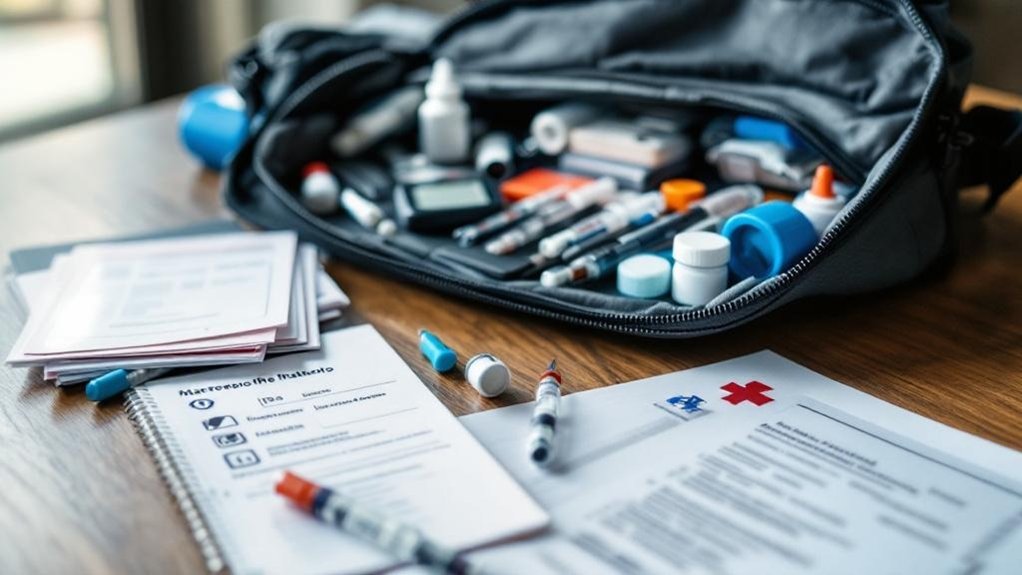
Effective emergency preparedness while traveling with diabetes requires five essential documentation elements that you’ll need to pack alongside your supplies. First, carry your doctor’s letter stating medical necessity for all diabetes supplies to avoid travel restrictions at security checkpoints.
Always wear a medical alert bracelet and pack your health insurance card with emergency contact information. For potential medical emergencies, bring a glucagon emergency kit and instruct your travel companion on proper administration procedures. Remember that glucagon emergency kits are permitted through TSA security checkpoints with your other diabetes supplies.
Don’t forget quick-acting glucose sources like tablets or hard candy for hypoglycemic episodes. When traveling internationally, include vaccination records and consider membership with the International Association for Medical Assistance to Travelers (IAMAT).
We recommend organizing these documents in a waterproof pouch that’s easily accessible during your journey for peace of mind and safety.
Frequently Asked Questions
How Do I Handle Time Zone Changes for Insulin Dosing?
We recommend adjusting your dosing schedule gradually when crossing five or more time zones. Monitor glucose more frequently during travel, and consult your diabetes care team for personalized time adjustments before your trip.
Can I Refrigerate Insulin in Hotels Without Mini-Fridges?
We can help hotel staff store your insulin in their main refrigerator. Many hotels accommodate medical needs by providing access to kitchen refrigeration or bar fridges when mini-fridges aren’t available in rooms.
Are Diabetes Supplies Covered by Travel Insurance?
Yes, many travel insurance policies cover diabetes supplies, but coverage limits vary. We recommend checking if your plan includes medical equipment coverage and declaring your condition beforehand for full benefits.
What if My Pump or CGM Fails During International Travel?
We recommend carrying backup supplies and having a pump troubleshooting plan ready. Always travel with written prescriptions, extra insulin, syringes, and test strips in case your technology fails while abroad.
How Do Extreme Climates Affect Insulin Effectiveness and Glucose Readings?
Temperature extremes greatly impact insulin stability and glucose readings. We’ve found both heat and cold can compromise effectiveness, with heat breaking down insulin proteins and cold slowing absorption. We’re here to help you navigate these challenges together.
Conclusion
We’ve covered the essentials of traveling with diabetes supplies, from pre-planning to emergency preparedness. Remember, preparation is your best travel companion. We’re confident that with these strategies, you’ll navigate any journey while keeping your diabetes management on track. Don’t let diabetes limit your adventures—with proper planning, you can explore confidently, knowing you’re well-equipped for whatever comes your way.