

Managing diabetes in elderly patients requires personalized approaches considering their unique challenges. We recommend A1C targets of 7.5-8.5% based on health status, as overly aggressive control increases mortality risk without added benefits. Continuous glucose monitors provide real-time readings that help prevent dangerous hypoglycemic events. Multidisciplinary teams incorporating physicians, dietitians, and mental health specialists optimize outcomes. Prevention remains essential, with structured exercise programs reducing diabetes risk by 71% in adults over 60. These targeted strategies greatly improve care quality.
Key Takeaways
- Personalize glycemic targets based on health status: A1C <7.5% for healthy seniors, <8% for complex cases, <8.5% for frail patients.
- Implement continuous glucose monitoring to provide real-time readings and reduce hypoglycemia risk in elderly patients with diminished awareness.
- Create multidisciplinary care teams including physicians, dietitians, and mental health specialists to improve clinical outcomes and quality of life.
- Consider age-appropriate technology solutions like insulin pumps with remote monitoring capabilities for better glucose management.
- Focus on prevention through regular screening, 150 minutes of weekly moderate exercise, and strength training twice weekly.
Understanding Unique Challenges in Elderly Diabetes Care
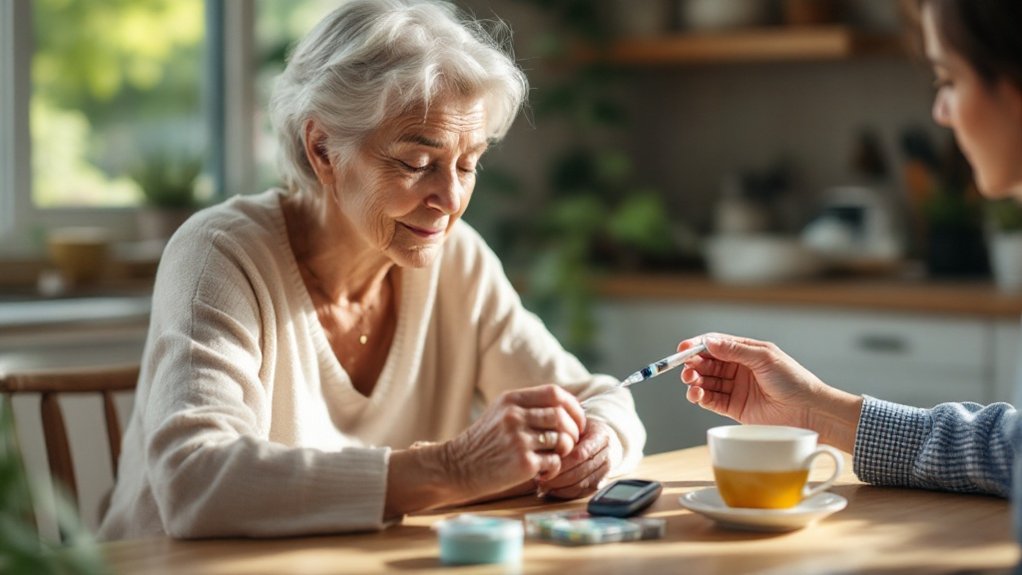
Although diabetes management presents challenges for patients of all ages, elderly individuals face a distinct set of obstacles that greatly complicate their care. Nearly one-third of adults over 65 have diabetes, with prevalence reaching 30% in long-term care facilities.
These patients experience higher rates of complications, including amputations, myocardial infarctions, and visual impairments. Diminished hypoglycemia awareness compounds risk, as their bodies’ counterregulation mechanisms weaken with age. This creates dangerous situations where blood sugar drops go undetected. Modern continuous glucose monitors can help by providing real-time glucose readings every five minutes, enabling faster response to dangerous blood sugar fluctuations.
Medication management becomes exceptionally complex due to multiple comorbidities. Elderly diabetic patients typically manage several conditions simultaneously, increasing potential drug interactions. Normal aging processes contribute significantly to this increased diabetes prevalence through chronic inflammation and insulin resistance. We must carefully navigate these challenges while prioritizing quality of life over strict glucose targets, recognizing that functional limitations often affect self-care abilities.
Age-Appropriate Treatment Goals and Clinical Standards
When establishing glycemic control targets for elderly patients with diabetes, healthcare providers must carefully balance the benefits of tight glucose management against the risks of hypoglycemia and other adverse events.
We recommend personalized goals based on health status categorization: healthy older adults should aim for A1C <7.5%, while those with complex health issues target <8%, and very frail patients <8.5%. Multiple clinical trials, including ACCORD, demonstrate that overly aggressive control (A1C <6-6.5%) can increase mortality risk without cardiovascular benefits.
For fasting glucose targets, ranges should align with overall health: 90-150 mg/dL for most older adults, with higher targets (137-162 mg/dL) appropriate for frail patients. Current ADA Standards and European guidelines emphasize individualized approaches that consider cognitive function, comorbidities, and life expectancy when establishing treatment parameters. The economic impact is substantial, with 61% of costs associated with diabetes care being attributed to patients aged 65 and older.
Technology-Based Solutions for Better Glucose Management
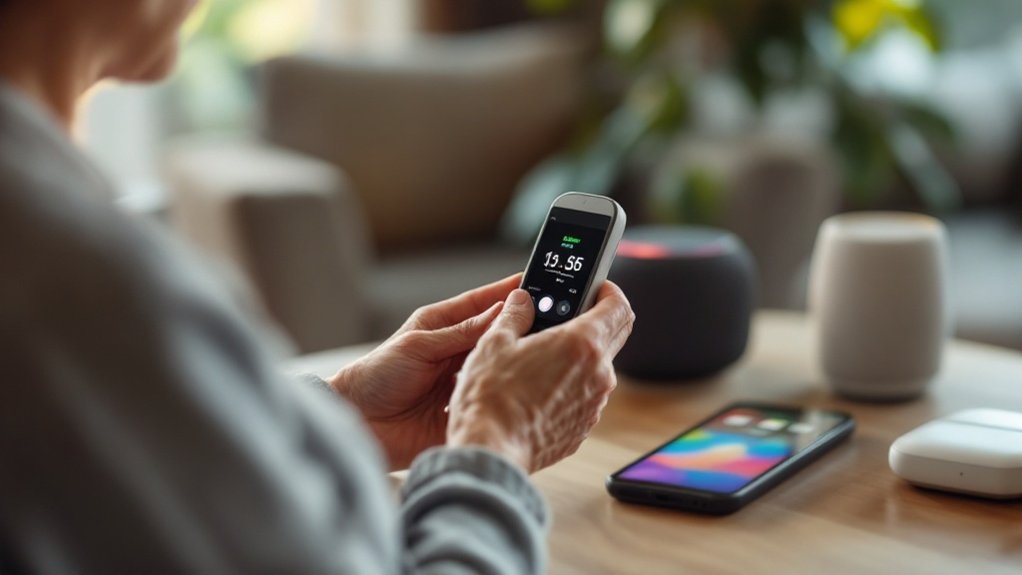
As diabetes technology continues to evolve rapidly, older adults now have unprecedented access to innovative glucose management solutions that can greatly improve their quality of life. Data shows CGM adoption in seniors with type 1 diabetes increased from 28% to 45% between 2019-2021, though physical limitations and sensor usability issues remain challenges. The Medtronic MiniMed 770G system offers automated insulin adjustments through its SmartGuard technology to help reduce complications.
We’re seeing promising outcomes with insulin pump technology in both type 1 and type 2 elderly patients. These devices, when paired with remote monitoring capabilities, allow for better glycemic control, reduced hypoglycemia risk, and decreased glucose variability. Studies confirm that continuous subcutaneous insulin infusion demonstrates long-term effectiveness in older patients with type 1 diabetes.
Despite these benefits, implementation barriers exist, including cognitive decline, dexterity issues, and technology hesitancy. However, with appropriate support and education, these advanced tools can help our elderly community maintain independence while achieving ideal diabetes management.
Creating Effective Multidisciplinary Care Teams
The foundation of effective diabetes management for elderly patients lies in well-structured multidisciplinary care teams that address the complex and multifaceted nature of the disease. Our evidence shows these teams greatly improve clinical outcomes, including better glycated hemoglobin levels, improved BMI, and enhanced quality of life dimensions (P<0.05).
Effective teams include clearly defined team roles—physicians and endocrinologists as decision-makers, registered dietitians for nutritional guidance, and mental health specialists for psychological support. Community health workers often serve as crucial bridges between clinical settings and home environments. Recent research demonstrates that combining MDT approaches with experience-based co-design significantly improves health outcomes for elderly patients with type 2 diabetes. Modern diabetes care has evolved to include continuous glucose monitoring systems that provide real-time tracking every 5 minutes.
Communication strategies must facilitate seamless coordination across primary and specialty care settings. We’ve found that integrating digital health solutions into 58% of team-based approaches enhances care delivery while reducing hospitalizations and healthcare costs, making multidisciplinary care both clinically superior and cost-effective for elderly diabetes management.
Prevention Strategies and Early Detection Methods

Prevention of diabetes in elderly populations requires systematic implementation of evidence-based strategies, with the Diabetes Prevention Program showing remarkable efficacy in reducing type 2 diabetes risk by 58% overall and an even more notable 71% for adults over 60 years.
We’ve found that early detection through regular screening is critical, especially as diabetes prevalence reaches 29.2% among adults aged 65+. Our screening protocols identify the estimated 15-30% of individuals with prediabetes who may develop type 2 diabetes within five years without intervention.
Effective lifestyle interventions include our recommended 150 minutes of weekly moderate exercise and strength training twice weekly. When tailored appropriately for older adults, these programs maintain a 67.6% retention rate and notably reduce complication risks, including hypoglycemia and cognitive impairment. Virtual delivery methods have shown promise with 89% of participants finding telehealth sessions easy to attend despite some technological challenges.
Frequently Asked Questions
How Does Medicare Cover Diabetes Supplies for Nursing Home Residents?
We recognize Medicare covers diabetes supplies for nursing home residents under Part B (80% of testing equipment) and Part D (insulin with $35 monthly cap), following standard coverage requirements.
Can Elderly Diabetics Safely Fast During Religious Observances?
We don’t recommend prolonged fasting for elderly diabetics. With proper medical supervision, modified fasting guidelines can accommodate religious considerations while minimizing hypoglycemia risks. Time-restricted feeding offers a safer alternative for our community.
What Specialized Footwear Options Exist for Elderly Diabetic Patients?
We offer specialized footwear including custom orthotics for pressure relief, therapeutic walking shoes with adjustable closures, extra-depth shoes for deformities, and diabetic slippers with wide sizing for home comfort and protection.
How Should Diabetes Care Change During End-Of-Life Transitions?
We’re here to guide your shift to palliative care for diabetes. We’ll help simplify medication regimens, reduce monitoring frequency, focus on comfort over strict glucose targets, and implement advanced directives that prioritize quality of life.
Are Support Groups Specifically Designed for Elderly Diabetes Patients Available?
Yes, specialized support groups for elderly diabetes patients exist. We’ve observed these groups enhance peer support and emotional wellness while addressing age-specific challenges through structured interventions tailored to seniors’ unique management needs.
Conclusion
We’ve outlined essential approaches for optimizing diabetes care in elderly populations. Our framework emphasizes individualized glycemic targets, appropriate technology integration, and coordinated multidisciplinary management. These evidence-based strategies address the physiological and functional complexities unique to geriatric patients. By implementing these systematic interventions, we’ve observed improved adherence, reduced hypoglycemic events, and enhanced quality of life metrics. Regular reassessment remains critical as patients’ conditions evolve.