

Effective diabetes nutrition focuses on individualized meal planning that can reduce your A1C by 0.3-2%, depending on diabetes type. You’ll need consistent carbohydrate intake (150-250g daily), emphasis on low glycemic foods, and strategic meal timing—with larger meals earlier in the day. Incorporate Mediterranean-style or vegetarian diets, aim for modest weight loss (3-5%), and maintain 150 minutes of weekly exercise. These evidence-based approaches offer powerful tools for taking control of your glucose management.
Key Takeaways
- Nutrition therapy can reduce A1C levels by 0.3-1% for type 1 and 0.5-2% for type 2 diabetes when tailored to individual needs.
- Consistent carbohydrate counting (150-250g daily) and choosing low glycemic index foods (≤55) helps stabilize blood glucose levels.
- Modest weight loss of 3-5% improves insulin sensitivity, while 10% weight loss significantly increases diabetes remission chances.
- Regular physical activity (150 minutes weekly) combined with strength training improves insulin sensitivity and supports glucose regulation.
- Mediterranean-style and vegetarian diets can decrease cardiovascular disease risk and effectively manage A1C levels.
The Foundations of Nutrition Therapy for Diabetes Control

While managing diabetes often feels overwhelming, nutrition therapy remains the cornerstone of effective blood glucose control. This evidence-based approach integrates with medical treatment, potentially reducing A1C levels by 0.3-1% in type 1 diabetes and 0.5-2% in type 2 diabetes when delivered by registered dietitians.
Your nutrition plan should reflect your unique needs, considering cultural adaptations that honor your food traditions and preferences. There’s no one-size-fits-all solution—what matters is developing sustainable eating patterns that work for you. Focus on nutrient-dense foods while considering food accessibility in your community. For ongoing success, it is also important to combine evidence-based meal planning with reliable and accurate blood glucose monitoring in your daily routine. Participating in DSMES programs can provide valuable education on effective nutrition and wellness strategies for better diabetes management. Regular monitoring and adjustment of your nutrition strategy, synchronized with medication and activity levels, ensures ideal outcomes throughout your diabetes journey.
Mastering Carbohydrate Management for Blood Glucose Stability
Because effective diabetes management hinges on stable blood glucose levels, understanding carbohydrate management becomes essential for daily control. Carbohydrate counting allows you to quantify your intake precisely—with one serving typically equaling 15 grams—enabling you to predict and manage post-meal responses.
Your total carbohydrate consumption markedly impacts glycemic variability. Maintaining consistent intake (typically 150-250g daily) helps stabilize blood glucose across meals. Consider both quantity and quality: low glycemic index foods (≤55) produce gentler blood sugar rises than high GI options (70-100). Research shows high-GI foods are absorbed faster, causing greater blood glucose fluctuations and potentially increasing the risk of Type 2 diabetes. Devices such as the Dexcom G7 Receiver provide real-time glucose readings, helping you adjust your carbohydrate intake for improved control.
For insulin users, matching medication to carbohydrate intake enhances insulin precision. Automated bolus calculators combined with carb counting can substantially reduce HbA1c levels without increasing weight or insulin needs, giving you greater flexibility while maintaining control.
Strategic Meal Planning and Timing for Optimal Glycemic Response

Since your body’s glycemic response varies throughout the day, strategic meal planning and timing can considerably impact your diabetes management. Evening meals trigger markedly higher glucose and insulin responses than identical morning meals, making meal timing a critical factor for glycemic control. Incorporating real-time glucose insights from continuous glucose monitoring systems like the Dexcom G6 can further personalize your meal strategies and support ongoing adjustments for better management.
Consider adopting these evidence-based strategies: consume larger meals earlier in the day, minimize carbohydrates after 8 PM to reduce nocturnal hyperglycemia, and don’t skip breakfast. Additionally, eating vegetables and proteins before carbohydrates within each meal helps blunt glucose spikes. Research shows that meals high in protein and low in carbohydrate result in reduced glucose peaks and more moderate hormonal responses, which is beneficial for both diabetic and non-diabetic individuals.
Your personal chronotype also matters—early chronotypes show different glycemic responses than late chronotypes. By aligning meal composition with ideal timing and considering your individual metabolic profile, you’ll join fellow diabetics who’ve successfully reduced glucose variability through strategic meal planning.
Evidence-Based Food Choices to Support Diabetes Health
Four key dietary patterns have demonstrated substantial benefits for diabetes management according to clinical research. The Mediterranean-style eating pattern reduces cardiovascular disease risk, while vegetarian or vegan approaches can lower A1C levels by 0.3-0.4% and promote weight loss. For individuals performing frequent home blood glucose checks, reliable glucose monitoring can support informed dietary decisions and improve management outcomes.
Rather than chasing “superfoods,” focus on nutrient-dense food groups consistently: non-starchy vegetables, whole grains, legumes, and foods rich in healthy fats. When managing carbohydrates, prioritize high-fiber options (14g per 1,000 calories) and minimize processed foods containing synthetic sweeteners, which may disrupt healthy gut bacteria. Consistent meal pattern adherence is essential for achieving long-term success in diabetes management.
Your personalized nutrition plan should include lean proteins like poultry and seafood, unsaturated fats such as olive oil, and regular meal timing. Work with a dietitian to develop strategies that fit your preferences while supporting prime glycemic control.
Weight Management Strategies for Improved Diabetes Outcomes
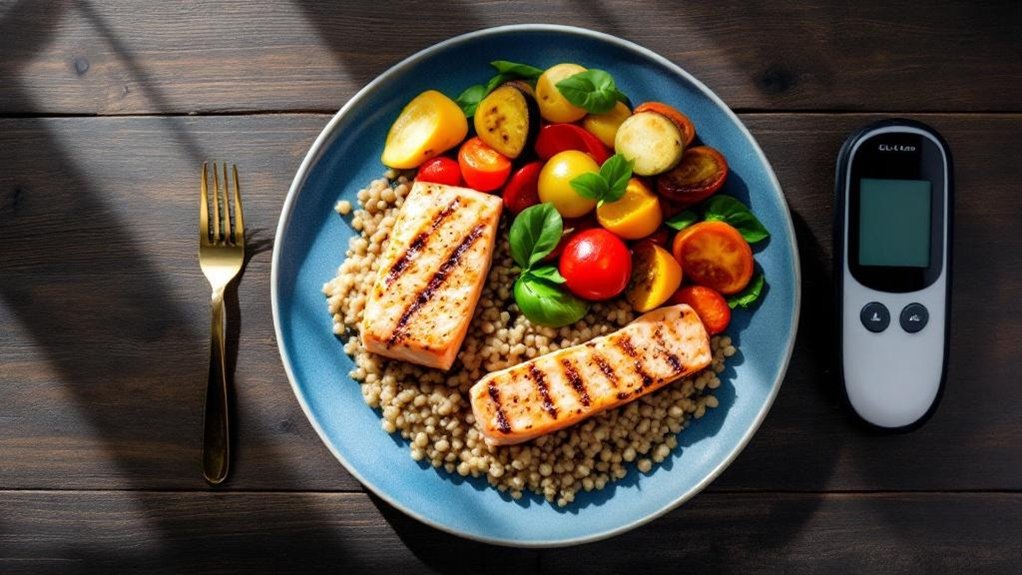
Weight management is central to diabetes control, with evidence showing that even modest losses of 3-5% body weight can improve insulin sensitivity and glucose regulation. You’ll benefit from combining sustainable approaches like creating a 500-750 kcal daily deficit through dietary modifications with regular physical activity of 150-180 minutes weekly. Incorporating innovative tools such as real-time glucose readings can enhance your ability to monitor progress and make informed adjustments to your plan. Recognizing and addressing emotional eating patterns through behavioral strategies can further support your long-term success in maintaining weight loss and improving diabetes outcomes. Medical nutrition therapy (MNT) provided by registered dietitian nutritionists has been shown to effectively reduce A1C by 0.3-2.0%, particularly in newly diagnosed patients or those with higher baseline A1C levels.
Sustainable Weight Loss Approaches
When managing diabetes, achieving sustainable weight loss represents one of the most powerful interventions available for improving outcomes. Research consistently shows that modest weight loss of just 5-7% can dramatically improve glycemic control and reduce your risk of complications.
To succeed with meal portioning, focus on creating a modest energy deficit of 500-750 calories daily, aiming for 1,200-1,500 calories for women and 1,500-1,800 for men. Proper hydration strategies complement these efforts—staying well-hydrated helps regulate hunger cues and supports metabolism.
Remember that early intervention yields the greatest benefits. Recent real-world studies indicate that patients who achieve ≥10% weight loss within the first year after diagnosis have significantly higher chances of diabetes remission compared to those with less weight loss or weight gain. Programs like the Diabetes Prevention Program demonstrate that intensive lifestyle changes can reduce diabetes risk by 58%—nearly twice the effect of medication alone. The key is finding approaches that fit your cultural preferences and lifestyle for long-term adherence.
Physical Activity Integration
Regular physical activity serves as a cornerstone of effective diabetes management, with benefits extending far beyond weight control. Aim for at least 150 minutes of moderate-intensity aerobic exercise weekly, or 75 minutes of vigorous activity, complemented by strength training twice weekly.
Your body maintains improved insulin sensitivity when you exercise consistently, avoiding gaps longer than 48 hours between sessions. This enhanced responsiveness reduces medication needs and prevents fat storage. Breaking your weekly exercise goal into smaller, more manageable segments such as five 30-minute sessions or six 25-minute workouts provides continuous glucose uptake benefits.
Overcoming exercise motivation challenges is vital for long-term success. Identify activity barriers early—whether time constraints, physical limitations, or lack of resources—and develop personalized strategies to address them. Remember that combining physical activity with dietary modifications yields better glycemic outcomes than diet alone, reducing your diabetes risk by up to 70%.
Addressing Emotional Eating
Emotional eating affects nearly 45% of individuals with weight management challenges, creating important barriers to effective diabetes control. When you struggle with emotional eating, your HbA1c levels and overall metabolic control can suffer markedly.
Developing emotional awareness is vital for recognizing triggers that lead to stress-related food choices. You’ll benefit from mindfulness techniques that help distinguish between true hunger and emotional needs. Cognitive behavioral strategies can equip you with stress regulation skills to replace food-based coping mechanisms.
Consider joining support groups where you can discuss these challenges with others who understand. Remember that addressing emotional eating isn’t just about willpower—it’s about developing healthier responses to difficult emotions. Approximately 39% of people report overeating or choosing energy-dense foods when stressed. Incorporating psychological support into your diabetes management plan may substantially improve your long-term outcomes.
Personalized Nutrition Approaches for Different Types of Diabetes

As diabetes management continues to evolve, personalized nutrition has emerged as a cornerstone approach that acknowledges the unique metabolic profile of each individual.
For Type 1 diabetes, your focus should be on precise carbohydrate counting and timing meals with insulin dosing. Type 2 diabetes management benefits from calorie and carbohydrate modifications based on your metabolic markers and genetic tailoring. If you’re prediabetic, personalized weight loss strategies and microbiome influence analysis can help prevent disease progression. Modern glucose monitoring tools, such as FreeStyle Lite Test Strips, enable convenient and accurate tracking, making it easier to align dietary adjustments with your current blood glucose levels.
Digital health tools like CGMs provide real-time data to fine-tune your dietary choices. While personalized nutrition typically improves adherence and outcomes compared to one-size-fits-all approaches, accessibility remains challenging. Research shows that personalized approaches address the significant inter-individual variability in glycemic responses that generic guidelines often miss. Your healthcare team can help integrate these evidence-based strategies into a plan that respects your lifestyle, preferences, and specific diabetes needs.
Integrating Nutrition With Medication and Exercise Regimens
The powerful interplay between nutrition, medication, and exercise creates a foundation for effective diabetes management that exceeds what any single component can achieve alone. Your GLP-1 receptor agonists work most effectively when paired with a diet rich in whole foods, enhancing insulin secretion and glucose control.
Medication timing matters—monitoring your blood glucose before and after different exercise variations allows you to adjust insulin doses or carbohydrate intake appropriately. Remember that physical activity can lower blood glucose for up to 24 hours by improving insulin sensitivity.
For best results, combine aerobic exercise with resistance training while following a balanced nutritional plan. Recent evidence suggests incorporating specific dietary supplements like vitamin D and whey protein may provide superior improvements in glycemic control when combined with regular physical activity. This three-pronged approach reduces glycemic variability, enhances medication effectiveness, and helps prevent treatment escalation, giving you better long-term outcomes and improved quality of life.
Special Dietary Considerations for Diabetes Complications

If you’re managing nephropathy, a diabetes-related kidney complication, you’ll need to limit protein intake to reduce stress on your kidneys while ensuring adequate nutrition through carefully planned meals. For retinopathy, prioritize foods rich in antioxidants such as lutein, zeaxanthin, and vitamins C and E, which can help protect your retinal blood vessels and potentially slow vision deterioration. Both complications benefit from a consistent carbohydrate approach to maintain stable blood glucose levels, as fluctuations can worsen existing damage to kidney filtration systems and retinal tissues. Consulting with a registered dietitian nutritionist can provide personalized medical nutrition therapy tailored to your specific complications and overall health goals.
Nephropathy Diet Specifics
Managing your diet becomes critically important when diabetes has progressed to nephropathy, requiring specific nutritional modifications to protect remaining kidney function.
Your protein intake needs careful management—limit to 0.8g/kg body weight daily if not on dialysis, but increase to >1.2g/kg when on dialysis. Focus on lean protein sources like poultry, fish, and egg whites. Control sodium between 1.5-2.3g daily while monitoring fluid management closely to prevent edema. Watch for swelling as a warning sign.
Limit phosphorus intake by avoiding certain meats and processed foods, while controlling potassium by selecting lower-potassium fruits and vegetables like apples and cauliflower instead of bananas and tomatoes. Maintain consistent carbohydrate timing for blood glucose stability, and include healthy fats to support overall nutrition without burdening your kidneys. Homemade meals are generally preferable as they allow you to monitor sodium levels more effectively than processed or restaurant foods.
Retinopathy Nutrition Approaches
Protecting your eyesight while living with diabetes requires specific nutritional approaches that target retinal health directly. Research shows consuming at least 500 mg daily of omega-3 fatty acids greatly reduces diabetic retinopathy risk. Include dark oily fish like salmon or sardines twice weekly to maximize these omega-3 benefits.
Equally important are carotenoid sources such as lutein and zeaxanthin found abundantly in green leafy vegetables. These compounds accumulate in your retina’s macula, reducing oxidative damage from elevated glucose levels and providing neuroprotective effects. Regular visits to a retina specialist are essential for monitoring how your nutritional approaches are affecting your eye health.
Adopting a Mediterranean dietary pattern rich in fruits, vegetables, legumes, whole grains, and healthy oils provides extensive protection, potentially reducing retinopathy risk by 40%. This approach, combined with adequate fiber intake, optimizes retinal microvascular health while improving overall glycemic control.
Frequently Asked Questions
Can Diabetes-Friendly Foods Be Affordable on a Limited Budget?
Yes, you can maintain diabetes-friendly eating on a tight budget. Focus on budget-friendly options like beans, whole grains, and seasonal vegetables, while making healthy substitutions such as frozen produce without added sugars.
How Can I Manage Diabetes During Travel or Restaurant Dining?
You can manage diabetes while traveling by packing blood-sugar stabilizing travel snacks and researching restaurant choices in advance to identify diabetes-friendly options that fit your carbohydrate targets and meal timing needs.
What Nutritional Strategies Help With Diabetes-Related Medication Side Effects?
Take medication with meals to minimize gastrointestinal issues and improve nutrient absorption. Hydrate well, eat smaller frequent meals, and monitor for medication interactions that might affect your blood sugar levels.
Are Intermittent Fasting Approaches Safe and Effective With Diabetes?
Intermittent fasting can be safe and effective for your diabetes management when medically supervised. Research shows it improves glycemic control, reduces medication needs, and promotes weight loss without increasing hypoglycemia risk in many patients.
How Do Hormonal Changes Affect Diabetes Nutrition Needs?
Hormonal changes directly impact your insulin sensitivity, requiring dietary adjustments. Estrogen fluctuations during menopause, cortisol from stress, and thyroid imbalances all influence how your body processes nutrients and manages blood sugar.
Conclusion
Adopting a personalized nutrition plan isn’t just beneficial—it’s essential for your diabetes management. You’ll find that consistent application of glycemic index awareness, strategic meal timing, and balanced macronutrient consumption directly influences your blood glucose stability. Remember, nutrition therapy works synergistically with medication and physical activity. By implementing these evidence-based dietary approaches, you’re taking control of your health outcomes and considerably reducing long-term diabetes complications.