

Selecting the right insulin pump requires evaluating tubed versus tubeless designs, CGM integration capabilities, and automated insulin delivery features. Tubed pumps offer flexibility and temporary disconnection options, while tubeless systems save setup time with their pod design. Consider precision dosing capabilities, reservoir capacity, and water resistance based on your lifestyle needs. Clinical evidence shows pump therapy improves glycemic control with 8-12% increases in time-in-range. The following thorough comparison will help you make this critical healthcare decision.
Key Takeaways
- Consider pump form factor – choose between tubeless pods for simplicity or tubed pumps for flexibility and temporary disconnection options.
- Evaluate CGM integration capabilities that enable automated insulin delivery and improve time in target glucose range by 8-12%.
- Assess smart features like touchscreen interfaces, smartphone control, alert customization, and waterproof design based on lifestyle needs.
- Compare micro-dosing technology options, with advanced pumps offering increments as small as 0.025 units for precise glycemic control.
- Match pump technology to your activity level, daily routine, and personal preferences for device interaction and management style.
Understanding Tubed vs. Tubeless Pump Options
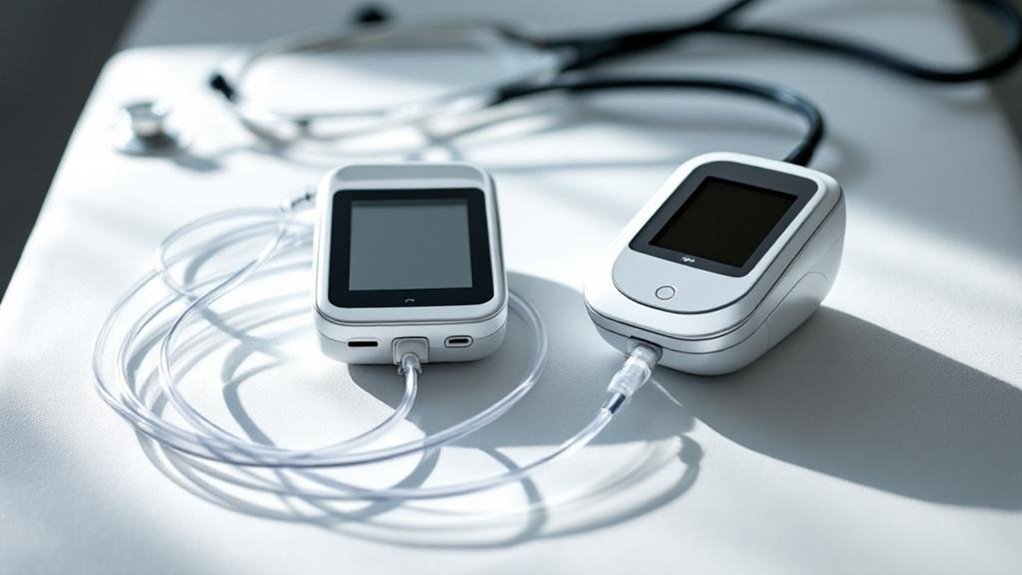
When selecting an insulin pump, you’ll need to decide between tubed and tubeless designs—a choice that greatly impacts your daily diabetes management. Tubed functionality offers flexibility with infusion sites since the pump connects via tubing to your cannula, allowing for versatile placement options. These systems permit temporary disconnection for specific procedures without requiring full reinitiation.
Tubeless convenience comes from the all-in-one pod design that adheres directly to your skin, eliminating dangling tubes and simplifying the change process. These systems require 15 minutes less setup time than tubed alternatives and feature waterproof pods that don’t need disconnection during swimming or bathing. Many people find that automated insulin delivery available with modern tubeless pumps provides a smoother management experience throughout everyday activities. The streamlined, two-component system (pod and controller) reduces maintenance complexity, making site changes faster and less disruptive to your daily routine. Healthcare providers report similar confidence levels in users’ abilities to operate both pump types effectively, with slightly higher confidence ratings of 92% for tubeless pumps compared to 88% for tubed options.
CGM Integration and Automated Insulin Delivery Systems
When selecting an insulin pump, you’ll need to evaluate the benefits of Automated Insulin Delivery (AID) systems, which can reduce management burden by automating basal insulin adjustments based on CGM readings. Modern pumps vary considerably in their CGM compatibility, with options like Tandem’s Control-IQ, Medtronic’s systems with Guardian sensors, and other platforms offering different integration capabilities and algorithms. The clinical evidence demonstrates that CGM-integrated pumps improve glycemic control, with studies showing increased time in range, reduced hypoglycemic events, and fewer hospitalizations compared to standard insulin therapy. Newer CGM solutions, such as the Dexcom G7 Sensor, offer real-time glucose readings every 5 minutes, seamless device compatibility, and predictive alerts to further enhance the effectiveness of AID systems. Research indicates that sensor augmented pump therapy has become the gold standard for type 1 diabetes management due to its ability to provide real-time glucose monitoring and facilitate appropriate insulin adjustments.
AID Benefits Worth Considering
Automated insulin delivery (AID) systems represent a notable advancement in diabetes management by seamlessly integrating continuous glucose monitoring (CGM) with insulin pump technology. When choosing your insulin pump, consider these substantial AID system benefits:
You’ll experience 8-12% increased time in target glucose range, with meaningful reductions in both hypoglycemic and hyperglycemic events. These systems provide “forgiveness” around meals by compensating for imperfect carbohydrate counting and maintaining stable overnight glucose levels.
Beyond glycemic improvements, AID systems offer quality benefits like reduced diabetes-related distress, better sleep, and decreased anxiety. The mental burden of constant monitoring is markedly lightened as the system automates insulin delivery between meals and overnight, dynamically adjusting basal rates to match your physiological needs rather than relying on fixed schedules. This technology, developed through interdisciplinary research at institutions like the Wellcome-Medical Research Council Institute, continues to evolve toward increasingly personalized insulin delivery solutions.
CGM-Pump Compatibility Matrix
Now that you’re aware of AID benefits, understanding which continuous glucose monitors (CGMs) work with specific insulin pumps is critical for system selection. Your options include several integrated systems with varying capabilities.
The Medtronic MiniMed 780G pairs exclusively with Guardian™ 4 sensors (7-day sensor wear), while Omnipod 5 integrates with FreeStyle Libre 2 Plus (15-day sensor wear) and Dexcom G7 (10-day sensor wear). Tandem’s t:slim X2 offers pump compatibility with both Dexcom G6/G7 and FreeStyle Libre sensors. The MiniMed 780G system is also compatible with Simplera Sync sensor for patients seeking alternative sensor options.
Each system features unique predictive algorithms—Omnipod’s SmartAdjust™ predicts glucose 60 minutes ahead, while Tandem’s Control-IQ forecasts 30 minutes forward. Consider both sensor wear duration and data-sharing capabilities when selecting your system to guarantee it aligns with your lifestyle needs.
Smart Features and User Experience Considerations
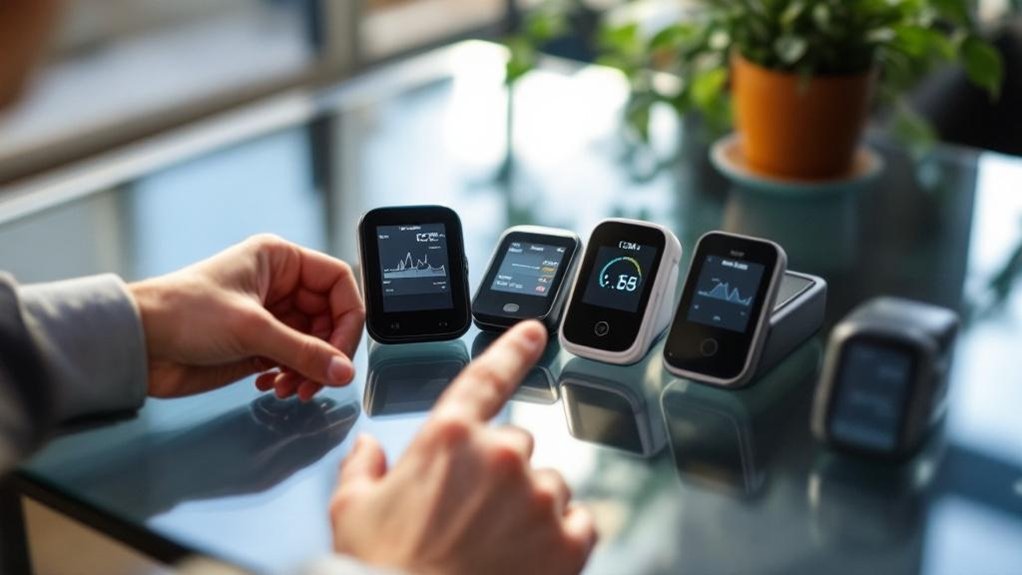
Modern insulin pumps offer sophisticated technology that directly impacts your daily diabetes management. When evaluating options, consider how smart customization features align with your lifestyle needs. Closed-loop systems like Tandem t:slim X2 and Omnipod 5 automate insulin delivery based on CGM data, considerably improving time-in-range metrics. The SmartAdjust™ technology in the Omnipod 5 provides automated correction boluses, further helping maintain target glucose levels.
User engagement is enhanced through touchscreen interfaces and smartphone control capabilities. The Omnipod 5’s app-based control provides tubeless convenience, while Tandem’s Control-IQ predicts glucose 30 minutes ahead. Remember that these products are regularly reviewed for accuracy and relevance. Consider connectivity features that matter to you—remote bolusing, caregiver follow functions, and data sharing with healthcare providers.
Evaluate alert customization options to balance safety with alarm fatigue. Waterproof designs (like Omnipod’s IP28 rating) and sleep/exercise modes provide practical flexibility for your active lifestyle.
Precision Dosing and Reservoir Capacity Requirements
When selecting an insulin pump, you’ll need to evaluate both micro-dosing capabilities and reservoir capacity to match your specific insulin requirements. The Medtronic 780G offers the smallest increment adjustments at 0.025 units per hour, while pumps like Tandem’s t:slim X2 deliver in 0.1 unit increments, making these options ideal if you require precise basal control. Your daily insulin usage should guide reservoir selection, with larger options like the 300-unit Medtronic 780G minimizing refill frequency compared to the 180-unit Omnipod system. For those prioritizing mobility in their daily routines, the Omnipod 5 and Dash provide completely tubeless designs that eliminate the need for external tubing connections while still delivering continuous insulin. Choosing pumps with features like SmartGuard™ technology allows for automatic insulin adjustment in real-time, offering greater control and proactive management for users.
Micro-Dosing Technology
While selecting an insulin pump, you’ll need to carefully evaluate its micro-dosing capabilities, as these technologies importantly impact glycemic control precision. Today’s advanced pumps can deliver insulin in increments as small as 0.025 units, offering remarkable dosing accuracy for your personalized therapy needs.
Microdosing benefits include finely tuned insulin delivery that closely matches your body’s requirements, reducing both hypoglycemia and hyperglycemia risks. Systems like the twiist AID exemplify this precision, delivering sub-unit doses based on continuous glucose monitoring data. The ongoing evolution of these devices has led to hybrid closed-loop systems that automatically adjust insulin delivery based on real-time glucose readings.
The most innovative pumps measure insulin directly rather than estimating delivery through indirect methods. This precision supports automated insulin delivery systems by enabling adjustments every few minutes, helping you maintain steadier glucose levels throughout the day while providing the personalized care that’s essential for your diabetes management.
Optimizing Insulin Storage
Beyond micro-dosing accuracy, your insulin pump’s reservoir capacity plays a key role in determining how effectively it’ll meet your daily needs. When making your reservoir selection, consider your total daily dose (TDD) requirements—smaller 180-unit reservoirs suffice for those using under 48 units daily, while larger 300-unit options benefit users with higher insulin demands.
Factor in both your basal and bolus needs over your preferred wear period (typically 2-3 days). Remember that priming requires additional insulin, with most pumps needing minimum fill volumes to guarantee proper delivery. The t:slim X2, for instance, requires at least 50 units available post-priming. Setting your pump’s low reservoir alert to match one full day’s insulin usage provides timely reminders for set changes.
For ideal insulin longevity, avoid overfilling beyond manufacturer maximums and consider that smaller reservoirs may enhance dosing precision by reducing dead space volume for those with lower requirements.
Clinical Outcomes and Long-Term Benefits
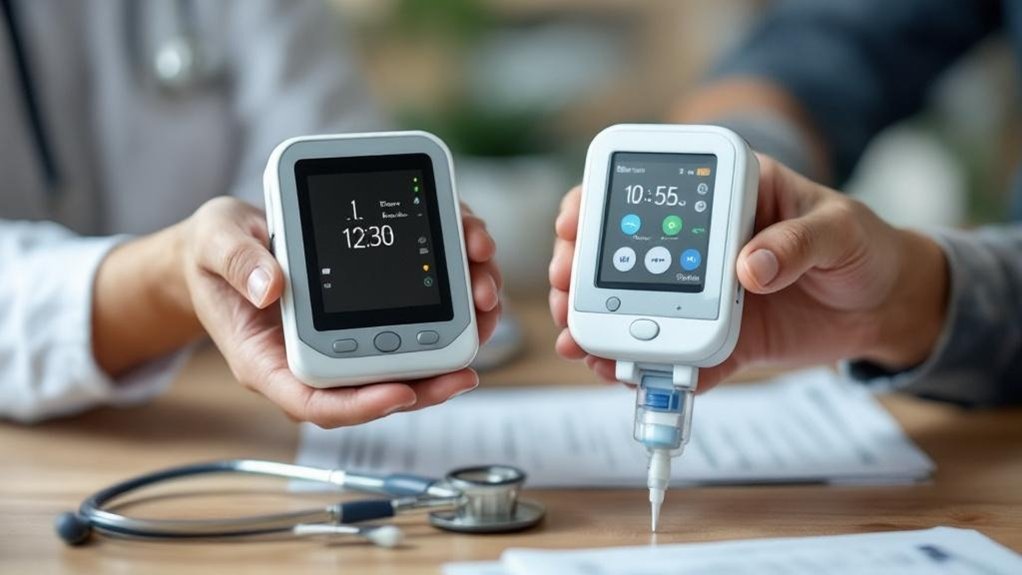
Evidence from extensive clinical trials demonstrates that insulin pump therapy delivers substantial improvements in glycemic control compared to multiple daily injections. You’ll experience significant reductions in HbA1c levels while automated insulin delivery systems can increase your time in range by approximately 20 percentage points. Clinical efficacy is further evidenced by decreased glucose variability and reduced hyperglycemia. The integration of real-time glucose readings allows for more proactive diabetes management, enhancing your ability to address glucose fluctuations promptly.
Long-term benefits include fewer severe hypoglycemic events and DKA episodes, resulting in reduced hospital admissions. Patient adherence improves with the documented quality of life enhancements and decreased diabetes distress. Recent research shows hybrid closed-loop therapy is particularly effective for youth with elevated HbA1c levels. You’ll likely experience less anxiety, better hypoglycemia awareness, and improved treatment satisfaction. Registry data confirms sustained glycemic improvements over time, demonstrating that joining the community of pump users offers both immediate and enduring health advantages.
Matching Pump Technology to Your Lifestyle Needs
Selecting the right insulin pump requires careful consideration of how the technology will integrate with your daily activities and personal preferences. Your pump preferences should align with your physical activity levels, device interaction comfort, and daily routine. For those seeking a tubeless and wearable insulin delivery solution, the Omnipod DASH system offers up to 72 hours of continuous insulin and Bluetooth-enabled wireless control. Active individuals might prefer tubeless options like Omnipod 5, offering freedom of movement without tubing concerns. If you require larger insulin reserves, tubed pumps with 300-unit capacities provide extended wear time. Lifestyle compatibility extends to water resistance features—critical if you swim or engage in water activities. Systems like Omnipod 5 and Tandem Mobi have shown improved time-in-range metrics for many users.
Consider how you’ll interact with your device: smartphone-controlled systems like Medtronic Flex eliminate physical screens, while Sequel Twiist offers emoji-based adjustments. Your CGM preferences also matter, as integration capabilities vary across pump systems.
Frequently Asked Questions
How Does Insurance Coverage Vary for Different Insulin Pump Models?
Your insurance pump coverage varies by model comparisons: Medicare covers most as DME at 80% after deductibles, while Omnipod 5 falls under Part D. Prior authorization requirements differ between manufacturers.
Can I Switch Pump Brands Without Retraining or Medical Consultation?
No, you shouldn’t switch pump brands without retraining. Each device has unique features affecting pump brand compatibility. Medical consultation guarantees safety and proper user experience feedback during changeover to new technology.
What Happens if My Insulin Pump Malfunctions During Travel?
If your pump malfunctions while traveling, you’ll need immediate pump troubleshooting using your backup supplies. Travel preparedness is essential—carry injection supplies, ketone strips, and your healthcare team’s contact information.
How Often Do Manufacturers Release New Pump Models?
Major manufacturers typically release new pump models every 3-5 years. You’ll notice pump model evolution follows market trends, with incremental updates occurring between major launches to enhance functionality and integration capabilities.
Are There Age Restrictions for Certain Insulin Pump Technologies?
Yes, age restrictions exist for specific pump technologies. Most pumps require users to be at least 2 years old, with systems like iLet requiring age 6+. Consider age considerations and technology preferences when selecting your device.
Conclusion
When you’re selecting an insulin pump, you’ll need to balance your clinical needs with lifestyle factors. Research shows that pumps with CGM integration can reduce HbA1c by 0.3-0.5% compared to MDI therapy. Consider your daily insulin requirements, technology preferences, and physical activity levels. The ideal device will provide precise dosing capabilities that align with your specific glucose management goals and daily routine.