

Closed loop insulin pump systems automatically regulate your blood glucose by integrating continuous glucose monitors with insulin pumps. These “artificial pancreas” technologies adjust insulin delivery in real-time, maintaining levels within 70-180 mg/dL targets without constant manual intervention. You’ll find both hybrid systems (requiring mealtime input) and fully automated options that manage basal and bolus insulin independently. Current models include Tandem’s Control-IQ and Medtronic’s MiniMed series, with advanced features that considerably reduce hypoglycemic events and management burden. The following analysis examines their components and effectiveness.
Key Takeaways
- Closed loop insulin pumps automatically adjust insulin delivery based on continuous glucose monitor readings to maintain target blood sugar levels.
- These systems mimic natural pancreatic function by creating a feedback loop between glucose sensors and insulin delivery without constant manual adjustments.
- Most current systems are “hybrid closed loop,” requiring manual mealtime boluses while automating basal insulin adjustments.
- Key components include a continuous glucose monitor, an insulin pump, and a control algorithm that calculates needed insulin doses.
- Benefits include increased time in target range, reduced hypoglycemic events, decreased management burden, and improved quality of life.
What Is a Closed Loop Insulin Pump System?
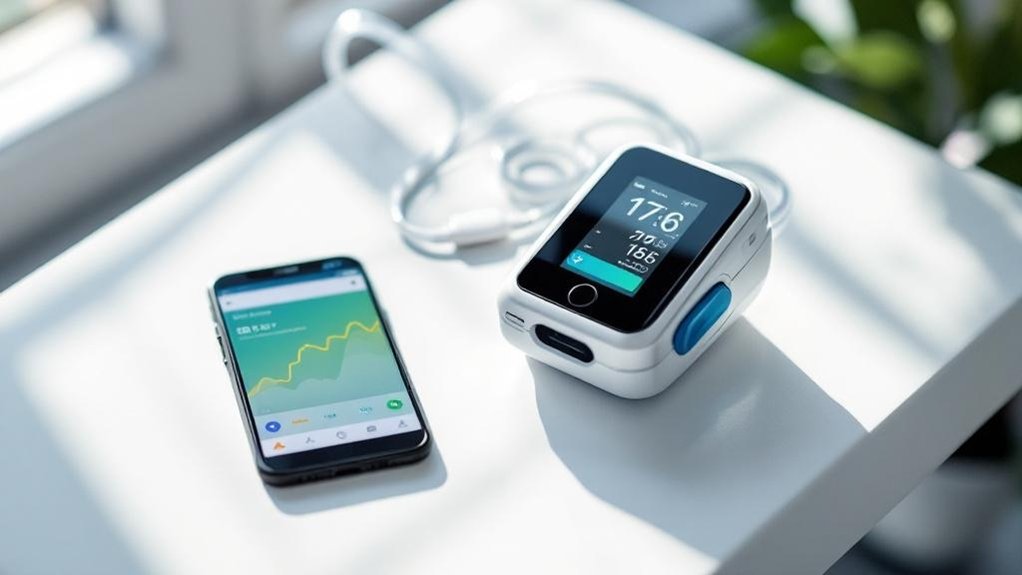
A closed loop insulin pump system represents a notable advancement in diabetes management technology, integrating a continuous glucose monitor (CGM) with an insulin pump via a sophisticated algorithm. This artificial pancreas mimics healthy pancreatic function by automatically adjusting insulin delivery based on real-time glucose data. The system continuously processes CGM readings to maintain blood glucose within target ranges (typically 70-180 mg/dL), with minimal user intervention. Modern systems, such as those featuring automatic insulin delivery adjustments, enhance the user’s ability to achieve optimal glycemic control by adapting to real-time needs. Clinical implications include reduced hypoglycemic episodes and improved time-in-range metrics. Most commercially available systems are hybrid closed loops, requiring manual mealtime bolusing while automating basal adjustments.
Patient education remains essential, as users must understand system capabilities and limitations. The technology’s predictive algorithms can anticipate glucose trends and make preemptive adjustments, considerably reducing the cognitive burden of diabetes self-management while improving clinical outcomes. These systems have been shown to significantly improve overall glycemic control and can help patients achieve lower HbA1c levels over time.
The Technology Behind Artificial Pancreas Systems
While traditional insulin therapy relies on reactive measures, closed loop artificial pancreas systems employ sophisticated technology stacks that function proactively through integrated components.
The system’s foundation rests on three critical elements: a continuous glucose monitor (CGM) that measures interstitial glucose levels, a control algorithm that analyzes glucose trends, and an insulin pump that delivers precise dosages. Sensor accuracy is paramount—the algorithm makes dosing decisions based on current readings and predictive modeling of future glucose levels. For instance, devices like the Dexcom G7 Sensor deliver real-time readings every five minutes, supporting precise and timely adjustments. These systems utilize advanced mathematical calculations to adjust insulin delivery automatically, suspending administration when hypoglycemia is predicted and increasing delivery during rising glucose trends. Hybrid closed-loop systems specifically require patients to perform carbohydrate counting for meal-time insulin dosing to maintain optimal glycemic control.
Your artificial pancreas communicates wirelessly between components, creating a seamless feedback loop that mimics pancreatic function. This technology greatly reduces daily management burden while maintaining tighter glycemic control than manual methods.
Comparing Hybrid vs. Fully Automated Closed Loop Systems
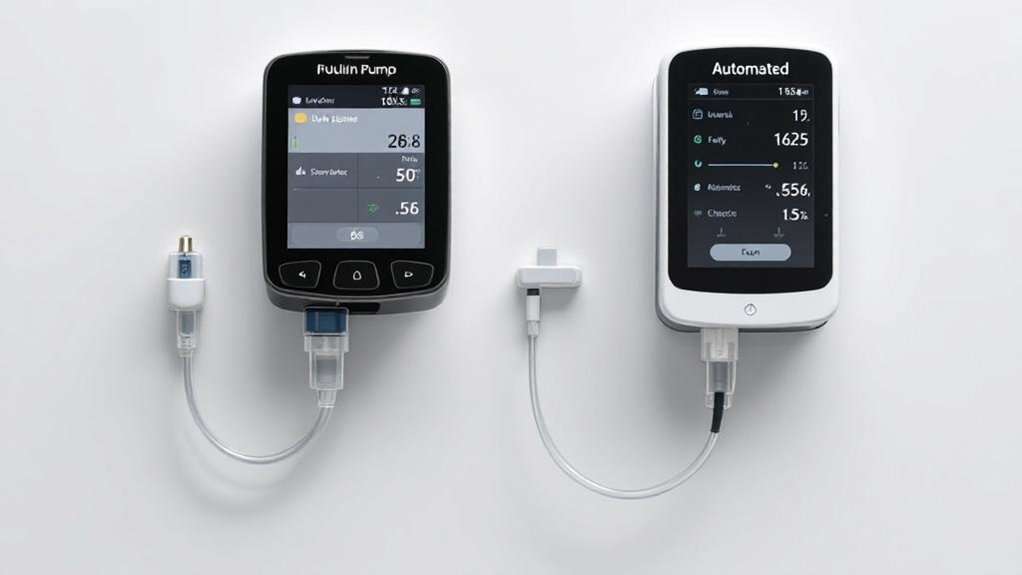
When choosing between hybrid and fully automated closed loop systems, you’ll need to weigh automation benefits against your desired level of control. Hybrid systems require your active participation in meal bolusing and carbohydrate counting, maintaining your decision-making responsibility for prandial insulin dosing. Fully automated systems shift more of this burden to algorithmic control, potentially reducing your management load but relinquishing some direct input over insulin delivery timing and amounts. Recent research demonstrates that fully closed-loop systems using ultrarapid insulin lispro can significantly increase time in range compared to conventional pump therapy with CGM.
Automation Versus Control
The distinction between hybrid and fully automated closed loop insulin delivery systems represents a significant technological evolution in diabetes management. With hybrid systems, you’ll experience automation advantages like automatic basal rate adjustments and correction boluses, yet still need to input carbohydrate counts and meal announcements.
Control comparisons reveal that while sensor-augmented pumps require manual adjustments based on CGM data, hybrid systems automatically modulate insulin delivery using sophisticated algorithms. These systems integrate real-time glucose monitoring with predictive calculations to improve your glycemic control.
Fully automated systems currently under development aim to eliminate meal announcements entirely, potentially reducing your disease burden substantially. Research demonstrates both systems improve time in range and reduce hypoglycemia risks, with psychological benefits including decreased management stress—advancing the community goal of minimizing diabetes’s daily impact. Studies show that patients using hybrid closed-loop systems experienced a significantly lower rate of hypoglycemic coma compared to those using open-loop therapies.
Decision-Making Responsibility Shift
As closed loop insulin pump technology evolves, a fundamental shift in decision-making responsibility has emerged between hybrid and fully automated systems.
With hybrid systems, you retain considerable control—requiring your input for meal times, carbohydrate counting, and meal bolusing. The system only automates basal insulin adjustments, aligning with user preferences that favor participation in management decisions.
Conversely, fully closed loop systems represent a paradigm shift, eliminating manual meal-time inputs entirely. Advanced algorithms independently manage both basal and bolus insulin, greatly reducing your management burden. These systems make the decision impacts less dependent on user vigilance.
This progression demonstrates diabetes technology’s evolution toward mimicking pancreatic function while accommodating varying degrees of desired control—from those preferring active involvement to those seeking minimal intervention in glucose management. Ideally, future developments aim to create dual-hormone systems that more accurately replicate biological processes.
Key Components That Power Closed Loop Systems
Modern closed loop insulin systems function through the integration of several sophisticated components working in concert to automate glycemic control. The foundation rests on continuous glucose monitoring (CGM) technology, where sensor accuracy directly influences system performance by measuring interstitial glucose levels at frequent intervals, markedly reducing reliance on fingerstick tests.
Insulin delivery occurs through advanced pumps that provide both basal continuous infusion and user-initiated boluses, allowing for precise dosing in minute increments. Many of these pumps utilize SmartAdjust™ technology to automatically adjust insulin dosages in response to CGM readings, further personalizing treatment for the user. The sophisticated control algorithm serves as the system’s brain, analyzing CGM data to predictively adjust insulin administration based on glucose trends and patterns.
While automation is increasing, these hybrid systems still require your manual input for mealtime boluses and carbohydrate counting, creating a collaborative relationship between you and your diabetes management technology. Current commercially available options include four hybrid systems in the UK: Tandem t:slim with Control-IQ, CamAPS FX, and the Medtronic MiniMed 670G and 780G models.
Real-World Benefits for Daily Diabetes Management

While advanced components form the technological foundation of closed loop systems, their practical impact on daily diabetes management delivers measurable improvements in health outcomes and quality of life. Clinical research demonstrates these systems increase time-in-range by approximately 10% while considerably reducing hypoglycemic events and DKA hospitalization rates. The Medtronic Minimed 770G Insulin Pump, for example, utilizes SmartGuard™ technology to automatically adjust insulin delivery based on real-time glucose data, helping users maintain more stable blood sugar levels.
Real life experiences consistently reveal decreased management burden, with automated basal adjustments alleviating decision fatigue and cognitive load. Patient testimonials highlight improved sleep quality due to reduced nocturnal glucose fluctuations and diminished anxiety. The integration of data sharing capabilities enables collaborative care between users and healthcare providers, facilitating more personalized treatment protocols. These tangible benefits translate to enhanced glycemic control with HbA1c improvements, fewer emergency situations, and ultimately, a more sustainable approach to long-term diabetes management. Children using closed-loop systems are increasingly able to achieve A1c levels below 7% or 9%, showing the technology’s effectiveness in pediatric diabetes management.
Limitations and Challenges to Consider
Despite technological advancements, closed-loop insulin systems face significant physiological limitations including delayed subcutaneous insulin absorption and the persistent mismatch between insulin delivery and glucose sensing sites. You’ll encounter practical challenges such as connectivity disruptions between system components, adhesion problems with sensors and pumps, and the continued requirement for carbohydrate counting and manual meal bolusing in most hybrid systems. These limitations necessitate your ongoing vigilance and intervention, as current technologies remain assistive tools rather than fully automated solutions for diabetes management. Systems like the 670G have reported high discontinuation rates primarily due to the frequency of sensor calibration requirements and closed-loop exit rates.
Technology Limitations Persist
Although closed-loop insulin pumps represent a significant advancement in diabetes management, several technology limitations persist that affect their best performance. Pharmacokinetic constraints create unavoidable lags between insulin delivery and action, compromising algorithm accuracy during postprandial periods. Even ultra-short-acting insulins fail to match physiological insulin release timing, resulting in suboptimal glycemic control after meals.
Device connectivity issues and hardware failures—including infusion set occlusions and sensor malfunctions—disrupt the system’s reliability. The algorithms struggle with variable insulin responsiveness due to temperature sensitivity and individual metabolic differences. Lipohypertrophy around catheter insertion sites can significantly impair insulin absorption efficacy, further complicating predictable insulin delivery. These systems cannot perfectly predict carbohydrate absorption rates, necessitating manual meal announcements that reduce autonomy. Additionally, limited customization options may not accommodate diverse lifestyles, while the constant physical attachment to devices creates user burden that impacts long-term adherence.
User Vigilance Required
The advancement of closed-loop insulin pump technology, while offering unprecedented automation, requires ongoing vigilance from users to guarantee ideal system functionality and safety. Despite automation benefits, you must maintain troubleshooting skills to address catheter occlusions or silent failures that can rapidly lead to hyperglycemia or ketoacidosis.
User error during infusion set changes or improper insertion remains a significant risk factor. The need for careful management is underscored by the significant increase in adverse event reports for insulin pumps in recent years. Developing alarm awareness is vital, as alarm fatigue may compromise safety, while the constant visibility of glucose values can trigger emotional distress. The psychosocial impacts of device management—including social limitations from alarms and adhesion issues—necessitate adaptation. Extensive user education remains essential for minimizing system dependence risks, as overreliance can erode manual management capabilities. Maintaining open dialogue with providers helps optimize device performance while addressing the psychological aspects of technology reliance.
Who Can Benefit Most From Closed Loop Technology
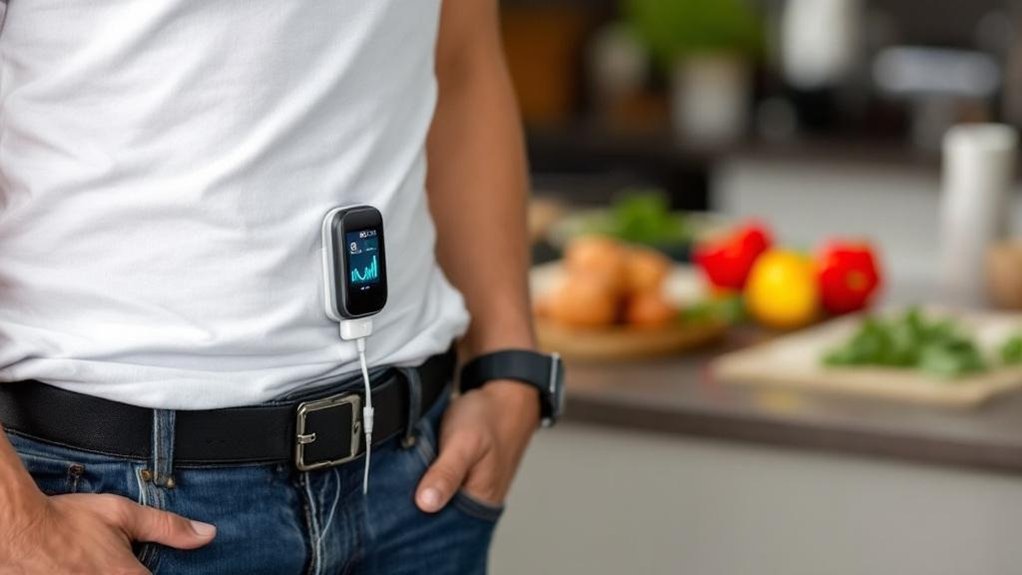
When evaluating candidates for closed-loop insulin delivery systems, several patient populations demonstrate significant clinical benefits. The primary target population includes individuals with Type 1 diabetes, who experience reduced hypoglycemia risk and improved time in target glucose range (70-180 mg/dL). People with insulin-requiring Type 2 diabetes also benefit substantially, with studies showing HbA1c reductions from 8.7% to 7.3% following closed-loop therapy. In addition, modern systems such as the Medtronic Guardian 4 Transmitter Kit offer continuous glucose monitoring in real-time, enhancing glycemic control and user convenience.
User eligibility extends to those with unpredictable activity patterns or lifestyles, as these systems continuously adjust basal insulin to accommodate exercise and irregular schedules. The pediatric and adolescent demographic benefits particularly from remote monitoring features, allowing parents real-time access to glycemic data. Newer generation systems with factory-calibrated sensors have increased adherence in youth populations, overcoming usability challenges that previously led to discontinuation. Recent research demonstrates that adults with Type 2 diabetes can achieve significantly better time in target compared to standard insulin therapy, with closed-loop systems showing 66.3% time in range versus just 32.3% with conventional treatment.
The Future of Automated Insulin Delivery Systems
As closed-loop insulin delivery systems continue to evolve, innovation in automated insulin delivery (AID) technology is accelerating rapidly. Research indicates that fully closed-loop systems requiring zero user input represent the ultimate goal, with Inreda’s bihormonal artificial pancreas leading this advancement by delivering both insulin and glucagon. The Omnipod 5 AID system has demonstrated significant improvements with HbA1c levels dropping from 8.1% to 7.2% after three months of use. Omnipod DASH offers a tubeless, wearable insulin delivery solution capable of delivering up to 72 hours of continuous insulin, further supporting the shift toward seamless diabetes management.
Patient experiences will be enhanced through emerging technologies like the Beta Bionics Mint Patch Pump (2027) and Glucotrack’s implantable CGM, which eliminates interstitial fluid lag by measuring directly from blood. Future innovations include AI-driven dosing algorithms and novel insulin formulations optimized for automated delivery.
Strategic partnerships between manufacturers are facilitating integration of next-generation CGMs, such as the FreeStyle Libre 3 Plus, which offers minute-by-minute readings for 15 days, furthering the community’s access to increasingly sophisticated management tools.
Frequently Asked Questions
How Much Do Closed Loop Insulin Pump Systems Typically Cost?
You’ll find closed loop systems typically cost $4,500-$7,000 initially, with annual supplies ranging $3,000-$6,000. Cost comparison reveals price factors include insurance coverage and specific technology selected.
Are Closed Loop Systems Covered by Insurance or Medicare?
Yes, closed loop systems can be covered by Medicare and insurance plans when meeting eligibility criteria, including documented medical necessity and participation in structured diabetes management programs. Coverage specifics vary between providers.
What Happens During Power Outages or Device Malfunctions?
During power failures, your closed-loop system reverts to failsafe protocols, maintaining basal rates or stopping insulin. You’ll need backup power sources and alternative delivery methods to guarantee device reliability throughout disruptions.
Can I Swim, Exercise, or Travel With a Closed Loop System?
Yes, you can engage in these activities with appropriate precautions. For swimming, verify waterproof ratings. Exercise benefits include automatic basal adjustments. During travel, prepare for time zones and altitude changes while monitoring glucose closely.
How Often Do Components Need Replacement or Maintenance?
You’ll need to replace transmitters every 6 months, sensors every 7-14 days, and infusion sets every 2-3 days. Regular component lifespan monitoring and adherence to maintenance schedules guarantees peak system performance.
Conclusion
You’ve now explored closed loop insulin delivery systems that integrate CGMs, insulin pumps, and control algorithms to automate glycemic management. These hybrid closed loop or artificial pancreas systems offer reduced glycemic variability, decreased hypoglycemic events, and improved time-in-range metrics. While technological limitations persist, ongoing clinical trials suggest future iterations will further minimize user input requirements. Consider discussing with your healthcare provider if this therapeutic approach aligns with your diabetes management goals.