

When choosing a CGM, consider whether you need real-time monitoring (Dexcom G7) or intermittent scanning (Freestyle Libre). Evaluate accuracy ratings (aim for MARD values of 10-11%), alert capabilities, sensor wear time (7-14 days), and data sharing functions. Your lifestyle and insulin regimen will determine which system works best, while costs range from $160-$500 monthly. Insurance coverage and manufacturer programs can greatly reduce expenses. The following guide offers deeper insights into matching the right CGM to your needs.
Key Takeaways
- Choose between real-time CGMs with automatic data transmission or intermittently scanned systems requiring manual scanning.
- Consider accuracy (MARD values), sensor wear time (10.5-14 days), and alert capabilities for preventing dangerous glucose excursions.
- Evaluate data sharing options to enable real-time monitoring by healthcare providers and compatibility with insulin delivery systems.
- Compare costs across brands ($1,920-$5,300 annually) and check insurance coverage, manufacturer discounts, and savings programs.
- Select based on lifestyle needs, including data frequency, transmitter range, and appropriate maintenance practices.
Understanding Different Types of CGM Systems
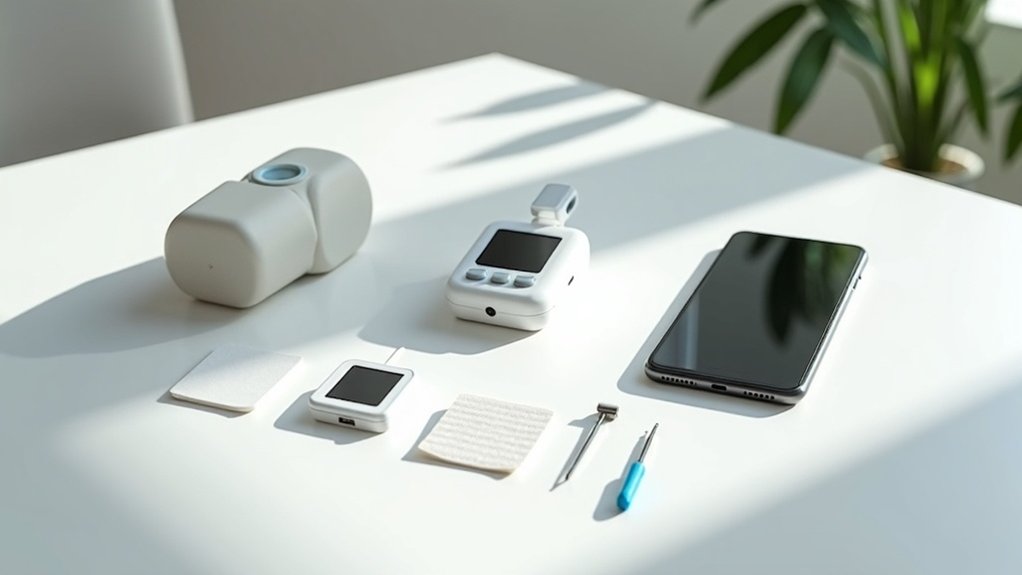
When choosing a continuous glucose monitoring (CGM) system, it is essential to understand the fundamental differences between available options.
The market offers two primary CGM types: real-time and intermittently scanned systems. Real-time CGMs automatically transmit glucose data every 1-5 minutes to your display device, providing immediate trend visibility and customizable alerts for glucose fluctuations. These systems offer superior integration with insulin pumps, enabling automated insulin adjustments. Intermittently scanned CGMs (flash monitors) require manual scanning to view current readings, with limited or no alarm functionality. The Dexcom G7 sensor is an example of a real-time CGM that provides predictive alerts to prevent highs and lows.
Your selection should consider sensor technology compatibility with your lifestyle and management needs. Real-time systems typically provide tighter glucose control, particularly beneficial for type 1 diabetes management. Some CGMs like the Dexcom G7 are designed for insulin-dependent users while others like Stelo target adults without insulin requirements. Device compatibility with smartphones or dedicated receivers also affects data sharing capabilities with your healthcare team and loved ones, making it easier to support your health management goals.
Key Features to Consider Before Purchase
When selecting a continuous glucose monitor (CGM), you’ll need to weigh the trade-off between accuracy (measured by MARD values) and sensor wear time, which ranges from 10.5 to 14 days depending on the model. Your CGM’s alert capabilities—including customizable thresholds, predictive warnings, and non-disableable critical alarms—directly impact your ability to prevent dangerous glucose excursions. The Dexcom G7’s predictive alert system can warn you of urgent lows 20 minutes in advance, providing an additional layer of safety. Data sharing functionality enables real-time monitoring by healthcare providers and loved ones, with systems like Dexcom G7 supporting up to three simultaneous Bluetooth connections for extensive support. Consider compatibility with automated insulin delivery systems, as AID systems automatically adjust insulin doses based on your CGM readings for improved glucose management.
Accuracy vs. Sensor Life
Understanding the balance between accuracy and sensor longevity is essential when selecting a continuous glucose monitor (CGM) for your diabetes management. The Mean Absolute Relative Difference (MARD) indicates sensor accuracy, with lower percentages reflecting better performance. Most high-quality CGMs achieve 10-11% MARD, though accuracy typically decreases in hypoglycemic ranges. A widely held belief suggests that a MARD of 10% is considered a safety threshold for nonadjunctive use in insulin dosing decisions.
When evaluating sensor accuracy and longevity trade-offs, consider that traditional transcutaneous sensors last 7-14 days, while implantable options can function up to 90 days. Longer-wearing sensors generally improve adherence but may experience slight accuracy degradation toward the end of their life. Factory-calibrated models tend to maintain more consistent readings throughout their lifespan, reducing your maintenance burden while providing reliable glucose data for treatment decisions.
Alerts and Data Sharing
The sophisticated alert systems and data sharing capabilities of modern CGMs represent vital components in effective diabetes management. Today’s devices offer extensive alert customization options—from predictive warnings that anticipate glucose fluctuations 10-60 minutes in advance to threshold alerts for immediate intervention.
Most CGMs now enable sharing glucose data with up to five caregivers via smartphone apps and cloud platforms, fostering collaborative care. Dexcom G7 offers the ability to monitor up to 10 people simultaneously through its Follow app, providing extensive support options for patients with complex care needs. When selecting a device, consider how frequently it transmits readings (ranging from every 1-5 minutes), whether alerts can be temporarily silenced, and if urgent warnings override silent settings.
Also evaluate data privacy policies carefully, as sharing preferences vary by manufacturer. The balance between alert sensitivity and reducing alarm fatigue is essential—Dexcom’s option to delay first high alerts, for example, helps minimize disruptions while maintaining safety.
Who Should Use Which CGM: Matching Devices to Your Needs
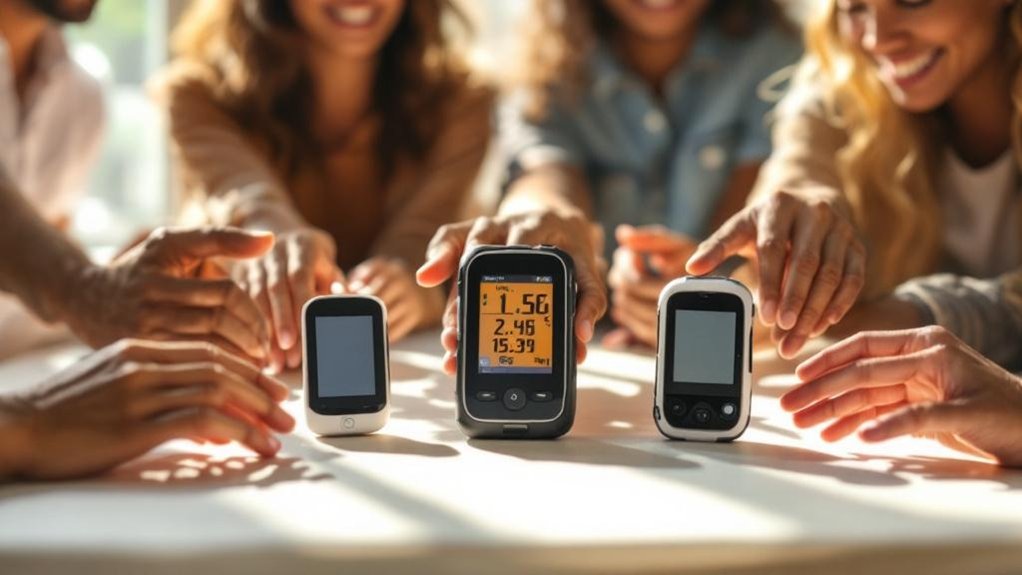
Selecting the right CGM involves considering your diabetes type and specific management needs, with real-time systems offering greater benefit for insulin-dependent patients. Your budget constraints will influence options, as devices range from basic models with fewer features to extensive systems with advanced integration capabilities. Your lifestyle factors—including activity level, technology preferences, and desired wear duration—should guide your selection toward devices that seamlessly integrate with your daily routine. Medical professionals recommend choosing devices with secure sensor adhesion to ensure consistent data collection throughout the sensor’s lifespan. Additionally, the Dexcom G7 Sensor offers a compact design that is particularly suited for active lifestyles, enhancing user convenience and accuracy.
Type 1 Diabetes Considerations
For those living with Type 1 diabetes, choosing the right continuous glucose monitor (CGM) can greatly impact daily management and long-term health outcomes. Real-time CGMs like Dexcom G6/G7 and FreeStyle Libre 3 are strongly recommended for type 1 considerations due to their automatic glucose readings every 1-5 minutes without manual scanning.
Your insulin management requires devices with customizable alerts and urgent low alarms that cannot be silenced—critical safety features when hypoglycemia risk is high. The Dexcom G6 provides wireless reading every 5 minutes with custom range alerts, making it particularly suitable for intensive diabetes management. Pump integration capabilities found in Dexcom systems enable closed-loop functionality, allowing automated insulin adjustments based on glucose trends.
While flash monitors (FreeStyle Libre 2/14 Day) may work for some stable type 1 patients, they lack automatic alerts and require user interaction, potentially missing dangerous glucose fluctuations that occur between scans.
Budget-Conscious Recommendations
While Type 1 diabetes management demands specific CGM features, your financial situation plays an equally important role in device selection. For cost-conscious users, the Freestyle Libre 2 or 3 offers budget-friendly options, with annual costs between $1,920-$2,040 compared to Dexcom G6’s $5,300.
Consider these cost-saving tips: verify insurance coverage before purchasing, utilize manufacturer savings programs, and explore GoodRx coupon options. Smartphone-compatible CGMs eliminate receiver device expenses. Choosing sensors with longer wear periods (Freestyle’s 14-day versus Dexcom’s 10-day) reduces replacement frequency and lowers monthly costs. The Medtronic Guardian Connect represents a mid-tier pricing option with yearly sensor costs around $3000.
Balance feature trade-offs against price points—Libre 2 provides essential monitoring at the lowest cost, while paying more for Dexcom G7 might be justified if you need superior accuracy and insulin pump compatibility.
Lifestyle Compatibility Assessment
How you live your daily life should greatly influence your continuous glucose monitor (CGM) selection. Your lifestyle preferences dictate whether you need continuous data every 5 minutes (Dexcom G6/G7) or less frequent readings (Stelo’s 15-minute intervals).
For active individuals, transmitters with longer ranges like Dexcom G7’s 33-foot coverage allow greater movement freedom without losing connection. The Stelo CGM is especially suitable for adults with prediabetes or type 2 diabetes who are not using insulin, providing useful insights without the need for urgent alerts. If you’re frequently outdoors, choose models with wider operating temperature ranges to maintain accuracy in varying conditions.
Consider your activity levels when selecting sensor size—the Dexcom G7’s compact design offers discretion during sports or work. Those requiring shared monitoring can benefit from CGMs that connect with up to 10 caregivers, enhancing your support network. Devices with shorter warm-up times (30 minutes) minimize downtime, accommodating busier lifestyles while maintaining effective glucose management.
Alert Systems and Data Sharing Capabilities
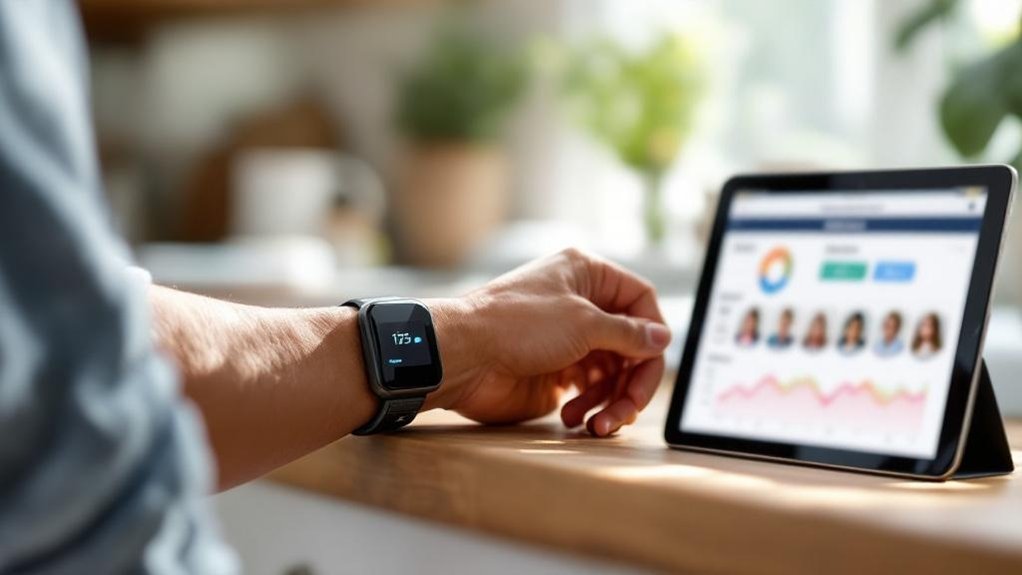
Modern continuous glucose monitors (CGMs) incorporate sophisticated alert systems that serve as essential safety mechanisms for diabetes management. These devices offer extensive alert customization, allowing you to set personalized thresholds for high and low glucose levels based on your specific needs.
Your notification settings can be tailored to include predictive alerts that forecast dangerous levels 20-30 minutes in advance, giving you important time to take preventive action. Most systems offer multiple alert modalities—auditory, vibratory, and visual—to guarantee you receive warnings effectively. Rise and fall rates can also be monitored with customized repetition options to help manage rapid glucose changes. Many CGMs, like the Dexcom G6, now feature data sharing capabilities that connect with smartphones and allow real-time monitoring by family members or healthcare providers. This connectivity creates a safety network, especially beneficial for children or elderly users, while giving you control over who accesses your glucose data.
Cost Analysis and Insurance Coverage Options
Understanding the financial aspects of continuous glucose monitoring is a critical component of your decision-making process. CGM systems represent a substantial investment, with annual out-of-pocket costs ranging from $2,000 to $7,000 without insurance coverage. Monthly supplies typically cost between $160 and $500, depending on the manufacturer. For example, the Dexcom G7 Sensor offers a subscription option that can help reduce monthly expenses.
Your insurance coverage dramatically impacts affordability. Popular systems like Dexcom, FreeStyle Libre, and Eversense are often covered by private insurance and Medicare for eligible patients. When evaluating options, request a detailed cost breakdown from your provider and verify your insurance eligibility requirements.
If you’re facing coverage challenges, explore manufacturer assistance programs, pharmacy discount cards, or subscription-based alternatives. Using a smartphone compatible CGM system can significantly reduce costs by eliminating the need for a separate receiver. Remember that while traditional blood glucose meters cost considerably less upfront, CGMs offer continuous data that may justify the investment for your specific health needs.
Daily Use and Maintenance Requirements
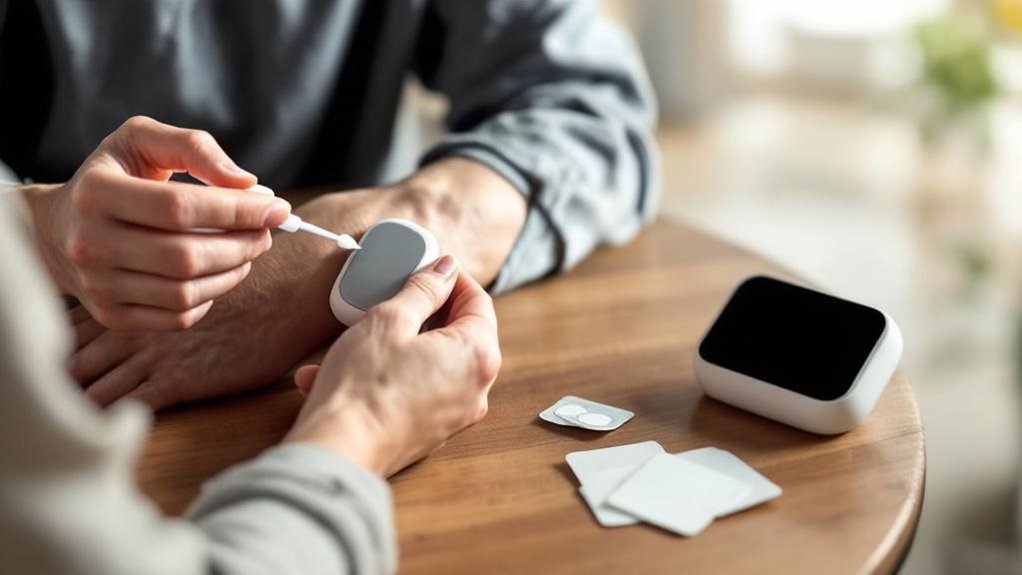
Successful management of your continuous glucose monitoring system requires adherence to specific daily maintenance practices that directly impact both device performance and data accuracy.
Regular sensor rotation prevents skin irritation while maintaining peak readings. Clean insertion sites thoroughly before application for infection prevention and improved sensor adherence. Interact with your device at recommended intervals—some systems require scanning every 8 hours to prevent data gaps, while others transmit automatically every 1-5 minutes. Most CGMs provide real-time glucose data to smartphones, eliminating the constant need for finger-stick tests in daily management. The Dexcom G7’s customizable alerts enhance safety by notifying users of high or low glucose levels.
Maintain your transmitter by tracking battery life and keeping firmware updated. For thorough glucose pattern analysis, aim for at least 14 days of continuous data with 70% or more sensor wear time. Remember that proper site cleaning after sensor removal helps identify and address potential skin issues quickly, ensuring comfort throughout your diabetes management journey.
Frequently Asked Questions
Can I Wear My CGM While Swimming or Bathing?
Yes, you can wear your CGM while swimming and bathing. Most are water-resistant, but follow swimming precautions like checking depth limits and bathing tips for maintaining sensor attachment and reliability.
How Painful Is Sensor Insertion Compared to Finger Pricks?
Most users report sensor insertion causes only brief, mild discomfort—a slight pinch compared to the sharper, repeated pain of finger pricks. Your insertion experience typically involves less overall pain than traditional testing.
Will Airport Security Scanners Damage My CGM Sensor?
Yes, airport security scanners can damage your CGM. For sensor protection, avoid X-ray and AIT scanners. Request hand-wanding or pat-down instead, and inform TSA agents about your device before screening.
Can Medications or Vitamins Interfere With CGM Readings?
Yes, your CGM readings can be affected by medication effects like acetaminophen and hydroxyurea, while vitamin interactions such as vitamin C may also cause inaccurate results. Always verify unusual readings with a fingerstick test.
How Do I Dispose of Used CGM Sensors Properly?
For proper sensor disposal, utilize manufacturer take-back programs like Abbott’s FreeStyle Libre program. Alternatively, dispose of sensors as electronic waste through local recycling options, never in regular household trash.
Conclusion
You’ll need to weigh sensor longevity, accuracy, alarm customization, and data sharing options when selecting your CGM. Consider your specific diabetes management needs, technical requirements, and lifestyle constraints. Insurance coverage varies greatly between devices, affecting your out-of-pocket costs. Remember that while all CGMs reduce fingerstick testing, they differ in calibration requirements, app interfaces, and integration with insulin delivery systems.