

Fiber greatly improves diabetes management by slowing carbohydrate digestion, preventing blood sugar spikes, and enhancing insulin sensitivity. You’ll benefit most from consuming 35-50 grams daily, focusing on both soluble fiber (from oats and beans) and insoluble fiber (from whole grains and vegetables). Gradually increase your intake by 3-5 grams daily to avoid digestive discomfort. The plate method—half non-starchy vegetables, quarter protein, quarter quality carbs—offers a practical approach to incorporating more fiber into your meals.
Key Takeaways
- Fiber slows carbohydrate digestion, reducing glucose absorption rates and preventing blood sugar spikes after meals.
- Regular soluble fiber intake can lower HbA1c by 0.47% and improve fasting glucose and insulin levels.
- Diabetics should aim for 35-50 grams of fiber daily, focusing on 6-8 grams of soluble fiber from oats and beans.
- High-fiber foods include legumes, whole grains, non-starchy vegetables, and fruits like raspberries, pears, and apples.
- Fiber reduces LDL cholesterol and inflammation markers linked to heart disease while promoting beneficial gut bacteria.
The Science Behind Fiber’s Blood Sugar Benefits

When consumed as part of a balanced diet, fiber works through several biological mechanisms to help regulate blood sugar in people with diabetes. It forms a gel-like substance in your gut that physically slows carbohydrate digestion and reduces glucose absorption rates.
This delayed fiber digestion prevents rapid blood sugar spikes by releasing glucose gradually into your bloodstream. The viscosity of soluble fiber also increases stomach content thickness, further delaying gastric emptying and nutrient absorption. Soluble fiber from foods like oats and beans is particularly effective at improving insulin sensitivity.
Additionally, when fiber ferments in your colon, it produces short-chain fatty acids that trigger hormones like GLP-1, enhancing insulin sensitivity and improving overall glycemic control. Unlike other carbohydrates, fiber doesn’t contribute glucose or calories to your body, making it an essential component of your diabetes management strategy.
Comparing Soluble vs. Insoluble Fiber Effects on Diabetes
When managing diabetes, you’ll find that soluble fiber forms a gel-like substance that directly slows carbohydrate absorption, reducing post-meal blood sugar spikes by up to 30%. While insoluble fiber doesn’t directly impact glucose levels, research shows it improves whole-body insulin sensitivity in overweight individuals and reduces insulin resistance when consumed at levels of at least 14 grams daily. Both types support weight management—crucial for diabetes control—but they work through different mechanisms: soluble fiber regulates blood glucose and cholesterol, while insoluble fiber enhances satiety and digestive health. Unfortunately, studies show that adolescents consume significantly below recommended levels of dietary fiber, which could contribute to insulin resistance and early diabetes risk factors.
Soluble Fiber’s Glucose Benefits
While both fiber types play important roles in a diabetic diet, soluble fiber stands out for its direct impact on blood glucose regulation. When you consume viscous soluble fiber sources like psyllium or guar gum, they create a gel-like substance in your digestive tract that slows glucose absorption and reduces post-meal blood sugar spikes.
The soluble benefits extend beyond immediate glucose control. Regular supplementation for more than six weeks can lower your HbA1c by an average of 0.47% – a clinically significant reduction that decreases your risk of diabetes complications including heart attack and stroke. This fiber works by increasing chyme viscosity, delaying gastric emptying, and improving insulin sensitivity without affecting pancreatic function. You’ll also experience improvements in both fasting glucose and insulin levels with consistent intake. For optimal blood glucose management, research indicates that dosages higher than 8.3g/day produce significant reductions in fasting blood glucose levels.
Insoluble Fiber’s Indirect Advantages
Insoluble fiber offers complementary benefits to its soluble counterpart, working through different mechanisms to support diabetes management. While it doesn’t directly lower blood glucose like soluble fiber, consuming 14+ grams daily can reduce postprandial glucose levels and decrease insulin resistance.
The insoluble fiber benefits extend to enhancing hepatic insulin clearance and reducing liver fat markers associated with diabetes risk. Found in whole wheat bran, this type of fiber primarily supports digestive health through improved gut regularity and healthy stool formation.
Research shows ideal metabolic benefits occur at about 25 grams daily, contributing to weight management by promoting satiety and slowing gastric emptying. A recent randomized controlled trial demonstrated that increasing insoluble fiber intake creates a nonlinear inverse relationship with blood glucose levels. These indirect advantages help lower your risk of developing or progressing type 2 diabetes, making insoluble fiber an essential component of a thorough diabetes management plan.
How Much Fiber Do Diabetics Really Need?

While the general recommendation for adults ranges from 21-38 grams of fiber daily, you’ll likely need more as a diabetic—research shows significant benefits when consuming 35-50 grams per day from diverse sources. You’ll want to focus on both soluble fiber (6-8 grams daily from foods like oats and beans) and insoluble fiber (from whole grains and vegetable skins) to effectively manage blood glucose levels. A gradual increase of 3-5 grams daily is recommended to avoid digestive discomfort when building up your fiber intake. For best results, aim to maintain a balanced fiber-to-carbohydrate ratio by choosing high-fiber carbs and distributing your intake across meals throughout the day.
General vs. Diabetic Recommendations
Although dietary fiber is essential for everyone’s health, diabetics need considerably more than the general population to effectively manage their condition. While general recommendations suggest 21-25 grams for women and 30-38 grams for men daily, you’ll need to aim higher with diabetes—approximately 35 grams daily, which is about 15 grams above typical intake.
Most people in affluent societies consume only around 20 grams daily, falling short of even basic recommendations. This gap is particularly problematic for you as a diabetic, as higher fiber intake from natural fiber sources provides substantial benefits including improved glycemic control, reduced cholesterol, and decreased inflammation. Research shows increasing your fiber can reduce mortality risk by 10-48%, with particular benefits from soluble fiber sources like oats and beans that help regulate blood sugar levels. Studies demonstrate that higher fiber intake leads to significant reductions in HbA1c levels, providing measurable improvement in long-term blood sugar control.
Daily Targets By Source
The science is clear: if you have diabetes, you need more fiber than the average person. Research shows you should aim for 35 grams daily—about 15 grams more than average consumption—to reduce mortality risk by up to 48%.
For best results, target 6-8 grams of soluble fiber within your daily total. Women over 50 should consume at least 21 grams daily, while men under 50 need about 38 grams. Key fiber sources include whole grains (3+ grams per serving), fruits with skin (3-4 grams each), and vegetables (3-4 grams per half-cup). Raspberries are exceptional, providing 8 grams per cup. Soluble fiber can significantly help lower bad cholesterol levels, which is particularly important for diabetics with increased cardiovascular risk.
Increase your intake gradually by 3-5 grams weekly while drinking plenty of water. This measured approach helps you avoid digestive discomfort while maximizing the glycemic and cardiovascular benefits.
Fiber-to-Carbohydrate Ratio Balance
For diabetics seeking ideal health outcomes, understanding the relationship between fiber and carbohydrates goes beyond simply targeting a daily fiber goal. Research indicates that achieving a 10:1 carbohydrate-to-fiber ratio represents the best balance for glycemic control.
When you select carbohydrate choices maintaining this proportion, you’re likely consuming genuine whole foods that help stabilize blood sugar levels. Aim for at least 35 grams of fiber daily while keeping this ratio in mind. Studies show this approach can reduce HbA1c by around 0.5% compared to lower-fiber diets. The WHO recommends a minimum intake of 25g of fiber daily, though this falls below optimal levels for those managing diabetes.
Incorporating fiber-rich snacks like whole fruits, nuts, and legumes can greatly improve your insulin sensitivity and reduce postprandial glucose spikes. Remember that foods exceeding the 10:1 ratio typically contain added sugars that may compromise your diabetes management goals.
Top 10 Fiber-Rich Foods for Blood Sugar Management
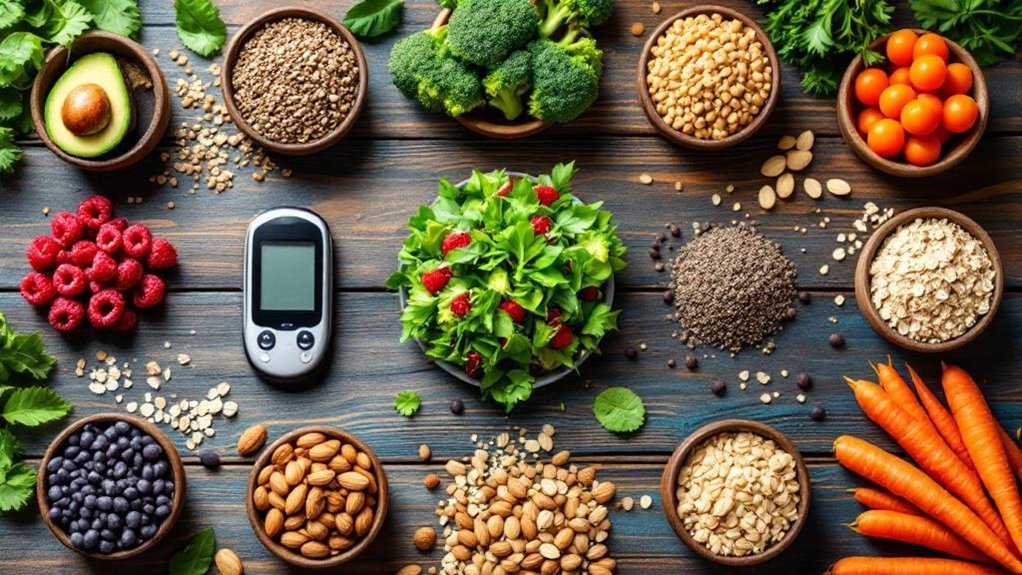
Managing your blood sugar effectively requires strategic food choices, with fiber playing an essential role in your diabetes management arsenal. Your best options include whole grains like brown rice and quinoa, which greatly outperform refined alternatives for glycemic control. Incorporate legumes—black beans, lentils, and chickpeas—which deliver exceptional fiber content while reducing blood sugar variability.
Non-starchy vegetables (spinach, Brussels sprouts, cauliflower) should fill half your plate, providing bulk without raising glucose levels. Choose high-fiber fruits like raspberries, pears, and apples, ideally paired with protein sources. Studies show that adequate fiber intake may prevent diabetes progression in those with prediabetes. These fiber-rich snacks stabilize blood sugar while high-fiber recipes incorporating these foods can help you reach the recommended 50 grams daily—look for items with 5+ grams per serving on nutrition labels.
Practical Ways to Increase Daily Fiber Intake
While incorporating more fiber into your diabetes diet offers significant benefits, it is essential to make this change gradually. Start by adding just 3-5 grams daily over several weeks, allowing your digestive system to adjust comfortably.
Make simple substitutions like choosing brown rice over white and whole-wheat pasta instead of regular. Keep peels on fruits like apples and pears, and enjoy fiber-rich snacks such as berries or whole-grain crackers with at least 2 grams of fiber per serving. Including raspberries in your diet provides exceptional fiber content as one cup contains 8 grams of fiber.
Legumes provide excellent soluble fiber—add chickpeas to salads or replace some meat with lentils. If you’re struggling to reach the recommended 25-35 grams daily, consider fiber supplements after consulting your healthcare provider. These gradual adjustments, paired with increased water intake, will help optimize your diabetes management.
Fiber’s Role in Preventing Diabetes Complications

Beyond simply aiding digestion, dietary fiber plays an essential role in preventing serious diabetes complications through multiple biological mechanisms. When you consume adequate fiber sources, you’re actively protecting your cardiovascular system as fiber reduces LDL cholesterol and inflammation markers linked to heart disease.
The health benefits extend to your gut microbiome, where fiber promotes beneficial bacteria that improve glucose metabolism and insulin sensitivity. By slowing glucose absorption, fiber prevents blood sugar spikes that contribute to neuropathy and retinopathy. It’s also a powerful ally for weight management, helping you maintain a healthy body weight and reducing strain on your kidneys and cardiovascular system.
Regular consumption of high-fiber foods can even lower your HbA1c levels and decrease the risk of progression from prediabetes to Type 2 diabetes. Studies show that specific soluble fibers like galactomannans and gums significantly improve metabolic markers in people with diabetes.
Meal Planning Strategies: Balancing Fiber and Carbohydrates
Successful meal planning for diabetes requires a strategic balance between fiber intake and carbohydrate consumption. Using the Diabetes Plate method can simplify your meal prep—fill half your plate with non-starchy vegetables, a quarter with lean protein, and the remaining quarter with quality carbohydrates like whole grains.
When counting carbs, subtract half the fiber grams to calculate net carbs for better insulin management. Consistent carbohydrate intake at each meal helps maintain steady blood sugar levels, while incorporating fiber slows digestion and prevents glucose spikes. For optimal health benefits, aim to include fiber-rich foods from all recommended food groups in your daily meals.
Practice portion control by pairing carbohydrates with protein, healthy fats, and fiber-rich foods. Space meals 2-3 hours apart to allow blood glucose stabilization. This balanced approach not only improves glycemic control but also creates satisfying meals that support your long-term diabetes management goals.
Frequently Asked Questions
Can Fiber Supplements Replace Medication for Diabetes Management?
No, fiber supplements cannot replace your diabetes medication. While they can complement your diabetes management by improving glycemic control, they should be used alongside prescribed treatments for ideal health outcomes.
Does Cooking Affect the Fiber Content of Diabetic-Friendly Foods?
Yes, cooking methods impact fiber content. Microwave cooking preserves more resistant starch than boiling, while shorter cooking times maximize fiber retention. You’ll benefit most from gentle cooking techniques for diabetes-friendly meals.
How Does Fiber Interact With Common Diabetes Medications?
Fiber interactions with diabetes medications are complex. You’ll find fiber can both enhance medication effectiveness and occasionally interfere with absorption. Time your intake separately from medications to maximize benefits while minimizing potential interactions.
Can High-Fiber Diets Cause Digestive Issues for Diabetic Patients?
Yes, high-fiber diets can cause gas, bloating, and constipation for you. Maintaining proper fiber balance and increasing intake gradually helps minimize these issues while still supporting healthy fiber digestion.
Is Fiber Content Affected When Freezing or Storing Diabetic Meals?
No, you don’t need to worry about fiber retention during freezing. Your diabetic meal preparation maintains fiber content, as freezing preserves fiber’s structure better than extended refrigeration or fresh storage methods.
Conclusion
You’ve seen how fiber is a powerful ally in your diabetes management strategy. By choosing foods rich in both soluble and insoluble fiber, you’re not just controlling blood sugar levels—you’re supporting overall health. Remember to increase your fiber intake gradually, drink plenty of water, and aim for 25-30g daily. With thoughtful meal planning that prioritizes fiber-rich carbohydrates, you’ll experience better glucose control and reduced complication risks.