

Diabetic ketoacidosis (DKA) is a life-threatening metabolic derangement characterized by hyperglycemia, ketosis, and metabolic acidosis. It occurs due to absolute or relative insulin deficiency, preventing cellular glucose uptake while enhancing lipolysis. The resulting ketone production causes an increased anion gap acidosis. You’ll notice polyuria, polydipsia, fruity breath, and potentially Kussmaul respirations as compensatory mechanisms develop. Understanding its biochemical cascade allows for prompt recognition of warning signs before progression to critical status.
Key Takeaways
- DKA is a life-threatening condition characterized by high blood sugar, ketones, and metabolic acidosis due to insulin deficiency.
- Common triggers include insulin omission, inadequate dosing, and infections that disrupt metabolic balance.
- Early warning signs include excessive thirst, frequent urination, fruity breath, fatigue, and blood glucose above 250 mg/dL.
- Emergency treatment involves fluid resuscitation, insulin therapy, electrolyte monitoring, and glucose management until acidosis resolves.
- Prevention requires medication adherence, regular glucose and ketone monitoring, and seeking medical help during illness.
What Is DKA? The Biochemistry Behind the Crisis
Diabetic ketoacidosis (DKA) represents a life-threatening metabolic derangement characterized by the biochemical triad of hyperglycemia, ketosis, and metabolic acidosis. At its core, DKA stems from an absolute or relative insulin deficiency coupled with counter-regulatory hormone excess.
When you’re experiencing DKA, your body’s biochemical pathways undergo dramatic shifts. Without adequate insulin, glucose can’t enter cells, triggering hepatic gluconeogenesis and glycogenolysis that worsen hyperglycemia. Simultaneously, enhanced lipolysis releases fatty acids that undergo beta-oxidation in your liver, producing ketone bodies (β-hydroxybutyrate, acetoacetate, and acetone). These acidic compounds overwhelm your bicarbonate buffering system, creating an increased anion gap metabolic acidosis. Your body attempts compensation through Kussmaul respirations, while osmotic diuresis leads to significant fluid and electrolyte losses, particularly potassium, despite potentially misleading serum levels. In many cases, DKA is precipitated by omission of insulin or an underlying infection that disrupts the already delicate metabolic balance in diabetes patients.
Common Triggers and Risk Factors for Developing DKA
Understanding what triggers DKA helps bridge biochemical knowledge with practical prevention strategies. Precipitating factors include intercurrent infections, insulin omission, and physiological stressors that exacerbate insulin resistance and accelerate ketogenesis. Recent studies have identified that inadequate insulin dosage contributes significantly to DKA development, accounting for 22.5% of cases. Type 1 diabetes confers markedly higher risk compared to type 2, with demographic vulnerabilities observed in pediatric patients under 5 and pubertal females.
Your risk assessment should consider medication interactions—particularly SGLT-2 inhibitors and corticosteroids—which can precipitate even euglycemic DKA. Lifestyle modifications must address insulin administration during illness, appropriate carbohydrate intake, and medication adherence. Socioeconomic barriers to insulin access remain critical determinants of DKA incidence. Proper education regarding sick-day protocols and continuous glucose monitoring can mitigate these risks, especially during periods of altered routine like travel or stress.
Recognizing the Warning Signs Before It’s Too Late

Recognizing DKA’s early manifestations—polyuria, polydipsia, and elevated blood glucose levels—is critical for preventing progression to life-threatening ketoacidosis. You’ll notice initial subtle signs including fruity-smelling breath, unexplained fatigue, and persistent headaches, which signal the metabolic derangement of accelerated ketogenesis and impaired glucose utilization. Without prompt attention, blood sugars typically reach above 250 mg/dL before ketoacidosis fully develops. When you experience these warning indicators accompanied by abdominal pain, Kussmaul respirations, or altered mental status, immediate medical intervention becomes imperative to correct the underlying acid-base disturbance and prevent end-organ damage.
Early Warning Signals
How quickly can a seemingly normal day transform into a medical emergency for individuals with diabetes? The progression to diabetic ketoacidosis often begins with subtle physiological disruptions you might overlook. Excessive thirst indicators, including unquenchable desire for fluids and frequent urination, signal your kidneys’ desperate attempt to eliminate mounting glucose. Blood glucose readings exceeding 250 mg/dL warrant immediate attention.
As ketones accumulate, your body’s biochemical balance deteriorates rapidly. Monitor for characteristic breathing patterns—Kussmaul respirations manifest as rapid, deep breathing compensating for metabolic acidosis. The presence of fruity-scented breath indicates acetone production. Cognitive changes, from mild concentration difficulties to frank confusion, reflect worsening acid-base disturbances. This critical condition requires prompt medical attention to prevent potentially life-threatening complications.
Don’t dismiss abdominal discomfort or persistent nausea. These aren’t merely inconvenient symptoms—they’re your body’s distress signals demanding urgent intervention.
Silent Danger Signs
While patients with diabetes often recognize overt symptoms of hyperglycemia, numerous subclinical manifestations of impending diabetic ketoacidosis remain dangerously undetected until physiological decompensation accelerates.
You might overlook subtle dehydration indicators such as poor skin turgor or mild facial flushing. Silent metabolic changes—including euglycemic DKA with blood glucose below typical DKA thresholds—can progress insidiously. Kussmaul respirations often develop gradually as your body attempts to compensate for metabolic acidosis.
Neurocognitive alterations warrant vigilance; mild headache or subtle confusion may signal cerebral edema development. Even minimal abdominal discomfort can herald advancing ketoacidosis. Your electrolyte homeostasis deteriorates silently—hypokalemia and hyponatremia typically manifest without overt symptoms until critical thresholds are breached. During illness or infections, it’s crucial to check for ketones in urine regularly using over-the-counter test kits. Regular ketone monitoring remains essential, especially during illness, as DKA can develop within 24 hours.
When to Seek Help
As the biochemical cascade of ketoacidosis accelerates within your system, recognizing the threshold for medical intervention becomes critically important to prevent life-threatening metabolic decompensation. Your prompt medical response should be initiated with any manifestation of advanced warning signs: fruity-scented breath, Kussmaul respirations, severe abdominal distress, or altered consciousness.
Fellow diabetics understand the urgency when ketone testing reveals moderate to high levels concurrent with hyperglycemia. Don’t hesitate when experiencing rapid symptom progression, particularly during illness or infection-induced stress. Infections such as pneumonia and UTIs commonly precipitate DKA episodes and require immediate attention. Electrolyte imbalances and severe dehydration, evidenced by persistent vomiting or inability to maintain fluid intake, necessitate immediate emergency intervention.
Remember: arterial blood gas abnormalities and osmolar derangements often precede visible clinical deterioration. Your vigilance in identifying these critical junctures represents your most powerful defense against DKA’s potentially fatal progression.
How Medical Professionals Diagnose DKA
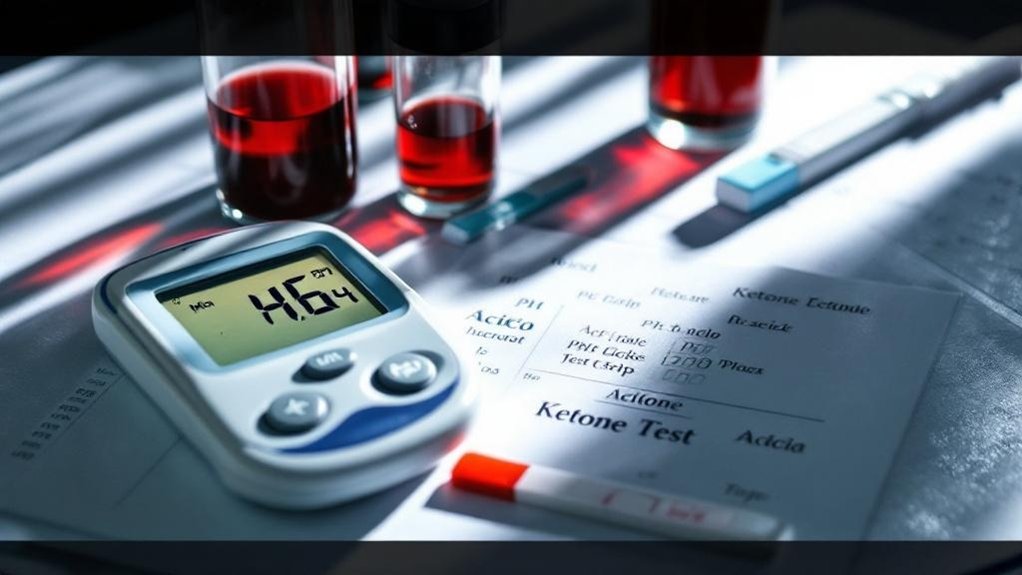
When experiencing symptoms of diabetic ketoacidosis, your healthcare provider will immediately assess two crucial diagnostic components: laboratory markers and clinical presentation. Laboratory evaluation includes measurement of blood glucose levels, beta-hydroxybutyrate concentration, arterial pH, anion gap calculation, and electrolyte panels to confirm metabolic derangements. Clinical assessment encompasses evaluation of mental status alterations, essential signs instability, dehydration severity, and identification of precipitating factors such as infection or medication non-adherence. Prompt diagnosis is especially important for young adults aged 18-44 years who represent the most common demographic affected by DKA, particularly those with type 1 diabetes.
Laboratory Markers Matter
Definitive diagnosis of diabetic ketoacidosis relies on a constellation of laboratory markers that confirm the triad of hyperglycemia, ketosis, and metabolic acidosis. Your healthcare team will assess plasma glucose (typically ≥200 mg/dL), serum ketones (primarily beta-hydroxybutyrate), and acid-base status through pH (<7.30) and bicarbonate (<15 mEq/L) measurements.
Laboratory accuracy is vital when evaluating your anion gap, which elevates as ketoacids accumulate. Equally important is monitoring electrolyte balance, particularly potassium, which may appear falsely elevated despite total body depletion. Sodium levels often present as deceptively low due to glucose-induced dilution. Utilizing the established CIWA-Ar implementation guidelines can help monitor patients experiencing alcohol withdrawal, which can be a precipitating factor for DKA in susceptible individuals.
While urinalysis provides rapid ketone detection, serum beta-hydroxybutyrate measurement offers superior diagnostic precision. Additional tests like CBC, ECG, and chest imaging help identify DKA-precipitating factors and potential complications requiring immediate intervention.
Clinical Assessment Essentials
Medical professionals employ systematic clinical assessment to diagnose diabetic ketoacidosis through recognition of its cardinal manifestations. You’ll be evaluated for the classic triad of hyperglycemia (>200 mg/dL), ketosis (blood ketones >3.0 mmol/L), and metabolic acidosis (pH <7.3, bicarbonate <15 mmol/L).
Dehydration assessment includes examination for tachycardia, dry mucous membranes, and poor skin turgor. Your clinician will monitor for Kussmaul breathing—deep, labored respirations compensating for acidosis—and detect the characteristic fruity breath odor from acetone. Mental status evaluation ranges from alertness to somnolence, with altered consciousness suggesting severe DKA. Importantly, the case fatality rate for DKA ranges from 1-5%, highlighting the critical importance of prompt diagnosis and treatment. Practitioners will investigate potential precipitating factors including infection or insulin non-adherence while distinguishing from other acidotic states. In euglycemic DKA, ketosis and acidosis occur despite glucose <200 mg/dL, often with SGLT2 inhibitor use.
Emergency Treatment Protocols for DKA
Emergency intervention for diabetic ketoacidosis (DKA) requires a systematic, evidence-based approach that prioritizes rapid stabilization of the patient’s metabolic derangements.
Your treatment protocol should begin with aggressive fluid resuscitation—typically 1-2L of normal saline over 1-2 hours, followed by maintenance fluids. Once you’ve initiated hydration, commence insulin therapy at 0.1 units/kg/hour IV after confirming serum potassium exceeds 3.3 mmol/L. Shift to dextrose-containing solutions when blood glucose falls below 200-300 mg/dL to prevent hypoglycemia while continuing insulin administration.
Monitor electrolytes vigilantly, especially potassium, which requires supplementation when levels drop below 4.6 mmol/L. Bicarbonate therapy is reserved for severe acidosis (pH <6.9) only. Continue this regimen until anion gap normalizes, pH exceeds 7.3, and ketones fall below 0.6 mmol/L.
Long-term Management After a DKA Episode

After successfully stabilizing a patient through the acute DKA crisis, your focus must shift toward extensive long-term management strategies to prevent recurrence. Implementing basal-prandial insulin therapy regimens (0.15-0.3 units/kg) serves as the cornerstone for glycemic control, requiring meticulous titration based on regular glucose monitoring and HbA1c targets. Patient education should comprehensively address how the omission of insulin frequently precipitates DKA episodes.
Strategic dietary adjustments emphasizing balanced macronutrient composition are essential for optimizing postprandial glycemic excursions. Your extensive care plan should incorporate regular physical activity to enhance insulin sensitivity, psychological support mechanisms, and vigilant medication adherence protocols.
Consistent follow-up evaluations facilitate timely intervention for subclinical metabolic derangements before progression to ketoacidosis. You’ll benefit from engaging with diabetes support communities while maintaining vigilance for psychosocial factors that may compromise treatment adherence and precipitate subsequent DKA episodes.
Special Considerations for Different Patient Populations
While managing diabetic ketoacidosis requires adherence to established protocols, certain patient populations present unique pathophysiological challenges necessitating tailored therapeutic approaches. For patients with CKD, careful electrolyte management is essential as impaired renal clearance affects fluid-electrolyte homeostasis. Pregnant women may develop euglycemic DKA requiring heightened vigilance and obstetric collaboration. Elderly patients with limited physiological reserve need modified fluid resuscitation protocols to prevent iatrogenic volume overload.
Care adjustments for SGLT2 inhibitor-associated DKA must address euglycemia despite ketoacidosis, while pediatric management focuses on preventing cerebral edema through cautious fluid administration. DKA patients with heart failure complications typically experience worse hospital outcomes including higher mortality rates and longer hospital stays. Each of these distinct patient populations demands specialized interventions beyond standard DKA protocols to optimize outcomes and minimize complications. Your understanding of these population-specific considerations guarantees appropriate therapeutic modifications when treating diverse individuals with DKA.
The Emotional Impact of Experiencing DKA

Psychological distress forms an essential, yet often overlooked dimension of diabetic ketoacidosis beyond its metabolic derangements. When you experience DKA, your emotional resilience faces significant challenges, as approximately 60% of recurrent cases present with diagnosed mental health disorders. During hospitalization, cognitive alterations compound feelings of vulnerability and loss of control, creating a multifaceted psychological burden.
The neuropsychiatric manifestations of DKA extend beyond the acute phase, potentially triggering anxiety, depression, and diabetes-related distress. Your altered sensorium during metabolic acidosis may impact decision-making capacity and subsequent psychological recovery. Recognition of these emotional sequelae represents a vital component of thorough care, particularly given the elevated prevalence of personality disorders (70%) and emotional regulation difficulties in recurrent DKA populations. This study demonstrates that individuals with recurrent DKA exhibit significantly higher scores on anxiety measures, highlighting a critical psychological component requiring intervention.
Preventing Future Episodes: Creating Your Action Plan
Prevention of recurrent diabetic ketoacidosis requires an extensive, individualized action plan that addresses multiple physiological variables. Your protocol should include rigorous glycemic monitoring 3-4 times daily, with increased frequency during physiological stressors. Medication adherence must remain absolute, with insulin dosing adjustments calibrated to your metabolic requirements.
Implement systematic ketone monitoring during hyperglycemic episodes (>250 mg/dL) and illness. Your action plan should delineate specific intervention thresholds: low ketones require hydration and supplemental insulin, while moderate-to-high levels necessitate immediate medical consultation. During periods of illness or stress, it is particularly important to monitor ketone levels as these conditions can trigger DKA.
Establish a support network comprising healthcare providers and informed family members who understand your DKA risk factors. This thorough approach, coupled with structured diabetes education, greatly reduces DKA recurrence through early recognition of precipitating physiological derangements and prompt corrective intervention.
Frequently Asked Questions
Can DKA Occur Even if I’m Taking My Insulin Regularly?
Yes, DKA can occur despite regular insulin administration due to physiologic insulin resistance during stress factors like infections, which alter your glucose metabolism and ketone production pathways. Monitor frequently, fellow diabetes warrior.
How Quickly Can I Return to Normal Activities After DKA?
You’ll typically need 24 hours of hospital treatment for your recovery timeline, with biochemical normalization being essential. Post-discharge, follow progressive activity limitations, starting with minimal ambulation before resuming your normal routine.
Does DKA Cause Permanent Organ Damage?
While DKA’s acute complications can affect multiple organs, permanent damage isn’t inevitable. Your long-term effects depend on severity, frequency of episodes, and how quickly you receive appropriate metabolic correction treatment.
Are Home Ketone Tests Reliable for Early DKA Detection?
Yes, home ketone testing is reliable for early detection. Blood β-OHB tests offer superior specificity (78.6%) compared to urine strips (35.1%), though both provide high sensitivity for your DKA screening needs.
How Does DKA Differ in Children Versus Adults?
In pediatric differences, you’ll observe more rapid acidosis progression and higher cerebral edema risk, while adult symptoms typically present with identifiable precipitating factors and more comorbidities affecting clinical course and management.
Conclusion
You’ve now understood DKA’s pathophysiology—a severe metabolic derangement characterized by hyperglycemia, ketonemia, and metabolic acidosis. Your vigilance regarding glycemic control, ketone monitoring, and prompt intervention during illness is essential. When your beta cell function is compromised, the resulting insulin deficiency precipitates lipolysis, ketogenesis, and subsequent anion-gap acidosis. Remember, DKA’s mortality rate decreases considerably with early recognition of this hyperglycemic crisis and appropriate fluid resuscitation.