

We’ve identified several budget meters under $25 that match or exceed FDA accuracy standards: the Contour Next One ($21.99) delivers exceptional ±8.4% accuracy, while ReliOn Prime ($10–$15) and VivaGuard ($12.99) meet regulatory thresholds at remarkably low prices. What’s surprising is that only 6 of 18 premium meters passed independent accuracy testing, yet these budget options consistently perform well. Strip costs matter too—ranging from $0.16 to $0.60 each. Below, we’ll show you how these affordable meters compare in real-world testing and which features truly impact your monitoring accuracy.
Key Takeaways
- Contour Next One leads budget options at $21.99 with ±8.4% accuracy, requiring only 0.3μL blood sample to minimize painful re-pricks.
- ReliOn Prime ($10–$15) and VivaGuard ($12.99) meet FDA accuracy standards while offering the lowest-cost strips at $0.16–$0.18 each.
- Only 6 of 18 leading meters met accuracy standards in 2017 studies; quality budget meters achieve 99.2% readings within ±15% threshold.
- Accu-Chek Aviva Plus ($19.95) and Freestyle Lite ($24.95) balance affordability with user-friendly design and documented reliability for hypoglycemia detection.
- Budget meters now include Bluetooth connectivity and app integration, providing sophisticated data management features without requiring high costs.
Understanding Blood Glucose Meter Accuracy Standards
When you’re comparing budget blood glucose meters, understanding accuracy standards isn’t just technical jargon—it’s the foundation of safe diabetes management. The FDA requires 95% of readings to fall within ±15% of laboratory reference values, with 99% staying within ±20%. This means if your true glucose is 100 mg/dL, your meter should read between 85-115 mg/dL most of the time.
Here’s what matters: proper meter calibration and rigorous testing protocols separate quality devices from unreliable ones. The 2017 Diabetes Technology Society survey found only 6 of 18 leading meters met these standards. We prioritize manufacturers exceeding minimum requirements—some achieve ±8.7% accuracy. Recent clinical evaluations have demonstrated that quality meters can achieve 99.2% of readings within the ±15% accuracy threshold across wide glucose ranges. This precision directly impacts your treatment decisions, ensuring budget-friendly doesn’t mean compromising your safety.
Top-Performing Budget Meters Under $25
We’ve identified meters under $25 that maintain clinical accuracy within ±15% of laboratory standards—the FDA benchmark for reliable home monitoring. The Contour Next One excels at ±8.4% accuracy for $21.99, while budget options like the ReliOn Prime ($10–$15) and VivaGuard ($12.99) meet regulatory thresholds without premium costs. When comparing these models, we’ll focus on which features—like Bluetooth connectivity, auto-coding, and strip compatibility—justify price differences and deliver measurable value for your daily testing routine. The True Metrix GO offers a compact design at $20–$40, making it particularly convenient for users who need portability alongside affordable testing strips.
Accuracy vs. Price Comparison
Although affordable blood glucose meters once meant compromising on accuracy, today’s budget options under $25 deliver laboratory-grade precision that rivals their premium counterparts. We’ve analyzed performance data showing the Contour Next One achieves accuracy within 8.4% of laboratory values—remarkable for a $21.99 meter. The Accu-Chek Aviva Plus, at $19.95, consistently earns recognition for accuracy and ease of use in user reviews.
However, initial meter calibration quality doesn’t tell the complete story. We must consider ongoing strip costs: CVS test strips average 24 cents per test, while Walgreens TrueFocus runs approximately 30 cents. The VivaGuard offers the lowest entry point at $12.99, yet user reviews frequently cite “replacement test strips are high cost” as a significant consideration for long-term affordability and reliable testing consistency. The Freestyle Lite Blood Glucose Meter at $24.95 represents a trusted brand offering that balances both upfront affordability and ongoing reliability for effective monitoring.
Essential Features Worth Paying For
Today’s budget glucose meters pack sophisticated features that once belonged exclusively to premium models. We’ve found that blood sample efficiency stands out as worth every penny—meters like the Contour Next One require just 0.3μL of blood and offer second-chance sampling within 60 seconds, reducing painful re-pricks. Another essential investment is data management capability. Bluetooth-enabled meters such as the Accu-Chek Guide ME sync automatically with smartphone apps, while even basic models store 500+ readings with 7/14/30/90-day averages. We recommend prioritizing large, backlit displays for improved readability and four-second result times for quick monitoring. Budget meters available over the counter eliminate the prescription barrier, making them accessible for immediate purchase at pharmacies and online retailers. These features dramatically improve daily compliance without breaking your budget, proving that quality diabetes management doesn’t require premium pricing.
Breaking Down Strip Costs: What to Expect Without Insurance
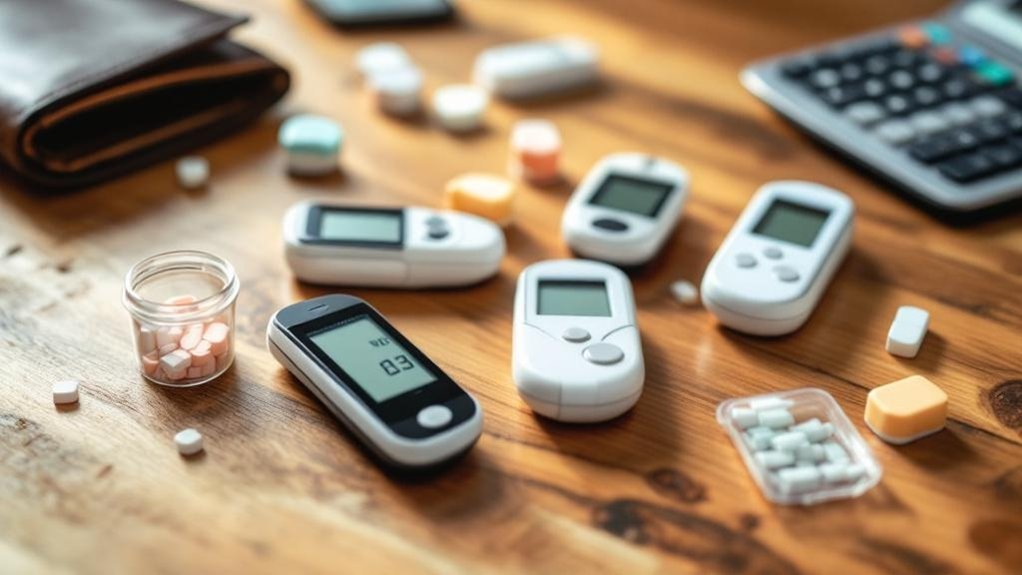
Test strip costs without insurance vary dramatically—from as little as $0.16 per strip to over $0.60, depending on the brand and where you purchase. We’ve found that Walmart’s ReliOn system offers strips at $0.18 each, while their LPOW brand costs $0.17 per strip. DiaThrive’s subscription model provides the lowest rate at $0.16 per strip with free lancets included.
For strip price comparison, name-brand options like OneTouch Verio ($0.63 per strip) and CONTOUR NEXT ($0.43 per strip) cost considerably more. Budget meter options from retailers like Diabetic Warehouse offer 60% below retail pricing without minimum orders. If you test multiple times daily, choosing a meter with sub-$0.20 strips can save hundreds annually while maintaining accuracy. Many manufacturers also provide co-pay card options that can significantly reduce out-of-pocket expenses for both meters and test strips.
Contour Next ONE: Precision Meets Affordability
While finding affordable strips matters, pairing them with a reliable meter maximizes your investment. We recommend the Contour Next ONE for its exceptional balance of clinical precision and cost-effectiveness. Priced at $21.99-$24.99, this meter meets ISO 15197:2013 standards with 95% of readings within ±8.4% of laboratory results.
Its user friendly design includes Second-Chance Sampling technology, which prevents wasted strips by allowing you to reapply blood within 60 seconds. The innovative technology behind No Coding eliminates calibration errors, while requiring only 0.6 μL blood delivers results in 5 seconds.
The free CONTOUR DIABETES app connects via Bluetooth, replacing costly tracking tools. SmartLIGHT color-coding provides instant result interpretation, and the Meal Marker feature supports personalized management without additional expenses. The Value Pack includes the meter, 20 test strips, a MICROLET NEXT lancing device, and 10 lancets to get you started with everything needed for monitoring.
FreeStyle Libre 3: The Budget-Friendly CGM Alternative
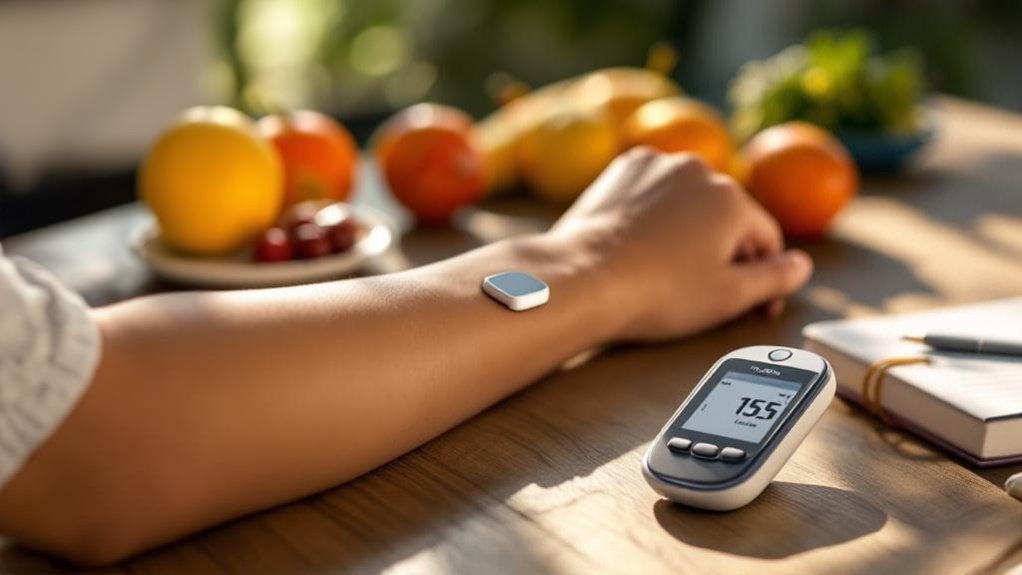
We’ve found that FreeStyle Libre 3 delivers continuous glucose monitoring at less than half the cost of competing CGM systems, making it an accessible option for patients seeking real-time data without traditional meter limitations. Clinical evidence demonstrates a 1.6% A1C reduction at six months for Type 2 diabetes patients, while the system provides minute-by-minute glucose readings with accuracy meeting regulatory standards. The 15-day sensor wear period and elimination of routine fingerstick calibrations translate to significant long-term savings compared to conventional blood glucose monitoring. The sensor features a small 5mm filament inserted under the skin with an adhesive pad that holds it in place, and 93.4% of patients reported no discomfort while wearing it.
Cost Savings Over Competitors
Since FreeStyle Libre systems cost roughly half that of competing CGMs, they’ve become the most accessible continuous glucose monitoring option for budget-conscious patients. Our cost comparison reveals significant advantages: commercially insured patients typically save over 50% monthly with prior authorization, while uninsured individuals can access sensors for approximately $142.49 through discount programs—32% below average retail pricing.
The savings analysis becomes even more compelling when we examine real-world data. Pharmacy claims consistently show FreeStyle Libre users experience lower out-of-pocket costs versus Dexcom across all insurance types. Economic studies demonstrate the system delivers better health outcomes while actually reducing overall costs. For our community managing diabetes on tight budgets, these aren’t just numbers—they represent genuine access to technology that was previously financially out of reach. Analysis of type 2 diabetes patients showed FreeStyle Libre generated nearly half a QALY gain while simultaneously cutting costs by over $8,000 compared to traditional glucose monitoring methods.
Accuracy and Performance Metrics
The FreeStyle Libre 3 achieved a 7.9% mean absolute relative difference (MARD) in clinical studies with 95 subjects—a measurement that places it among the most accurate continuous glucose monitors available today. In head-to-head performance evaluation, it outperformed the Dexcom G7 with a 7.1% MARD versus 7.7%, demonstrating superior accuracy benchmarks under identical testing conditions.
We’re particularly impressed by its consistency across glycemic ranges. Whether you’re experiencing lows below 70 mg/dL or highs, the system maintains reliable accuracy throughout its 14-day wear period. The FDA clearance confirms it’s the first CGM to achieve sub-8% MARD—a threshold previously considered the gold standard for potentially replacing traditional fingerstick testing.
For budget-conscious individuals managing diabetes, this clinical precision at an accessible price point represents genuine value. In a recent study by Eichenlaub et al. (2025), the FreeStyle Libre 3 demonstrated an 11.6% MARD against laboratory-grade YSI analyzers when tested alongside competing devices over a two-week period.
Real-Time Glucose Monitoring Features
Accuracy means little without practical access to your glucose data when you need it most. The FreeStyle Libre 3 delivers continuous tracking through automatic measurements every minute, streaming directly to your smartphone without manual scanning. This real-time connection maintains a 33-foot Bluetooth range, ensuring you stay informed throughout daily activities.
We particularly value the customizable real-time alerts that notify you of glucose fluctuations before they become urgent. You’ll receive automatic warnings for high and low levels, plus a mandatory urgent low alarm at 55 mg/dL. The system stores your complete 14-day glucose history, capturing readings during sleep and exercise when you’re not actively checking. The factory calibrated sensor eliminates the need for fingerstick checks to maintain accuracy throughout its 14-day wear period.
At less than half the cost of competing CGM systems, it provides accessibility without compromising essential monitoring features.
Accu-Chek Guide: Gold Standard Accuracy at Competitive Prices
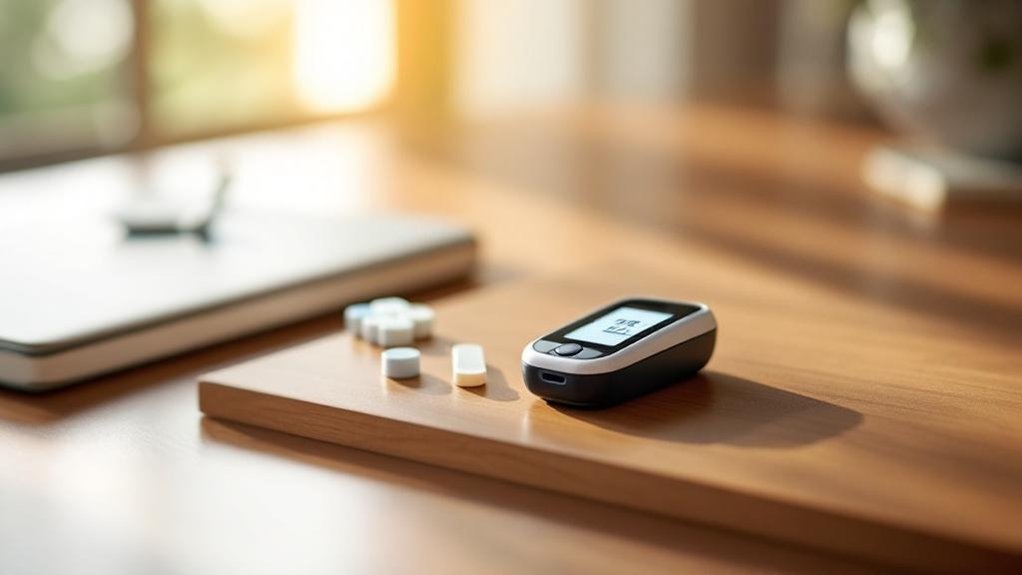
When managing diabetes, choosing a meter that delivers consistent, clinically validated results can mean the difference between confident treatment decisions and uncertainty. The Accu-Chek Guide exemplifies budget accuracy by meeting ISO 15197:2015 standards with documented 10/10 accuracy performance—95% of readings fall within ±10 mg/dL for concentrations below 100 mg/dL.
Among the Accu Chek benefits we value most: no coding required, eliminating common user errors; results in under 4 seconds; and the spill-resistant SmartPack vial that prevents strip waste. With 720 diary records stored and Bluetooth connectivity to the mySugr app, you’ll maintain thorough glucose tracking.
Independent testing confirms this meter outperformed Contour and OneTouch models in Mean Absolute Relative Difference, achieving high Clarke Error Grid Zone A classification for reliable treatment decisions. The manufacturer tests over 60,000 test strips during production to ensure consistent accuracy across every batch you purchase.
How Medicare and Insurance Coverage Affects Your Bottom Line
Understanding how Medicare Part B structures its coverage for blood glucose meters reveals significant out-of-pocket costs that many patients don’t anticipate. Before Medicare coverage begins, you’ll meet a $257 deductible in 2025, plus monthly premiums of $185. After that, you’re responsible for 20% coinsurance on all approved supplies.
The insurance impact extends beyond basic cost-sharing. If you use insulin, Medicare allows up to 300 test strips quarterly—non-insulin users receive fewer. Coverage requires using Medicare-enrolled suppliers who accept assignment; otherwise, you may pay up to 15% above approved amounts or face complete claim denials.
Medicare Part B covers both standard glucometers and continuous glucose monitors as durable medical equipment for patients with a diabetes diagnosis. These coverage restrictions explain why many patients choose our cash-based pricing model. We often provide comparable or better value than traditional Medicare reimbursement, without the administrative complexity.
Accuracy Performance in Low Blood Sugar Ranges
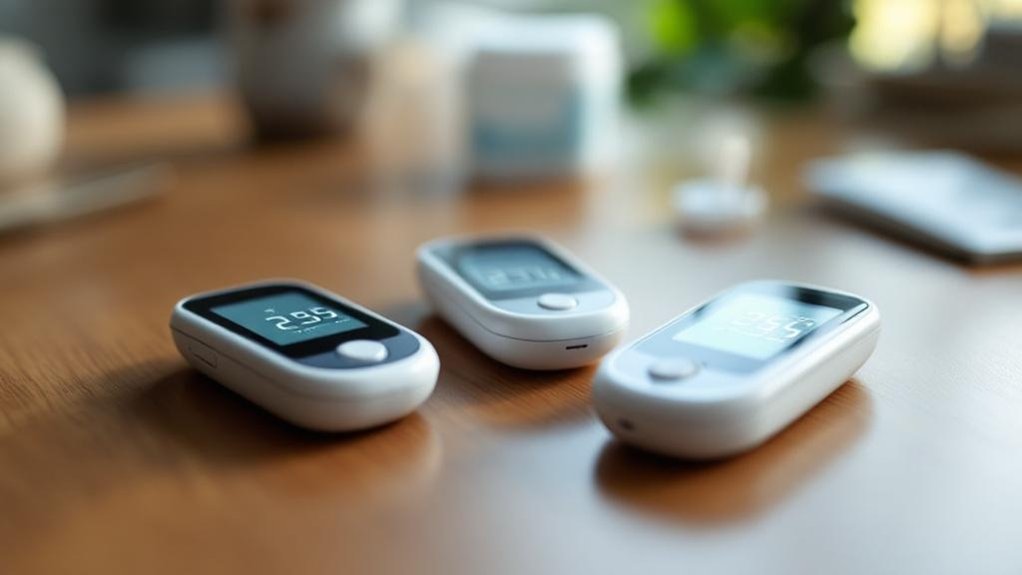
We need to address a critical concern: not all budget meters perform equally when detecting low blood sugar. Clinical studies reveal that error rates increase considerably in the hypoglycemic range (below 81 mg/dL), with some meters showing 1.84 to 2.33 times higher failure rates compared to normal glucose levels. This variability matters because inaccurate readings during hypoglycemia can lead to dangerous treatment decisions when your blood sugar is already critically low.
Research comparing five different home glucose meters found that devices like Accu-Chek Go, Optium Xceed, and Contour TS performed similarly and demonstrated superior accuracy to other tested models during low blood sugar episodes. Patients and caregivers should always prioritize physical hypoglycemia symptoms over meter readings alone, as even well-performing devices can fail to detect dangerously low glucose levels with complete reliability.
Hypoglycemic Range Accuracy Challenges
While budget glucose meters offer excellent value for daily diabetes management, their performance in the hypoglycemic range—typically defined as blood glucose levels below 70-81 mg/dL—presents specific accuracy challenges that warrant careful consideration.
Research shows that error rates increase notably during hypoglycemia detection, with odds of inaccurate readings 1.84 to 2.33 times higher in low ranges compared to normal glucose levels. This matters because false high readings during actual hypoglycemia could delay critical treatment.
To maximize meter reliability when checking for low blood sugar, we recommend using fingertip samples rather than alternate sites, as they’re more accurate during rapidly changing glucose levels. If you’re experiencing hypoglycemic symptoms, trust those physical signs even if your meter shows otherwise, and consider confirming readings with your healthcare provider. For definitive confirmation during suspected hypoglycemia, a central laboratory measurement may be necessary to ensure accurate treatment decisions.
Budget Meter Performance Variability
When it comes to detecting low blood sugar, not all budget meters perform equally—and the differences can be clinically significant. We’ve reviewed independent validation studies showing measured accuracy ranging from 5.6% to 20.8% across different budget models. These budget accuracy challenges matter most during hypoglycemia, when some devices maintain clinical-grade precision while others show critical errors.
The cost performance trade offs aren’t always predictable. We found that error rates increased by 84% in the hypoglycemic range for certain meters, with some consistently overestimating glucose values and others underestimating them. Surprisingly, minimal price differences sometimes separated high and low performers. That’s why we prioritize independent clinical validation data over marketing claims when recommending budget-friendly options that won’t compromise your safety during low glucose events.
Only two meters achieved the stringent ISO 2013 criteria, both demonstrating error rates below 7% even under challenging laboratory conditions. Regular calibration remains essential regardless of which budget meter you choose, as proper maintenance significantly impacts long-term accuracy and patient safety.
Critical Reading Reliability Concerns
If there’s one area where budget meter performance becomes genuinely concerning, it’s hypoglycemia detection. Research shows most meters struggle with accuracy below 70 mg/dL—exactly when we need reliable readings most. These critical reading reliability concerns aren’t just technical issues; they’re safety matters.
Studies reveal certain models consistently outperform others in low ranges. Accu-Chek Go, Optium Xceed, and Contour TS demonstrated considerably better hypoglycemia detection, while some budget options showed dangerous misclassifications of severe lows as moderate events.
Here’s what matters for our community: if you’re prone to hypoglycemia, prioritize meters with documented low-range accuracy. Always use fingertip samples during suspected lows, and trust your physical symptoms over any meter reading that doesn’t align with how you’re feeling. Both Accu-Chek and FreeStyle brands meet international accuracy standards, providing dependable results across their product lines.
When Low Price Doesn’t Mean Low Quality
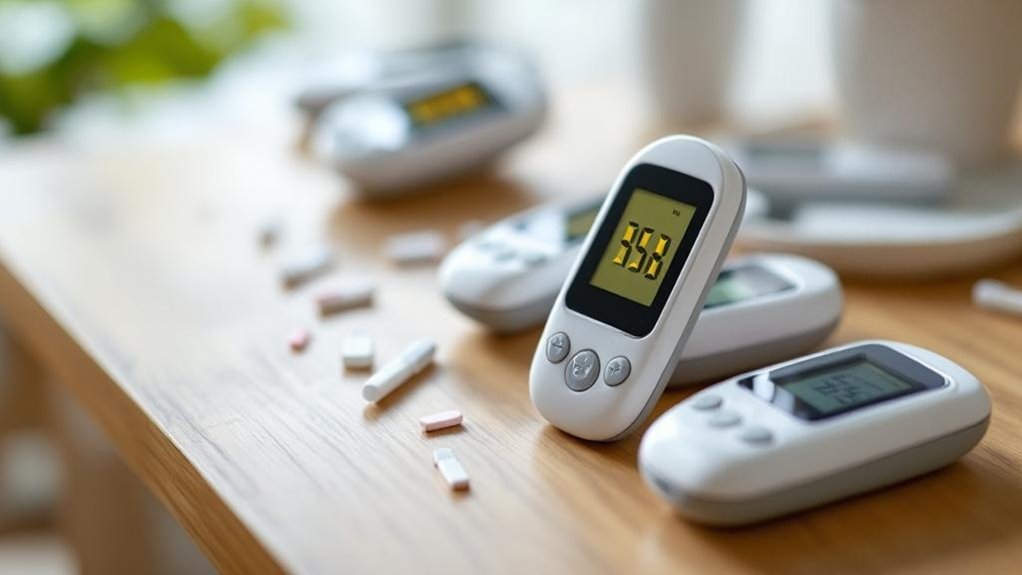
Because independent studies consistently show no significant correlation between retail strip cost and glucose meter accuracy, you don’t need to sacrifice quality for affordability. Laboratory testing of 17 meters revealed MARD values ranging from 5.6% to 20.8% across all price points, proving that budget options can match premium performance.
We’ve seen this validated through consumer preferences—Care Touch maintains its position as Amazon’s #1 bestselling glucose meter because it delivers reliable readings at $30. The Contour Next One achieves 8.4% accuracy deviation at just $21.99, while ReliOn demonstrated strong meter reliability in formal testing despite its budget pricing. The Contour Next One also requires a minimal blood sample of just 0.6 μL, matching the convenience of premium models.
Research confirms that many low-cost strips perform excellently while some expensive ones underperform. Your wallet and your health can both win.
Essential Features Worth Paying For in Budget Meters
Budget-friendly doesn’t mean feature-free, and knowing which capabilities genuinely improve your testing experience helps you maximize value without overpaying. When evaluating budget meter features, we prioritize small blood sample requirements (0.3-1 microL) that reduce discomfort while maintaining accuracy. Essential functionalities include backlit displays for testing in any lighting condition and alternate site testing capability that lets you rotate between fingertips, palms, and arms to minimize trauma. We’ve found that Bluetooth connectivity transforms isolated readings into actionable patterns through smartphone synchronization, while adequate memory storage (at least 250 readings) enables meaningful trend analysis during medical appointments. Error detection systems represent another non-negotiable feature, identifying testing inaccuracies before displaying results. Modern glucometers should display results in either mmol/L or mg/dL units to align with your healthcare provider’s preferred measurement system and ensure clear communication during appointments. These core capabilities distinguish truly valuable budget meters from merely inexpensive ones.
Frequently Asked Questions
Can I Use Generic Test Strips With Name-Brand Budget Meters?
We don’t recommend using generic test strips with name-brand budget meters due to meter compatibility issues. The FDA requires you to use only manufacturer-specified strips to guarantee accurate readings and safe diabetes management decisions.
How Often Should I Replace My Blood Glucose Meter?
There’s no standard replacement frequency for blood glucose meters—they’re designed to last several years. We recommend replacing yours when it malfunctions, shows inconsistent readings, or when you verify the meter lifespan has affected accuracy.
Do Budget Meters Require Smaller Blood Sample Sizes Than Premium Models?
No, budget meters don’t require smaller blood sample sizes than premium models. Our sample size comparison shows both categories typically need 0.5 μL. We recommend meter accuracy evaluation over price when choosing your device for ideal diabetes management.
Are Refurbished Glucose Meters Safe and Accurate to Use?
We don’t recommend refurbished meters due to uncertain refurbished meter reliability and unverified accuracy testing methods post-refurbishment. Instead, we offer new, FDA-cleared meters at budget-friendly prices that maintain proven accuracy standards you deserve.
Can I Share One Meter Between Multiple Family Members With Diabetes?
We don’t recommend meter sharing between family members with diabetes due to infection transmission risks. The CDC and FDA explicitly prohibit it—even between family members—because bloodborne pathogens can spread through contaminated devices.
Conclusion
We’ve shown you that accurate diabetes management doesn’t require expensive equipment. The meters we’ve recommended meet FDA accuracy standards, deliver consistent results in critical low-glucose situations, and won’t strain your budget. What matters most is that you’re testing regularly and making informed decisions about your health. By choosing quality budget meters and understanding strip costs, you’ll invest those savings where they count—in the foods, activities, and care that keep your blood sugar stable. That’s real value.