

For stable blood sugar, choose protein-packed snacks like Greek yogurt with berries (15g protein), turkey roll-ups (6.5g protein), or hard-boiled eggs (4g protein). Pair carbohydrates with protein and healthy fats to slow digestion—try apple slices with peanut butter or veggie sticks with hummus. Measure portions carefully: protein should resemble a deck of cards. These balanced combinations won’t just satisfy hunger; they’ll support your overall diabetes management strategy.
Key Takeaways
- Greek yogurt parfaits with berries provide 15g protein and minimal blood sugar impact.
- Pair complex carbohydrates with protein and healthy fats to slow glucose absorption.
- Hard-boiled eggs offer complete protein with zero carbohydrates for stable blood sugar.
- Vegetable sticks with hummus deliver fiber without causing glucose spikes.
- Aim for snacks containing at least 5g fiber per serving for optimal glycemic control.
Why Snack Composition Matters for Blood Sugar Control
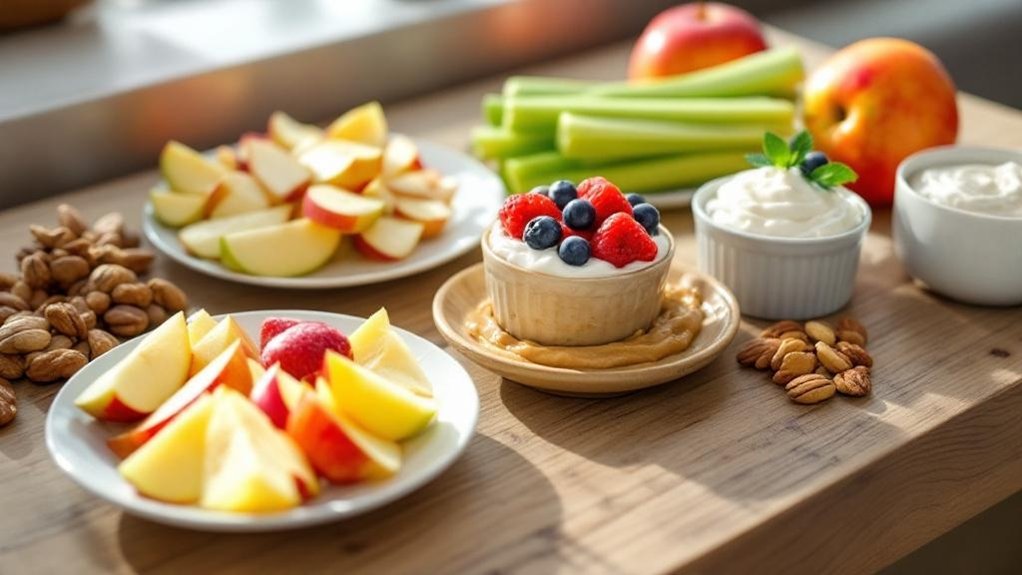
When managing diabetes, understanding the precise impact of snack composition on blood glucose levels is essential to maintaining ideal control throughout the day. Different carbohydrate types affect your glycemic response considerably—complex carbohydrates like uncooked cornstarch provide slower glucose release compared to simple sugars that cause sharp spikes.
The quantity of carbohydrates directly correlates with glycemic impact, while incorporating fiber slows digestion and attenuates glucose rises. You’ll experience more stable blood sugar when combining carbohydrates with protein and fat, as these macronutrients delay gastric emptying and moderate glucose absorption.
For best control, consider timing your snacks strategically—bedtime options with complex carbohydrates or protein can prevent nocturnal hypoglycemia. Clinical studies show that specialized snack bars containing uncooked cornstarch can significantly reduce nighttime and morning hypoglycemic episodes in diabetic patients. You’re not just eating; you’re precisely engineering your blood glucose profile through educated food choices that support your diabetes management.
Protein-Packed Snacks Under 200 Calories
You’ll find quick protein-rich options essential for stabilizing blood glucose while supporting muscle maintenance throughout your day. These portable mini meals deliver 6-14g of protein per serving while staying under 200 calories, making them ideal for glycemic control between larger meals. Hard-boiled eggs make excellent diabetes-friendly snacks with almost 4g of protein in each egg. Options like turkey roll-ups, Greek yogurt parfaits, and portion-controlled nut mixes can be prepared in advance and transported easily for on-demand nutrition when you’re away from home.
Quick On-The-Go Options
Five protein-packed snack options can make a significant difference in managing diabetes while on the go. Portion control becomes effortless with pre-portioned protein bars containing 10-20g protein and under 9g net carbs, ideal for preventing afternoon blood sugar drops.
For snack convenience, pre-pack 1-ounce servings of sugar-free beef jerky, delivering 9g protein with minimal carbs. Turkey roll-ups with cheese and vegetables offer 6.5g protein per roll-up while supporting glycemic control.
Greek yogurt parfaits with fresh berries provide 15g protein in a transportable container. Hard-boiled eggs make an excellent portable option with 12.6g of protein per serving while providing healthy fats that help maintain steady blood sugar levels. For a plant-based alternative, portion ½ cup vegetable sticks with 2 tablespoons of hummus or guacamole, providing fiber that slows glucose absorption.
These options guarantee you maintain nutritional balance without exceeding 200 calories—critical for consistent diabetes management throughout busy days.
Muscle-Building Mini Meals
Building and maintaining muscle mass remains essential for diabetics, as stronger muscles improve insulin sensitivity and glucose metabolism. Your protein sources should combine quality nutrition with blood sugar stability. Consider cottage cheese with sliced almonds (14g protein), plain Greek yogurt with berries (15g protein), or turkey roll-ups with vegetables (6.5g protein) for balanced mini meals under 200 calories.
Lean meat jerky offers approximately 9g protein per ounce with minimal carbs—just avoid varieties with added sugars. For plant options, hummus with vegetables provides fiber and moderate protein while supporting satiety. Adding hard-boiled eggs to your snack rotation provides complete protein with zero carbohydrates.
Snack timing matters greatly—aim for consumption within 30 minutes post-exercise when your muscles are most receptive to nutrients. Between meals, casein-rich options like cottage cheese provide sustained amino acid delivery to support muscle maintenance while preventing glucose fluctuations.
Fiber-Rich Options for Glycemic Stability
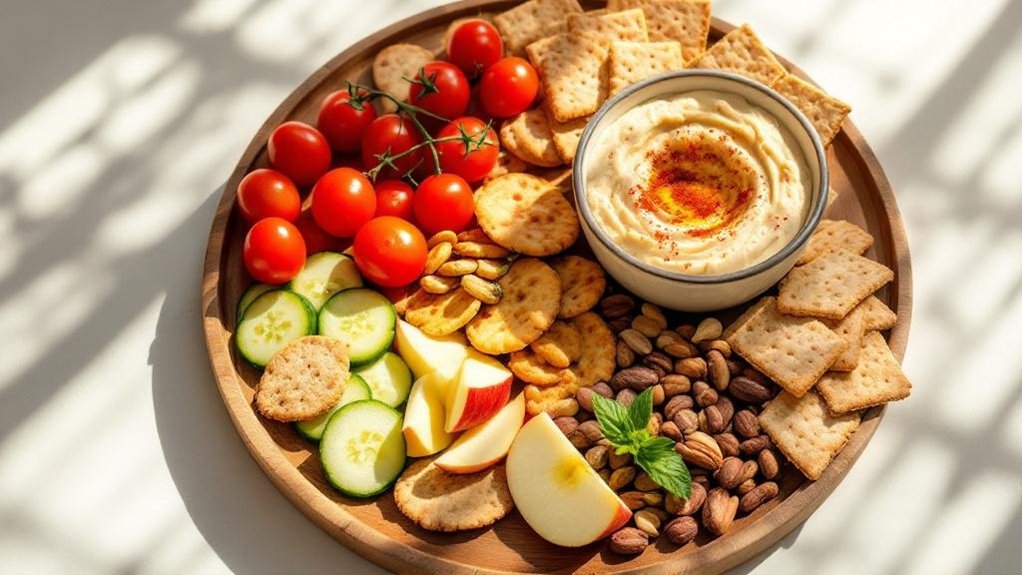
When managing diabetes, fiber-rich snacks play an essential role in maintaining glycemic stability throughout the day. Incorporating foods with high fiber content helps slow carbohydrate absorption, preventing blood sugar spikes that can derail your management efforts.
Consider pairing apple slices with peanut butter for approximately 6 grams of fiber while balancing carbs and protein. Roasted chickpeas offer about 6 grams of fiber per half-cup serving, creating a convenient, crunchy option that supports glycemic control. Berries topped with chia seeds deliver both soluble and insoluble fiber, improving insulin sensitivity.
For on-the-go options, try turkey roll-ups with non-starchy vegetables or whole grain crackers with avocado. The high fiber intake from these snacks helps improve glycemic control and insulin sensitivity long-term. These fiber benefits extend beyond blood sugar regulation to include improved gut health and reduced cardiovascular risks—significant advantages for your diabetes management journey.
Healthy Fats That Support Diabetes Management
Contrary to outdated dietary advice, healthy fats play an essential role in diabetes management by improving insulin sensitivity and supporting stable blood sugar levels. Incorporating high-quality fats can greatly impact your A1c levels and reduce inflammation.
Focus on replacing saturated and trans fats with these healthy fat sources: monounsaturated fats from olive oil and avocados; polyunsaturated fats from nuts and seeds; and omega-3 fatty acids from fatty fish like salmon. These not only help regulate blood glucose but also protect your cardiovascular system—crucial since diabetes increases heart disease risk.
For easy integration into your daily routine, try adding a quarter avocado to your toast, sprinkling walnuts on salads, or using olive oil instead of butter. Healthy fats contribute significantly to feeling fuller longer, which aids in weight management essential for diabetes control. Remember, fat quality matters more than quantity when supporting your diabetes management journey.
Quick Grab-and-Go Snack Ideas for Busy Days
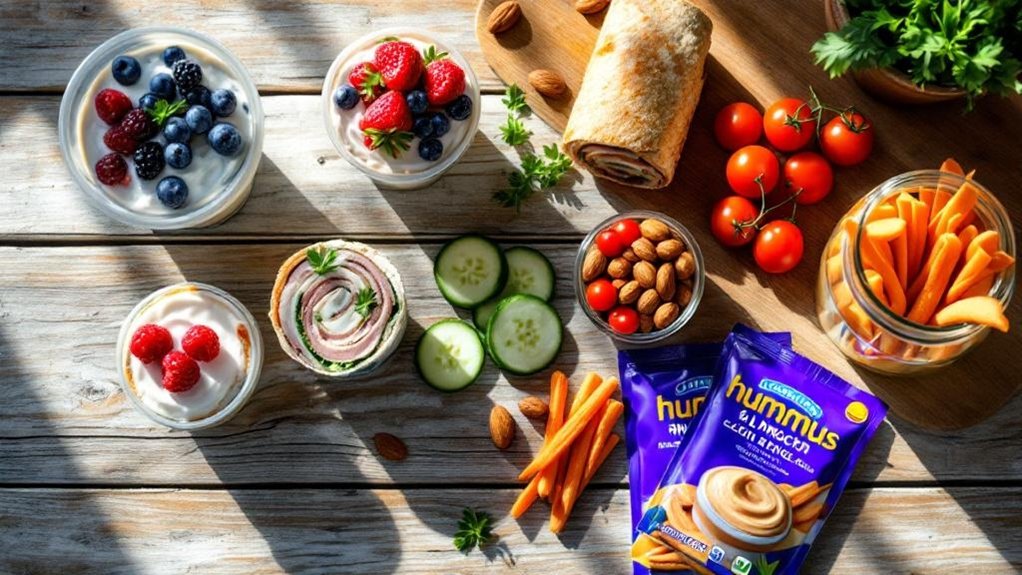
Managing diabetes on busy days requires strategic snack planning that won’t compromise your glucose levels. You’ll benefit from portable protein options like pre-portioned nuts, hard-boiled eggs, or cheese sticks that provide satiety without significant carbohydrate impact. Fiber-focused choices such as veggie sticks with hummus, berry skewers, or small apples with natural peanut butter can help moderate blood sugar response while delivering essential nutrients when you’re on the move. Convenient options like Oh Snap! Pickles provide a tangy, low-calorie vegetable snack that won’t spike blood sugar levels.
Portable Protein Picks
Finding convenient, protein-rich snacks is essential for busy individuals managing diabetes. Nuts and seeds like almonds, pistachios, and pumpkin seeds offer portable combinations of protein, healthy fats, and fiber that stabilize blood sugar levels throughout your day.
For dairy options, string cheese paired with fruit or pre-packaged cheese and nut packs provide balanced macronutrients with minimal preparation. Greek yogurt parfaits and cottage cheese with vegetables create satisfying protein combinations that support glucose stability. These combinations actively moderate glucose absorption into the bloodstream, preventing unwanted spikes.
When considering energy boosting snacks, select protein bars with low added sugar—like Barebells plant-based options with 20g protein and 20g carbohydrates per serving. For those seeking nut butter alternatives, hummus with vegetable strips or lentil-based wraps deliver plant proteins that maintain steady energy levels while offering variety to your diabetes-friendly snacking routine.
Fiber-Focused Fast Options
Beyond protein-packed options, fiber plays an essential role in glucose management for those with diabetes. When you’re racing between appointments, these fiber-rich choices can help maintain steady blood sugar levels throughout your day.
Grab a handful of mixed veggie sticks with hummus for a satisfying combination that delivers fiber benefits without glucose spikes. Whole-grain crackers paired with cheese offer both fiber and protein, while berry skewers provide natural sweetness with minimal glycemic impact. Consider strategic snack timing—aim for consistent intervals to prevent dangerous drops in blood glucose. Aim for snacks that provide at least 5 grams of fiber per serving for optimal blood sugar control.
Pre-portioned nuts and seeds (¼ cup serving) make excellent on-the-go options, combining fiber with healthy fats that support insulin sensitivity. For maximum convenience, prepare roasted chickpeas weekly—they’re shelf-stable and deliver fiber that keeps you feeling satisfied longer.
Perfect Portion Sizes for Between-Meal Eating
When you’re living with diabetes, understanding proper portion sizes for snacks becomes essential for maintaining stable blood glucose levels throughout the day. The key is differentiating between portions (what you choose to eat) and standardized serving sizes (what’s listed on nutrition labels).
Practice mindful eating by using measuring tools to accurately portion your snacks—one medium fruit, 1 ounce of protein, or 1 cup of non-starchy vegetables are appropriate between-meal options. Remember that pre-packaged items often contain multiple servings, potentially doubling your intended carbohydrate intake.
For ideal snack timing, fill your plate with non-starchy vegetables and lean proteins while limiting carbohydrates to prevent blood sugar spikes. Visual cues help: protein portions should resemble a deck of cards, ensuring you’re nourishing your body appropriately between main meals. Consuming excess calories from large portions can contribute to unwanted weight gain that further complicates blood sugar management.
Smart Swaps for Common High-Sugar Snacks
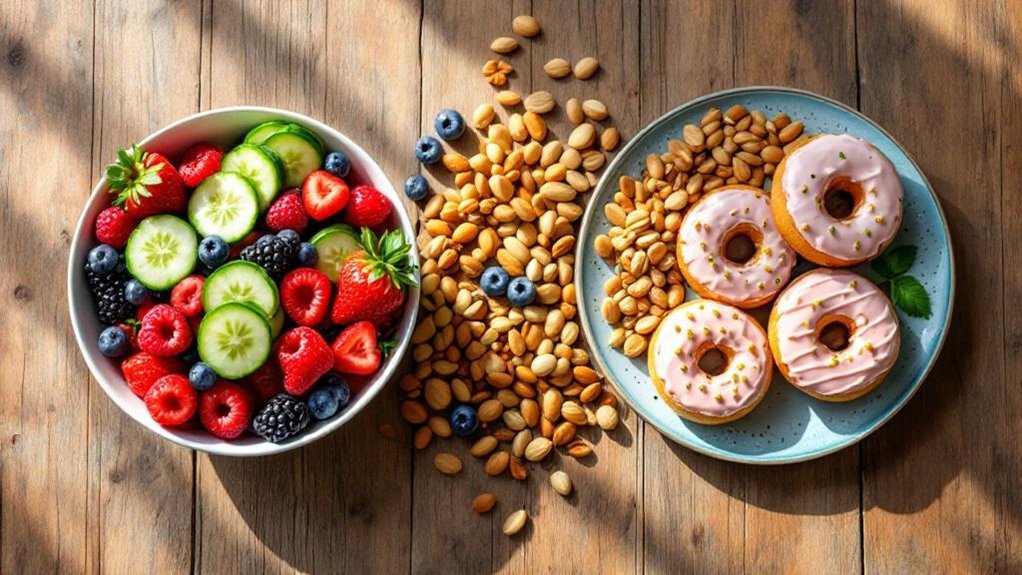
Making strategic food swaps is essential for diabetes management, as replacing high-sugar snacks with nutrient-dense alternatives can greatly improve blood glucose control. Instead of packaged cookies or candy, try fruit substitutions like berries paired with a handful of almonds—this combination provides fiber, healthy fats, and protein that slow sugar absorption.
Replace sweetened yogurts with plain Greek yogurt topped with fresh berries for probiotic benefits without the added sugars. For satisfying snack combinations, swap refined crackers for hummus with vegetables or hard-boiled eggs with whole-grain toast. Late-night snacking can be managed with casein-based protein supplements that help maintain stable blood sugar levels while you sleep.
When thirst strikes, trade sugary beverages for unsweetened tea or water infused with cucumber. These mindful exchanges not only stabilize your blood sugar but also deliver essential nutrients that support your overall metabolic health.
Seasonal Snacking for Year-Round Diabetes Care
The changing seasons offer unique opportunities to diversify your diabetic snacking routine while maintaining ideal blood glucose levels. Summer brings low-GI berries and non-starchy vegetable skewers, perfect for stabilizing blood sugar while providing essential antioxidants. Summer berry salads mixed with lemon juice provide a refreshing summer snack that’s high in fiber and antioxidants.
As temperatures drop, shift to warming options like roasted pumpkin seeds rich in protein and minerals, or nutrient-dense sweet potato toast. Winter calls for comforting choices like vegetable-packed soups and cheese crisps that satisfy cravings without spiking glucose.
Year-round, incorporate nuts and seeds—almonds improve long-term blood sugar control, while walnuts deliver anti-inflammatory omega-3s vital for diabetes awareness. Remember to pair seasonal fruits with protein sources like Greek yogurt or nut butters to optimize fiber intake and minimize blood sugar fluctuations.
Frequently Asked Questions
How Do Blood Sugar-Friendly Snacks Affect Medication Timing?
Blood sugar-friendly snacks can help optimize your medication absorption and enhance blood sugar regulation. You’ll need to time them carefully with your medications to avoid hypoglycemia and maintain consistent glucose levels throughout your day.
Can Diabetic-Friendly Snacks Help Manage Nighttime Hypoglycemia?
Yes, you’ll find that balanced snacks before bed can effectively manage nighttime hypoglycemia while satisfying nighttime cravings. Protein-fat-fiber combinations promote blood sugar stabilization throughout your sleep, preventing dangerous lows overnight.
Which Snacks Are Suitable Before and After Exercise?
For pre-workout options, choose 15-30g carbohydrates like bananas or whole-grain crackers. Post-workout recovery should include 15g carbs with 7-8g protein, such as Greek yogurt with berries or cheese with fruit.
How Do Stress and Illness Affect Snack Choices for Diabetics?
When you’re under stress, you’re likely to crave high-carb comfort foods. Focus on stress management techniques and illness coping strategies to maintain nutrient-dense choices that won’t spike your blood glucose.
Are There Differences in Snacking Needs for Type 1 Versus Type 2?
Yes, you’ll find distinct differences between types. Type 1 requires strategic snack timing around insulin dosing to prevent hypoglycemia. Type 2 benefits from fewer, nutrient-dense snacks that support insulin sensitivity throughout your day.
Conclusion
You’ve now got a toolkit of diabetes-friendly snacks that combine protein, fiber, and healthy fats—vital elements for glycemic control. By emphasizing nutrient density over empty calories, you’ve learned how strategic snacking can maintain blood glucose stability between meals. Remember that consistent portion control remains essential, even with healthier options. Implementing these evidence-based choices supports not just daily management but long-term metabolic health outcomes.