

Medicare Part B covers essential diabetic supplies including blood glucose monitors, test strips, lancets, and glucose control solutions as durable medical equipment. After you’ve met your annual Part B deductible, Medicare pays 80% of approved amounts while you’re responsible for 20% coinsurance. Coverage limits apply: insulin users receive 300 test strips and lancets quarterly, while non-insulin users get 100 of each. Part B also covers insulin pumps and continuous glucose monitors when specific medical criteria are met, and supplies must come from Medicare-enrolled suppliers to guarantee your benefits apply properly.
Key Takeaways
- Medicare Part B covers blood glucose monitors, test strips, lancets, and glucose control solutions after meeting the annual deductible.
- Insulin users receive 300 test strips and lancets quarterly; non-insulin users receive 100 of each every three months.
- Continuous glucose monitors are covered for insulin-prescribed patients, with expanded eligibility beginning April 2023 for all insulin users.
- After meeting the deductible, Medicare pays 80% of approved costs; beneficiaries pay 20% coinsurance for most supplies.
- Supplies must be obtained from Medicare-enrolled DME suppliers with proper physician documentation confirming medical necessity and diabetes diagnosis.
Essential Diabetic Testing Equipment and Supplies Covered by Medicare Part B
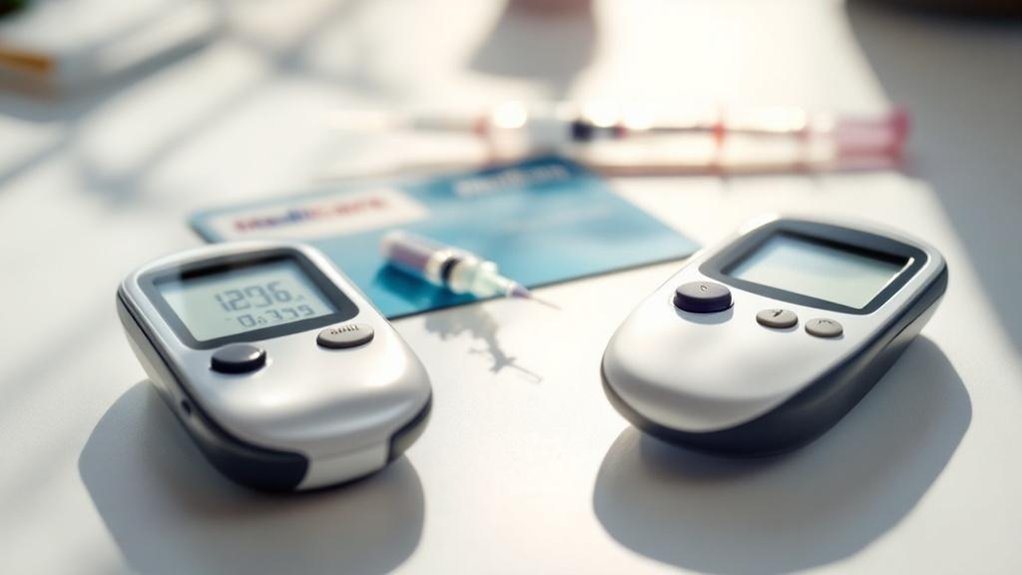
Medicare Part B classifies blood glucose monitors, test strips, lancet devices, lancets, and glucose control solutions as durable medical equipment, establishing coverage for these essential testing supplies when a healthcare provider determines medical necessity. We recognize maneuvering through these coverage parameters can feel overwhelming, but knowing what qualifies helps us access the diabetes supplies we need.
Part B covers blood glucose monitors as nondisposable equipment, while test strips and lancets receive coverage as integral components of home blood sugar management. Glucose control solutions also qualify under this coverage framework, enabling us to verify our monitoring systems’ accuracy. After meeting our annual Part B deductible, Medicare pays 80% of the approved amount for these covered items, leaving us responsible for the remaining 20% coinsurance on Medicare-approved amounts. Beneficiaries can obtain these testing supplies through local pharmacies or arrange for home delivery using a Medicare national mail-order contract supplier.
Understanding Your Coverage Limits: Test Strips, Lancets, and Replacement Schedules
Federal regulations establish distinct quantity limits for diabetic testing supplies based on insulin dependency status, directly impacting our access to the tools we need for daily glucose monitoring. Medicare Part B implements coverage limitations of 300 test strips and 300 lancets every three months for insulin users, while non-insulin users receive 100 of each. These quantity restrictions apply uniformly across all Medicare-approved suppliers, regardless of brand preferences.
After meeting our Part B deductible, we’re responsible for 20% coinsurance of Medicare-approved amounts. Exceeding standard limits requires physician documentation establishing medical necessity. Our testing frequency determines allowable quantities, with prescriptions specifying this frequency for proper calculation. We must order through Medicare-enrolled suppliers accepting assignment, accompanied by current physician orders. Part B also covers durable medical equipment, including blood glucose monitors as essential tools for diabetes management. The quarterly replacement schedule resets every three months, though documented medical needs may justify adjustments.
Insulin Pumps and Continuous Glucose Monitors Under Part B
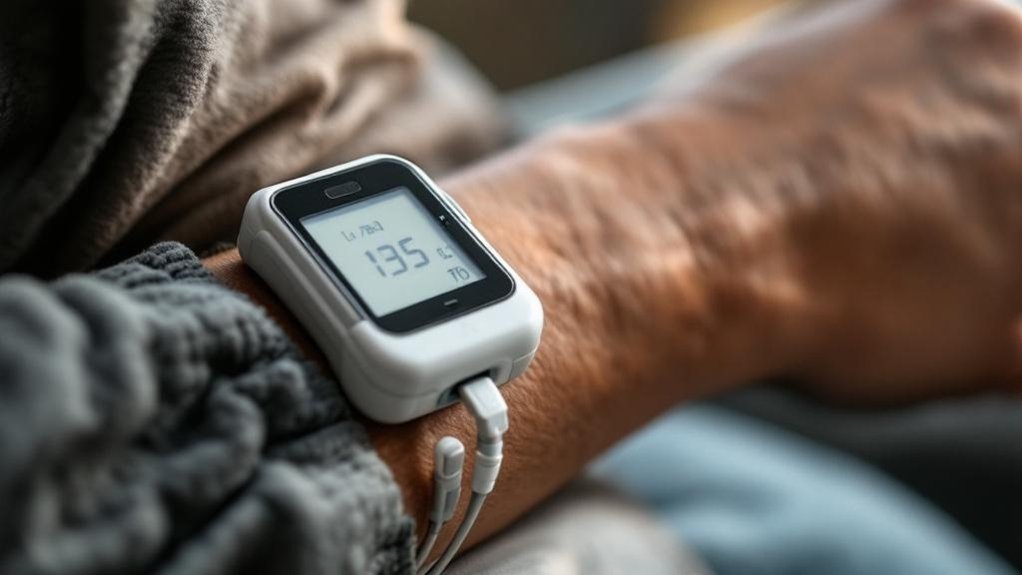
While traditional testing supplies form the foundation of diabetes management, advanced technologies like insulin pumps and continuous glucose monitors represent significant therapeutic tools that we must understand within Part B’s coverage framework.
Insulin pump eligibility requires Type 1 or insulin-dependent Type 2 diabetes with documented poor glucose control despite multiple daily injections. Medical necessity must include evidence of low C-peptide levels confirming insulin dependency. Medicare covers FDA-approved external pumps classified as durable medical equipment, including automated insulin delivery systems from Medtronic, Tandem, and Omnipod 5. After meeting the deductible, Medicare pays 80% of the approved amount for the insulin pump, leaving you responsible for the remaining 20% coinsurance.
Since April 2023, CGM coverage expanded to include any insulin-prescribed patient. CGM training requirements mandate confirmation that you or your caregiver received adequate device instruction. Additionally, you’ll need a healthcare provider visit within six months before ordering to evaluate diabetes control and establish medical necessity.
Out-of-Pocket Costs: Deductibles, Coinsurance, and the $35 Insulin Cap
Understanding your financial responsibility under Part B requires analyzing three distinct cost components: the annual deductible, standard coinsurance, and the insulin-specific cap that operates outside traditional cost-sharing rules.
You’ll first satisfy Part B’s annual deductible before coverage begins for diabetic supplies. Once met, Medicare pays 80% of approved amounts while you’re responsible for 20% coinsurance on monitors, test strips, and lancets. This standard structure demands careful out of pocket strategies, particularly if you’re managing multiple supply needs.
The $35 monthly insulin cap represents a significant insulin affordability protection. This cap applies to Part B-covered insulin without deductible requirements, meaning your maximum cost remains $35 per prescription regardless of list price. We recommend exploring Medigap or Medicare Advantage plans that cover your 20% coinsurance portion, potentially reducing your supply costs to zero.
Part B coverage is limited to insulin administered via an infusion pump, excluding insulin pens and related supplies like syringes and alcohol swabs unless you’re enrolled in Part D.
Meeting Medicare’s Requirements: Prescriptions, Suppliers, and Documentation

Knowing your cost responsibilities matters little if you can’t access covered supplies in the first place. Medicare’s prescription guidelines require physician documentation confirming your diabetes diagnosis and medical necessity for each supply type. For continuous glucose monitors, you’ll need proof of insulin treatment or documented hypoglycemia history. Your physician must verify treatment patterns—like three daily insulin injections for CGM eligibility or four daily glucose tests for test strip allowances.
Supplier eligibility rules are equally strict. Medicare covers supplies only from enrolled DME suppliers participating in competitive bidding programs. In designated geographic areas, you must use contracted suppliers to guarantee coverage. Non-contracted suppliers may charge amounts exceeding Medicare-approved rates. Before purchasing, verify your supplier’s Medicare enrollment status and contractual standing to avoid unexpected out-of-pocket expenses. For CGM devices, you must select a model with either a standalone receiver or one integrated with an insulin pump to meet Medicare’s coverage requirements.
Frequently Asked Questions
Can I Use Diabetic Supplies Hub and Still Get Medicare Reimbursement?
We’re not Medicare-enrolled suppliers, so direct diabetic supply reimbursement isn’t available through us. However, hub supplier eligibility requirements don’t prevent you from purchasing supplies here and submitting receipts to Medicare for potential reimbursement consideration.
Does Medicare Part B Cover Diabetes Medication Besides Insulin?
Medicare Part B doesn’t cover oral diabetes medication options or most injectables—only pump-administered insulin qualifies. You’ll need Part D coverage to access other medications following Medicare formulary guidelines for extensive diabetes management within our community.
What Happens if I Need Supplies Before My Coverage Period Ends?
You’ll need physician documentation proving medical necessity for coverage extensions before your quarterly period ends. We recommend contacting your doctor immediately if you require emergency supplies, as Medicare reviews each early replacement request individually through their standard authorization process.
Are Therapeutic Diabetic Shoes Covered Under Part B or Part D?
Therapeutic diabetic shoes fall under Part B coverage, not Part D. You’ll need to meet specific therapeutic shoe criteria including severe foot disease diagnosis. Part B covers 80% after deductible, with coverage limitations of one pair annually.
Can I Switch Suppliers Mid-Year Without Affecting My Medicare Coverage?
Yes, you can switch supplier options mid-year without disrupting coverage continuity. We’ll guarantee your new supplier is Medicare-enrolled and accepts assignment, maintaining your benefits seamlessly while you choose what works best for your needs.
Conclusion
Understanding Medicare Part B’s coverage framework for diabetic supplies requires careful attention to CMS guidelines, documentation protocols, and supplier enrollment standards. We’ve outlined the specific coverage categories, cost-sharing structures, and regulatory requirements that govern your benefits. To guarantee compliance and maximize reimbursement, maintain current prescriptions, verify supplier accreditation status, and document medical necessity according to LCD and NCD specifications. Your adherence to these Medicare policies directly impacts coverage approval and out-of-pocket expenses for essential diabetes management supplies.